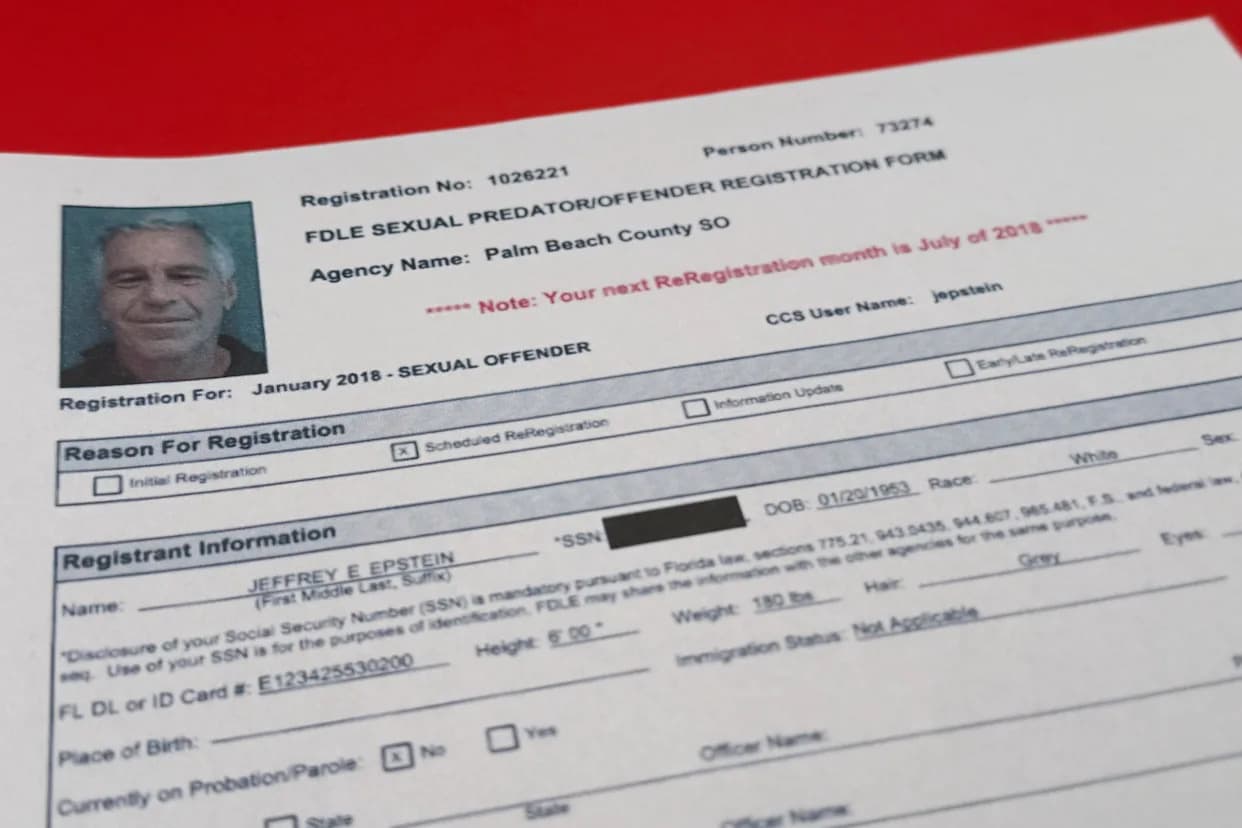
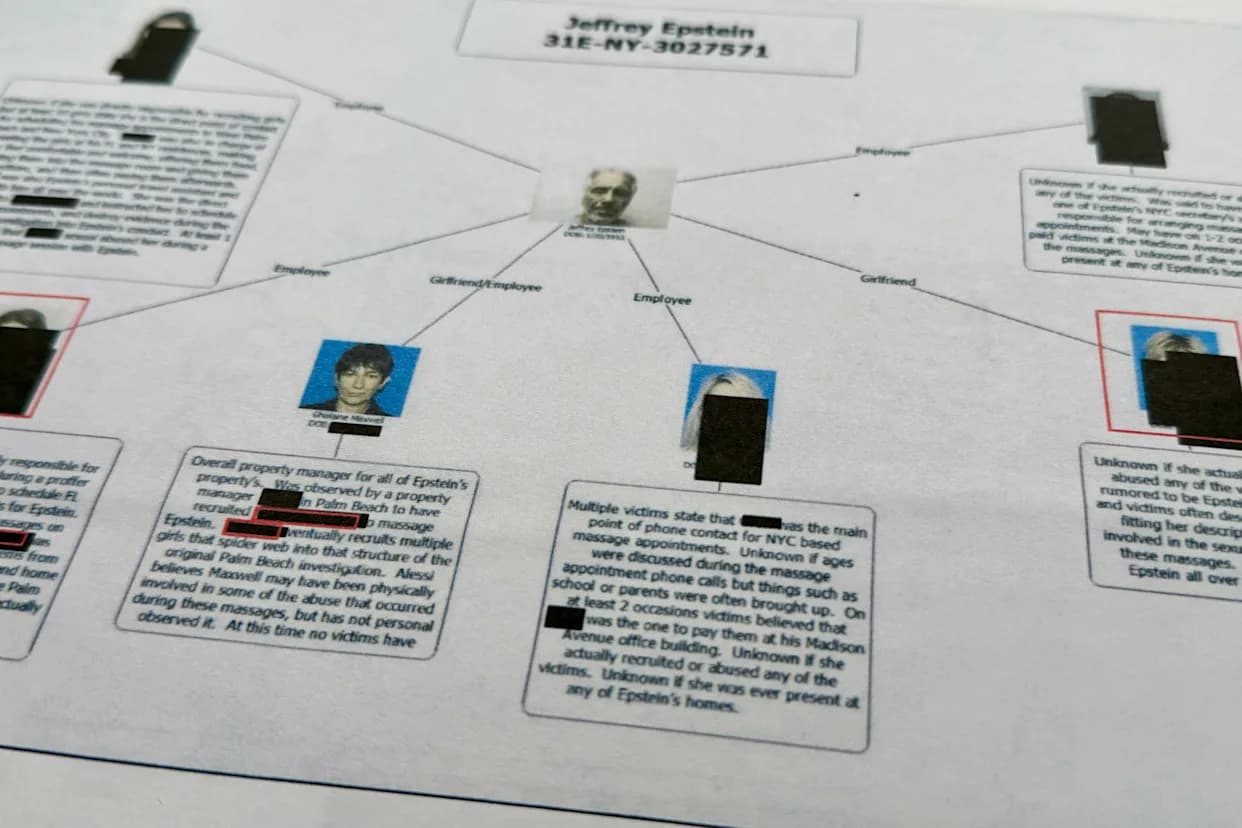
The DOJ has launched an online "Epstein Library" with hundreds of thousands of documents related to Jeffrey Epstein, but the release is incomplete and many files are heavily redacted to protect victim privacy and ongoing investigations. The Epstein Files Transparency Act, signed Nov. 19, required the DOJ to publish all unclassified related records within 30 days, a deadline that elapsed on Dec. 19. Officials say more material will be posted by year-end, while critics warn that permitted redactions and other exceptions could limit disclosures.
DOJ Publishes ‘Epstein Library’: Hundreds Of Thousands Of Files — Key Pages Redacted

A protester urging the release of the Epstein files, in Washington, D.C., Aug. 6. (Kevin Lamarque/Reuters)
The Department of Justice has begun publishing an online “Epstein Library” containing what it describes as hundreds of thousands of documents tied to the Jeffrey Epstein investigations. Officials say the initial upload is incomplete and that additional material will be posted by year-end after privacy and other reviews.
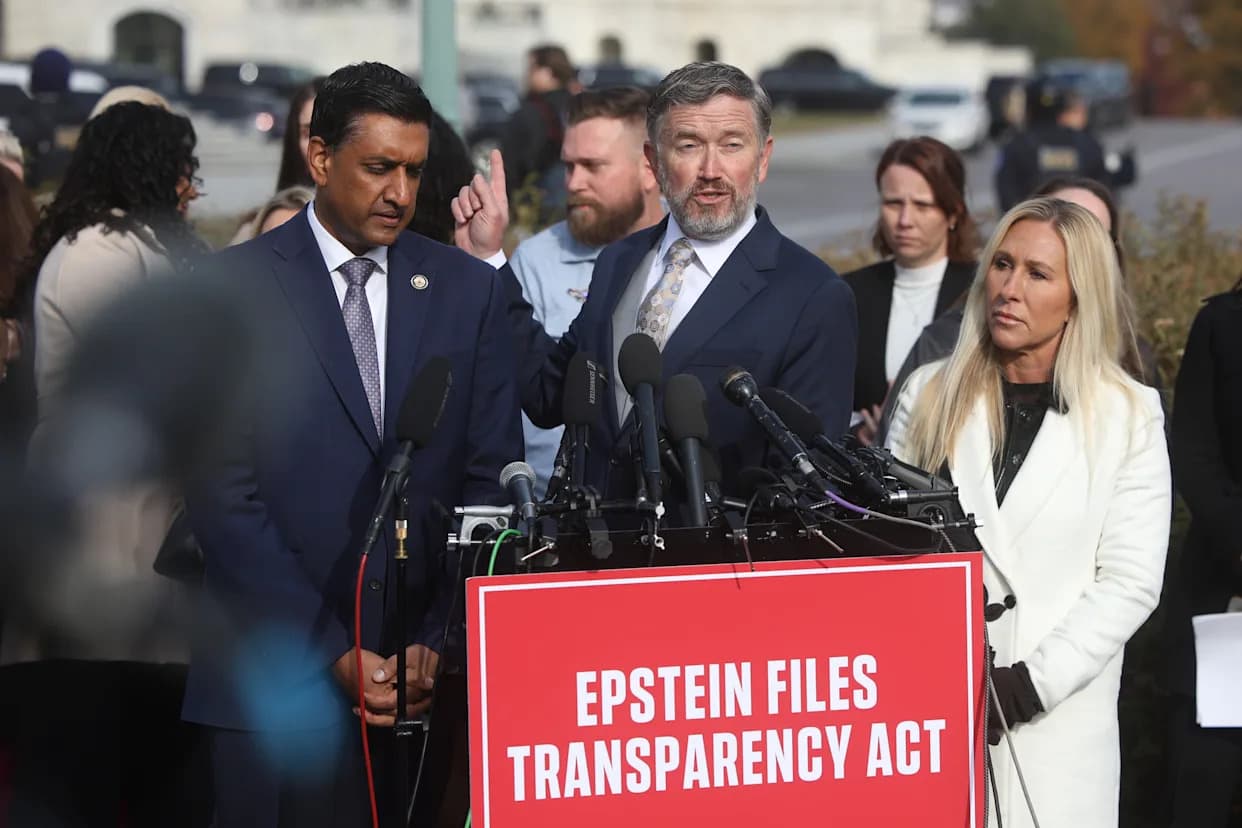
Congress compelled the release through the bipartisan Epstein Files Transparency Act, which President Trump signed on Nov. 19 and which required the DOJ to publish all unclassified, relevant records within 30 days. That statutory deadline fell on Dec. 19. Access to the library was momentarily limited by a queue system as users sought the files.
What the DOJ Says and Why Files Are Redacted
Deputy Attorney General Todd Blanche told reporters the department expected “several hundred thousand” documents to be posted immediately, with “several hundred thousand more” to follow over the coming weeks. The DOJ said it had identified roughly 1,200 alleged victims or relatives whose identities must be shielded and that a privacy review will continue to prevent disclosure of personally identifiable information.
“What we’re doing is we are looking at every single piece of paper that we are going to produce, making sure that every victim, their name, their identity, their story, to the extent it needs to be protected, is completely protected,” Blanche said.
News organizations reviewing the initial uploads reported extensive redactions and that many documents already exist in the public domain. The law bars withholding material for reasons of embarrassment or political sensitivity, but it permits limited redactions for narrowly defined categories such as victim privacy, child sexual abuse images, active investigations, certain graphic images, and classified national-security information.
What the Law Requires the DOJ To Release
The statute directs the attorney general to make publicly available, in a searchable and downloadable format, all unclassified records in DOJ possession that relate to Jeffrey Epstein, including investigations, prosecutions and custodial matters. The law specifically lists categories that must be included:
- Records related to Ghislaine Maxwell, Epstein’s convicted associate.
- Flight logs and travel records for aircraft, vessels or vehicles tied to Epstein or related entities.
- Individuals named or referenced in connection with Epstein’s criminal activity, settlements, plea or immunity agreements, or investigations.
- Entities with alleged ties to Epstein’s trafficking or financial networks.
- Immunity deals, non-prosecution agreements, plea bargains, or sealed settlements tied to Epstein or associates.
- Internal DOJ communications about charging decisions, investigations or declinations.
- Communications or metadata concerning destruction, deletion, alteration or concealment of evidence or files related to Epstein.
- Documentation of Epstein’s detention or death, including incident reports, witness interviews and medical examiner records where permitted.
Types Of Materials Expected
Court filings and media reports indicate the DOJ plans to include materials obtained in FBI searches of Epstein properties, witness interview memos, financial and banking records, commercial and private flight logs, materials subpoenaed from internet providers, civil-deposition transcripts, documents from local police agencies and forensic reports from seized electronic devices. Federal judges have also allowed the release of certain grand-jury materials tied to Epstein and related cases.
Limits, Oversight And Political Fallout
The attorney general may publicly justify redactions within 15 days as required by the statute. Some members of Congress have warned of consequences if the department fails to comply fully. In parallel, congressional committees have already published selected files and photos from Epstein’s estate; those releases included images featuring high-profile figures but did not allege criminal conduct by individuals pictured.
Observers caution that while the trove could yield new reporting leads, many documents appear heavily redacted and some material has been previously available. Journalists, investigators and the public will likely sift the library for new evidence and context that could clarify unanswered questions about Epstein’s network and the government’s past handling of the investigations.
Help us improve.