
The Justice Department has published hundreds of thousands of Epstein‑related records to an online “Epstein Library,” but survivors and lawmakers say the initial releases were incomplete or improperly redacted. On Dec. 24 the DOJ announced it had found more than one million additional potentially related documents that will take weeks to review and post. Notable items already surfaced include a 2021 Mar‑a‑Lago subpoena, photos of Bill Clinton with Epstein, and a now‑discredited handwritten note. Lawmakers including Reps. Ro Khanna and Thomas Massie have threatened contempt if required records are not produced.
DOJ’s ‘Epstein Library’ Publishes Hundreds of Thousands of Files — Over One Million More Discovered

Material marked with evidence tape inside the home of Jeffrey Epstein is shown in this image from the estate of late financier and convicted sex offender Jeffrey Epstein, released by the Department of Justice in Washington, D.C., U.S., on December 19, 2025. - U.S. Justice Department/Handout/Reuters
The Justice Department has begun publishing a massive collection of files related to Jeffrey Epstein to a new online repository dubbed the “Epstein Library,” but the document release process is far from finished. Congress required the department to disclose all records by Dec. 19 under a broadly supported law, and the DOJ posted hundreds of thousands of items around that deadline. On Dec. 24, the department stunned lawmakers and survivors by announcing it had identified more than one million additional potentially related documents that will take weeks to review and post.
What Has Been Released So Far
The initial uploads — described by Deputy Attorney General Todd Blanche as “several hundred thousand” documents — include court filings, Freedom of Information Act releases, materials previously disclosed by the House Oversight Committee, and a substantial set labeled “DOJ Disclosures,” which contains many of the newly released items of interest. The collection totals more than 300 gigabytes and includes papers, videos, photographs and audio files originating largely from the FBI’s investigations in Florida and New York.

Newly-released documents from disgraced late financier and sex offender Jeffrey Epstein, including a sheaf of entirely redacted pages, are seen in this handout released by the US Justice Department and printed and arranged for a photograph by Reuters in Washington, DC on December 19. - Jonathan Ernst/Reuters
Notable Documents And Controversies
Items that drew immediate attention include a 2021 subpoena to Mar‑a‑Lago, an internal prosecutor email referencing a flight former President Donald Trump reportedly took on Epstein’s jet in the 1990s, and previously unseen photographs showing former President Bill Clinton with Epstein. The DOJ also posted a handwritten note purportedly from “J. Epstein” addressed to Larry Nassar; the department later determined that note to be fake and removed or clarified the record.
Survivors and some lawmakers have criticized the initial releases as either over‑redacted—making key information unreadable—or under‑redacted, which in at least one instance exposed a victim’s identity. The department says it is manually reviewing files to protect victims’ privacy as required by law.

Bill Clinton, Ghislaine Maxwell and an unidentified person whose face has been redacted are seen in this undated photo released by the Justice Department as a part of the release of the Epstein Files, on Friday, December 19, 2025. - Department of Justice
Why New Documents Were Found
On Dec. 24 the DOJ said its Manhattan office and the FBI uncovered more than one million additional documents potentially related to Epstein. Many of these materials reportedly come from the FBI and the U.S. Attorney’s Office for the Southern District of New York, which handled earlier prosecutions of Epstein and Ghislaine Maxwell. Court records from Maxwell’s prosecution reflect that millions of pages were produced in discovery, which helps explain the large volume of possibly relevant material.
Political And Survivor Reactions
The announcement provoked bipartisan frustration on Capitol Hill and renewed anger among survivors. Representative Ro Khanna (D‑Calif.) and Representative Thomas Massie (R‑Ky.), co‑authors of the Epstein Files Transparency Act, have threatened contempt proceedings if the DOJ does not fully comply with the statute. Attorneys for survivors called the release process chaotic and delayed, arguing the department had ample time to prepare.
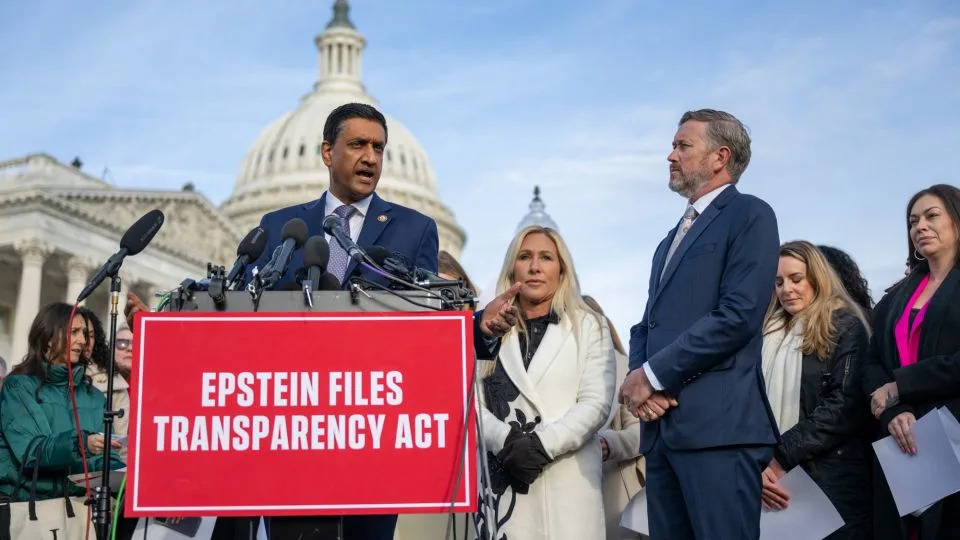
Rep. Ro Khanna (D-CA) speaks alongside Rep. Marjorie Taylor Greene (R-GA) (C) and Rep. Thomas Massie (R-KY) (R) during a news conference on the Epstein Files Transparency Act at the US Capitol in Washington, DC, on November 18, 2025. - Daniel Heuer/AFP/Getty Images
What To Expect Next
The DOJ has asked for patience, saying attorneys are working around the clock to review and redact the newly discovered documents. Officials say the process will take weeks because it requires careful, manual review to shield victims’ identities. Lawmakers and advocates are pressing for specific items, including a long‑sought 60‑count draft indictment from 2007 and an 82‑page memo regarding potential federal charges that were never filed.
Context
Jeffrey Epstein, a financier convicted in Florida on state prostitution charges, died by suicide in 2019. His case and the surrounding investigations have drawn sustained public and legal scrutiny, in part because of questions about earlier prosecutorial decisions and the treatment of victims.
Bottom Line: The DOJ’s public disclosure process is ongoing. The initial document dumps have revealed new items and sparked controversy, and the department’s Dec. 24 disclosure that more than one million documents remain to be reviewed means the “Epstein files” saga will continue into the new year.


