Khmer classical dance, a roughly 1,000-year-old tradition famed for delicate gestures and ornate costume, survived near-destruction under the Khmer Rouge but now confronts modern threats. Enrollment at Phnom Penh’s Secondary School of Fine Arts has fallen to 39 new eight-year-olds this year and teachers predict only about 15 will complete the nine-year programme. Survivors like 78-year-old master Penh Yom, along with younger dancers such as Yang Sopheaktra and Tola Thina, are combining rigorous training and social media to preserve the art.
Hard Steps: Cambodia’s 1,000-Year-Old Classical Dance Faces Modern Threats
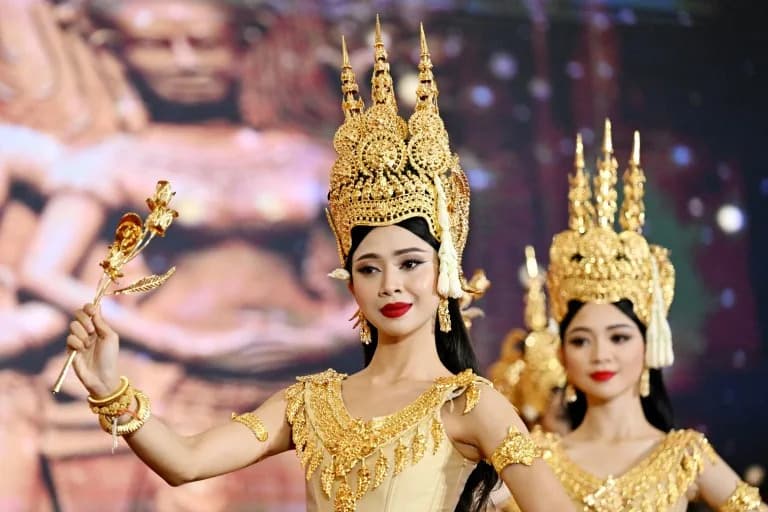
Khmer classical dance is renowned for its graceful hand gestures and stunning costumes (TANG CHHIN Sothy)(TANG CHHIN Sothy/AFP/AFP)
Penh Yom, a master of Khmer classical dance, moves among her teenage pupils in Phnom Penh, correcting the curve of a finger or the tilt of a head as she hands down a performing tradition that stretches back roughly 1,000 years.
Survival, Then New Pressures
Renowned for its delicate hand gestures, precise poses and lavish costumes, Khmer classical dance narrowly survived near annihilation during the Khmer Rouge era in the 1970s. Nearly all master dancers and musicians were killed or driven to death along with close to two million Cambodians during that period. Now the art faces fresh challenges: changing entertainment habits, limited funding and growing economic pressures on families.
Training And Institutions
The Secondary School of Fine Arts in Phnom Penh, the primary training centre for the next generation, employs more than 90 classical dance teachers and runs a demanding nine-year curriculum. Students study dance in the mornings and follow a standard academic programme in the afternoons; tuition is free. But the school has reduced student accommodation and teachers fear many pupils will drop out as educational and financial pressures increase.
This year the school registered just 39 new eight-year-olds—barely more than half the typical intake—and instructors predict only about 15 of them will complete the training and become professional dancers.
Discipline, Dedication And Digital Reach
Training is exacting: dancers spend years mastering gestures and poses that express emotions from fear and rage to love and joy. "We need patience," says 21-year-old graduate Yang Sopheaktra. "When we bend our fingers, we have to count up to 100." Many students find the pace and physical demands gruelling; some drop out early.
"Now I am worried that it will disappear. We keep urging them to train hard and to help us preserve this art," said Penh Yom, who began training at the Royal Palace at age eight and survived the Khmer Rouge by hiding her profession.
At the same time, younger dancers are embracing social media to broaden the art’s audience. Final-year student Tola Thina posts performances on Facebook and has grown an audience of more than 20,000 followers, demonstrating a potential path to fresh relevance and revenue.
Heritage And Global Recognition
Often called Cambodia's royal ballet, Khmer classical dance was historically performed for court ceremonies such as coronations and weddings, and was first shown to an international audience in France in 1906. In 2003 UNESCO inscribed it on the list of Intangible Cultural Heritage, praising the years of intensive training required and warning the tradition risks "becoming a mere tourist attraction" if its deeper cultural meaning is lost.
Teachers and survivors combine rigorous instruction, community outreach and modern platforms to try to secure a future for the tradition. But with fewer entrants, fewer places to live during training and persistent economic strain on families, Cambodia’s classical dance faces an uncertain next chapter.
Help us improve.