Cambodia says more than 518,000 people have been displaced after nearly two weeks of deadly border clashes with Thailand that have involved tanks, drones and artillery. Officials report at least 22 dead in Thailand and 19 in Cambodia. The conflict stems from a long-running territorial dispute over colonial-era borders and contested temple sites near the Preah Vihear temple. Southeast Asian foreign ministers will meet in Kuala Lumpur to try to de-escalate the crisis and push for humanitarian access.
More Than 518,000 Displaced as Deadly Cambodia–Thailand Border Clashes Intensify

People look at a damaged bridge after Thailand carried out air strikes in an area between Cambodia's Oddar Meanchey and Siem Reap provinces (STR)(STR/AFP/AFP)
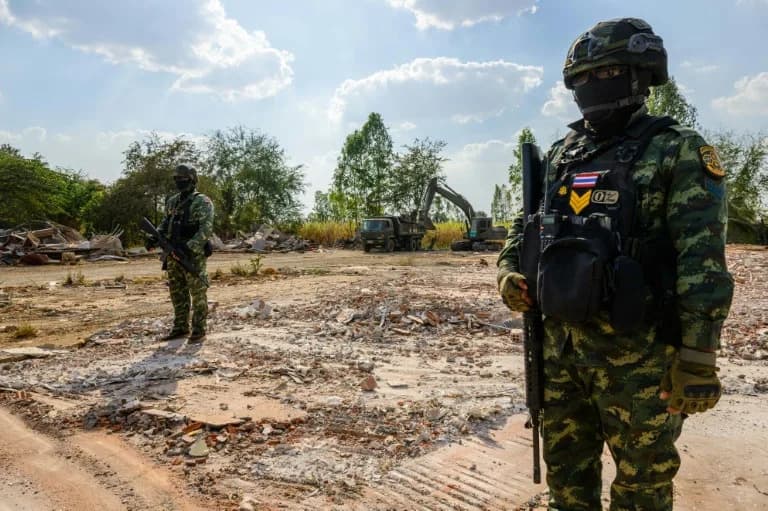
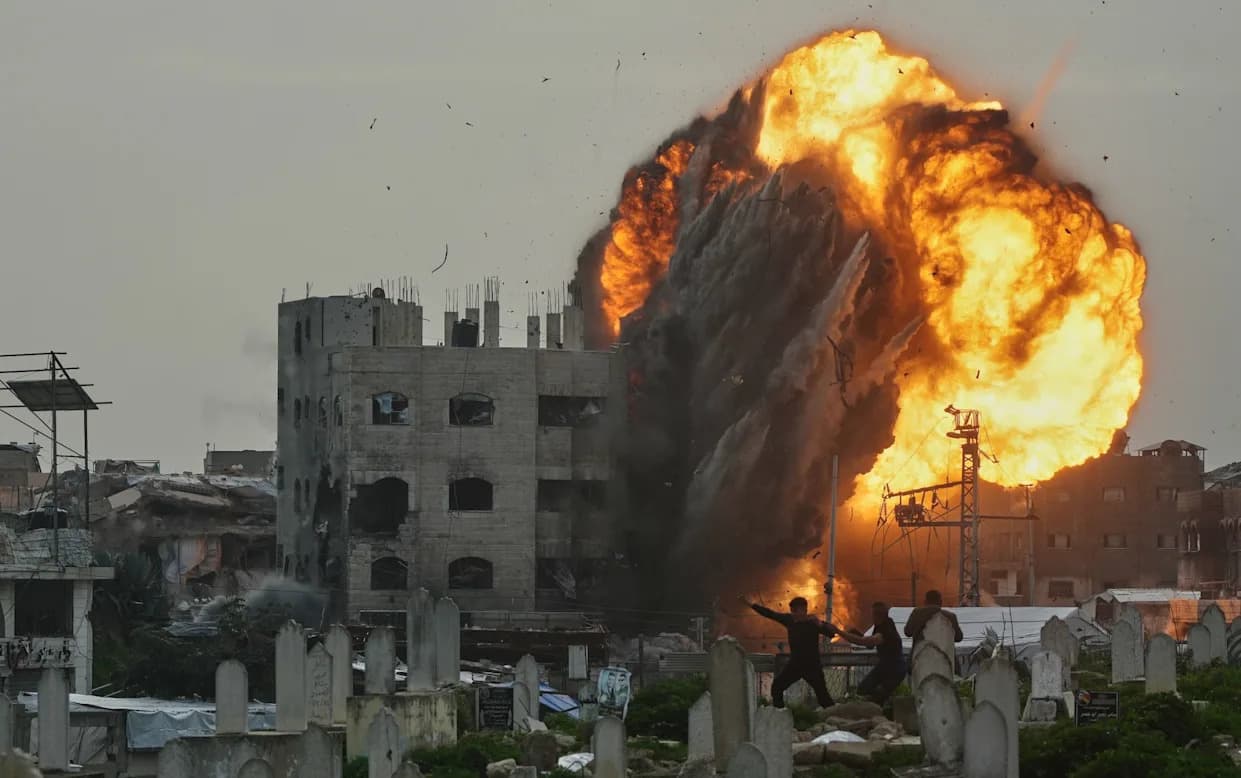
Cambodia said on Sunday that more than 518,000 people have been displaced after nearly two weeks of renewed, often deadly clashes along its border with Thailand. The fighting, which has involved tanks, drones and artillery, has killed dozens on both sides and driven large-scale civilian evacuations ahead of regional talks aimed at easing the crisis.
Casualties, Displacement and Humanitarian Impact
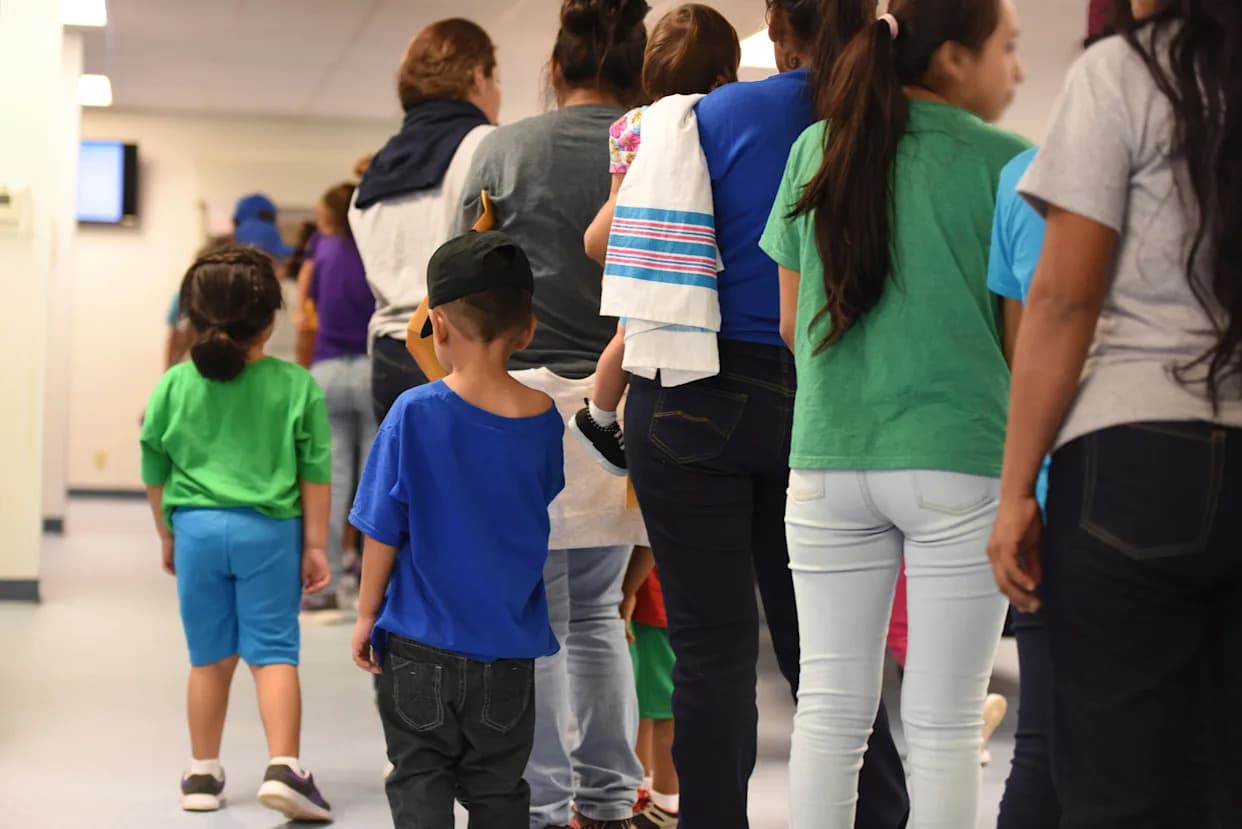
Officials reported at least 22 deaths in Thailand and 19 in Cambodia. Cambodia's interior ministry said more than 518,000 people are "suffering severe hardship due to forced displacement from their homes and schools" as civilians flee artillery strikes and air attacks. Thailand has said about 400,000 people were displaced on its side of the border, with more than 200,000 still remaining in shelters.
Diplomacy and an Upcoming ASEAN Meeting
Both Phnom Penh and Bangkok said Southeast Asian foreign ministers would meet in Kuala Lumpur on Monday in hopes of de-escalating tensions. Thailand described the meeting as "an important opportunity for both sides." Thai foreign ministry spokeswoman Maratee Nalita Andamo reiterated Bangkok's preconditions for talks, including a demand that Cambodia first announce a truce and cooperate with de-mining efforts along the frontier.
"Those conditions will guide our interaction in the discussions tomorrow in Kuala Lumpur," Maratee told reporters.
Cambodia's foreign ministry said the meeting aims to restore "peace, stability and good neighbourly relations," adding that Phnom Penh would "reaffirm its firm position of resolving differences and disputes through all peaceful means, dialogue and diplomacy."
Root Causes and Recent History
The clashes stem from a long-running territorial dispute rooted in colonial-era boundary demarcation along the roughly 800-kilometre (500-mile) frontier and contested ancient temple sites, including areas around the 900-year-old Preah Vihear temple. A patch of disputed land adjacent to the UNESCO-listed site was the scene of fighting in 2008 and intermittent violence thereafter. A 2013 international court ruling sided with Phnom Penh, but tensions reignited this year after a Cambodian soldier was killed in a clash in May.
Ceasefires, Accusations and International Involvement
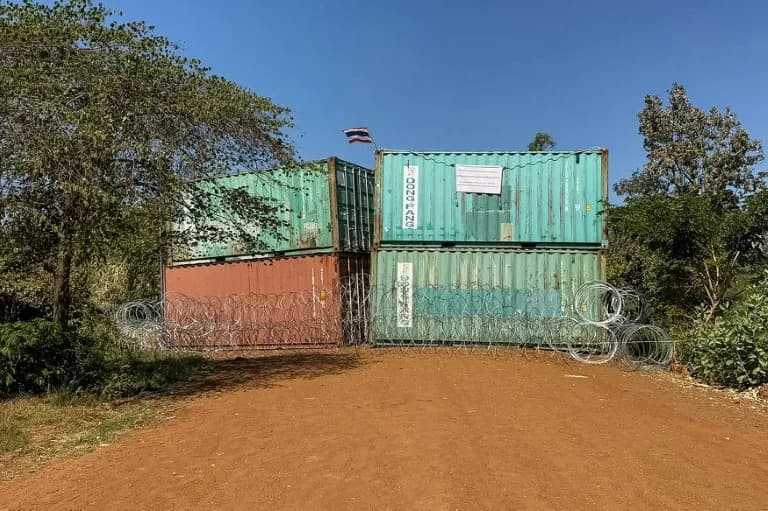
Both sides have accused the other of instigating violence and of strikes affecting civilians. Earlier ceasefires brokered by the United States, China and Malaysia have been short-lived. The article also references public statements by international figures and governments—some of which reported or proclaimed ceasefires later contested by Bangkok. Bangkok has accused Cambodia of laying new mines, an allegation Phnom Penh denies. Thai officials warned that villagers returning home may still face "dangerous mines or bombs left" in contested areas.
U.S. officials said they hoped the Kuala Lumpur meeting could produce a new ceasefire, but Thai authorities emphasized that any truce must reflect the Thai military's assessment of conditions on the ground. Meanwhile reports from Cambodia said Thai forces continued to strike near the Preah Vihear site.
What Comes Next
ASEAN foreign ministers will convene in Malaysia to seek a diplomatic pathway out of the crisis. Humanitarian groups and regional mediators are expected to press both sides for immediate measures to protect civilians, clear mines, and enable safe returns for displaced families if security permits.
Help us improve.