Cecilia Giménez, the Spanish amateur restorer whose 2012 attempt to repair Elías García Martínez’s "Ecce Homo" fresco in Borja spawned the viral "Potato Jesus" meme, has died at 94. The botched restoration drew international ridicule but ultimately transformed the tiny town into a tourist destination, attracting more than 150,000 visitors by 2014. Giménez later received 49% of the image's copyright and used her fame to sell artwork and support charitable causes connected to her family.
Cecilia Giménez, Creator of the Viral 'Potato Jesus' Restoration, Dies at 94
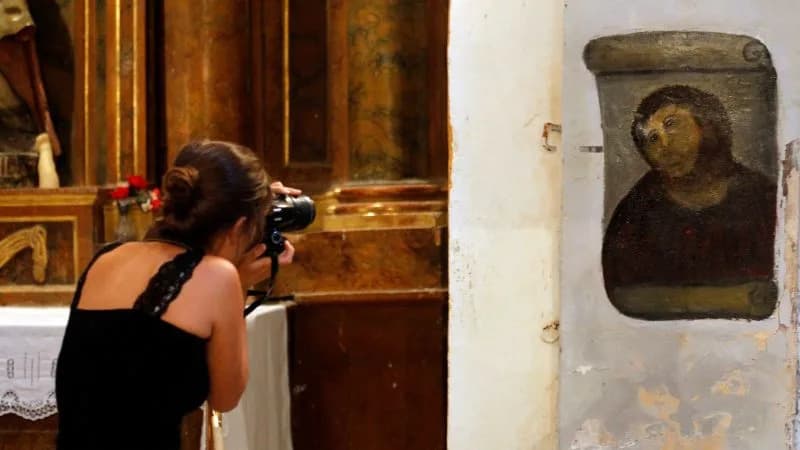
Spanish artist behind viral botched Jesus fresco dies at 94
Spanish artist Cecilia Giménez, whose 2012 amateur restoration of a 19th-century fresco became a global internet sensation, has died at the age of 94. Her attempt to retouch Elías García Martínez’s Ecclesiastical painting "Ecce Homo" in the small town of Borja transformed a little-known work into one of the decade’s most recognizable memes.
From Local Repair to Global Meme
The original fresco, painted in the 1930s on a wall inside the Santuario de Misericordia, had endured years of water damage. Giménez, an elderly amateur artist, sought to restore the image but produced a markedly different face for Christ. The altered result drew nicknames such as "Monkey Christ" and "Potato Jesus," and images spread quickly across TV and social media platforms including Twitter, Reddit and Tumblr.
The episode began amid uncertainty about whether Giménez had official permission to work on the church mural; the then-priest denied authorizing the restoration. Authorities briefly treated the incident as possible vandalism, but no criminal charges were filed.
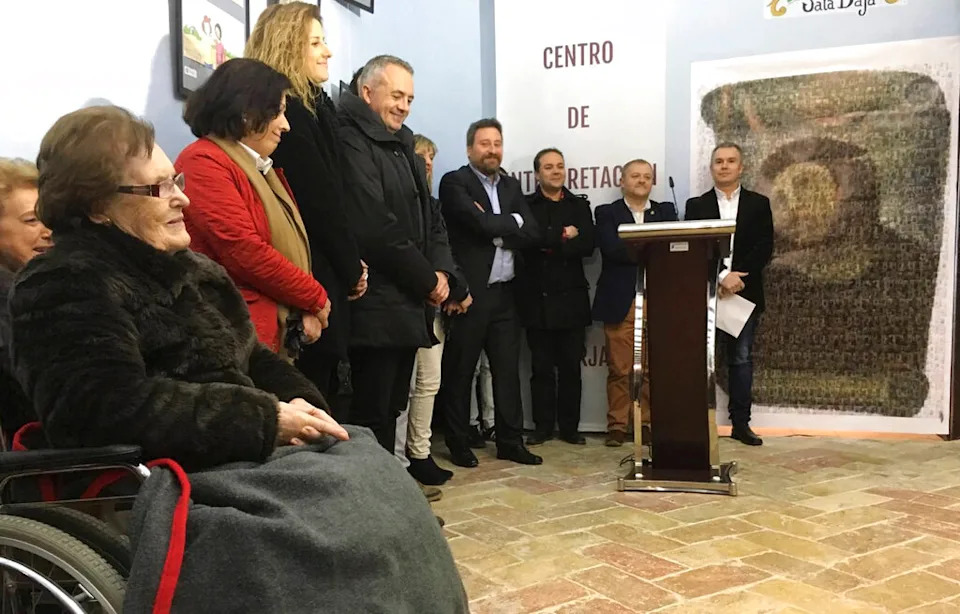
Cecilia Gimenez, left, attends the inauguration of a new center in Borja, Zaragoza, Spain, on March 16, 2016. The information center aims to documents the fresco’s success and to attract more visitors (AP Photo/Javier Vinuela)
Tourism, Legal Battle and Later Life
What started as derision eventually turned into economic opportunity for Borja. Reports say more than 150,000 visitors traveled to see the so-called "Ecce Homo (Monkey Version)" by 2014, boosting local shops, restaurants and wineries. The Santuario de Misericordia began charging a small admission fee (about $1.18) and reported collecting roughly $2,300 in just over four days during a surge in visitors. The image also inspired a range of merchandise.
Giménez sought royalties from the image, saying she intended proceeds to help muscular atrophy charities connected to her son. A court later awarded her 49% of the copyright in the image. She went on to sell her own artwork and participated in exhibitions and events tied to her unexpected notoriety.
Reputation and Legacy
Borja’s mayor, Eduardo Arilla, paid tribute after Giménez’s death, noting she had been widowed while raising two children with disabilities and praising the positive attention her restoration brought to the town. The Santuario de Misericordia described her as "a devoted mother and a fighter," and highlighted her generosity and the affection she gained worldwide.
"Cecilia was a devoted mother and a fighter, a strong woman, but above all we should talk about her generosity which has won her the whole world’s affection."
Cecilia Giménez’s story is a reminder of how a single act—intended or not—can reshape cultural conversation, tourism and the life of an artist. She will be remembered both for the controversial restoration and for the unexpected benefits it brought to her community.
Help us improve.