Russia’s Defense Ministry announced Tuesday that the nuclear-capable Oreshnik missile system has entered active service in Belarus, a development that arrives at a sensitive moment in U.S.-led efforts to negotiate an end to the nearly four-year war in Ukraine.
The ministry released video footage showing combat vehicles from the mobile intermediate-range ballistic missile system moving through forested terrain during training exercises. Belarusian President Alexander Lukashenko had said earlier this month that the Oreshnik had arrived and that as many as 10 systems could be based in Belarus.
President Vladimir Putin told military leaders earlier this month the Oreshnik would be put on combat duty before the end of the year and warned Moscow could press its advantage in peace talks if Kyiv and Western partners reject Kremlin demands. The deployment coincides with high-level U.S.-backed negotiations: U.S. President Donald Trump recently met Ukrainian President Volodymyr Zelenskyy and described progress toward a settlement, while cautioning the talks could still fail.
Capabilities, Tests and Concerns
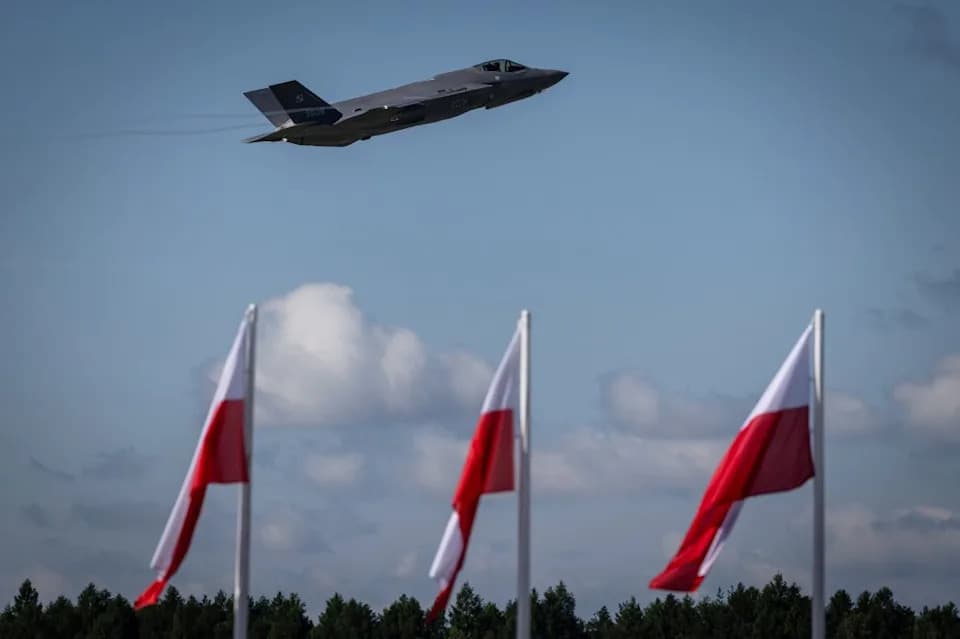
Belarus’ Defense Ministry said the Oreshnik has a range of up to 5,000 kilometers (3,100 miles). Russian state media highlighted very short flight times — roughly 11 minutes to an air base in Poland and about 17 minutes to NATO headquarters in Brussels — and noted there is no way to tell whether a missile carries a nuclear or conventional warhead before it strikes.
Russia first used a conventionally armed variant of the Oreshnik — whose name means "hazelnut tree" in Russian — in a November 2024 strike on a Ukrainian factory. Russian leaders have claimed the weapon can carry multiple warheads that descend at speeds up to Mach 10 and that several conventional warheads used together could inflict damage comparable to a nuclear strike.
Intermediate-range missiles have ranges between roughly 500 and 5,500 kilometers (310 to 3,400 miles). Such weapons were banned under a Cold War–era treaty that both Washington and Moscow abandoned in 2019.
Strategic and Political Implications
The deployment follows other Russian moves to extend its nuclear posture. In 2024 the Kremlin revised its nuclear doctrine to say a conventional attack on Russia aided by a nuclear power could be treated as a joint attack on Russia; the revision also explicitly extended Russia’s nuclear umbrella to include Belarus. Russian officials have previously positioned tactical nuclear weapons on Belarusian territory, and Lukashenko has said Belarus hosts several dozen Russian tactical nuclear arms.
When Putin and Lukashenko signed a security pact in December 2024, Putin said Russia would retain control of the Oreshnik systems but would allow Minsk to select targets, and he suggested missiles fired at targets closer to Belarus might carry heavier payloads. Belarusian opposition figures and Western officials say the deployment deepens Minsk’s political and military dependence on Moscow.
Why it matters: The Oreshnik deployment raises the risk of faster escalation in a conflict where the difference between conventional and nuclear strikes may be unclear until after impact, and it complicates ongoing peace diplomacy.
Follow ongoing coverage of the war in Ukraine and related developments in arms deployments as negotiations continue.