Summary: The US has intensified strikes on Venezuelan vessels while President Trump pardoned former Honduran president Juan Orlando Hernández, freeing him from a 45‑year US sentence for drug‑ and weapons‑related convictions. UNODC data show a record 3,708 tonnes of cocaine produced in 2023, and the DEA reports about 84% of US‑seized cocaine originates in Colombia. Historical episodes—from the 19th‑century opium trade to Cold War covert operations—have led to recurring allegations that US policy has at times intersected with narcotics networks; many of those cases remain contested and require transparent evidence.
US Strikes, A Presidential Pardon, and Nearly Two Centuries of Alleged Drug Ties

US Strikes, A Presidential Pardon, and Nearly Two Centuries of Alleged Drug Ties
Overview: As the United States steps up strikes on Venezuelan vessels and signals the possibility of a larger operation to disrupt alleged drug-trafficking networks, it has also granted a high-profile pardon: on November 28 President Donald Trump pardoned former Honduran president Juan Orlando Hernández, who was serving a 45‑year US sentence for drug- and weapons-related convictions. Together, these moves have renewed scrutiny of long-standing allegations that US policy and intelligence operations have at times intersected with narcotics networks abroad.
Recent Developments
Since September, US military strikes have targeted at least 21 Venezuelan boats in the Caribbean and the eastern Pacific, actions that US officials say were aimed at drug traffickers and that have reportedly resulted in more than 80 deaths. The administration has asserted these vessels were bound for the United States, but has not publicly released clear evidence to substantiate those specific claims.
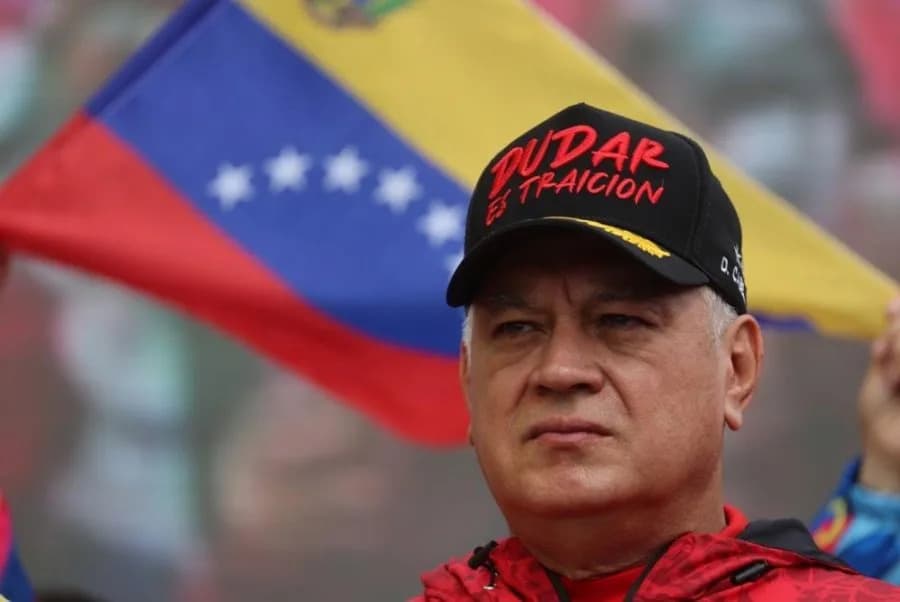
On November 28, President Trump pardoned Juan Orlando Hernández, a former leader of Honduras’s right‑wing National Party. Hernández was extradited to the United States in 2022 and, in 2024, was convicted of conspiring to import cocaine into the US and of possessing machineguns. He was released this week from a 45‑year sentence at the high‑security USP Hazelton in West Virginia. Trump defended the move on social media, saying Hernández had been 'treated very harshly and unfairly.' Critics contend the pardon and the focus on Venezuela may reflect broader political aims, including pressure on Nicolás Maduro — against whom the US has offered a $50 million reward for information leading to his arrest.
What Drug-Flow Data Show
Global drug production and trafficking remain concentrated in specific regions. The UN Office on Drugs and Crime (UNODC) reported a record 3,708 tonnes of global cocaine production in 2023 and identifies Colombia, Peru and Bolivia as the primary source countries. UNODC and US Drug Enforcement Administration (DEA) reporting trace most US‑bound cocaine shipments through Colombia, Peru and Ecuador; the DEA has reported that roughly 84% of cocaine seized in the United States originates in Colombia. These public data indicate Venezuela is generally a minor transit corridor for cocaine rather than a primary producer or source for the majority of US seizures.
Historical Context: Repeated Allegations Across Eras
Allegations that US agencies, proxies or allied local actors have tolerated, facilitated or profited from narcotics networks in pursuit of strategic objectives span nearly two centuries. Key episodes include:
19th Century: Opium Trade With China
In the 19th century, Western commercial and imperial interests — notably British, French and American merchants — pushed opium into China to redress trade imbalances for goods such as tea and silk. British military action in the First Opium War (1839–1842) and the Second Opium War (1856–1860) helped secure market access. The 1844 Treaty of Wanghia between the US and China opened several Chinese ports to Western trade and, in practice, expanded opportunities for Western merchants, including those dealing in opiates.
Cold War Southeast Asia: Laos, Air America, and the Hmong
During the Vietnam War era, the CIA conducted covert operations in Laos and supported indigenous militias such as the Hmong to counter communist forces. Historian Alfred W. McCoy and other researchers have argued that opium cultivation in Hmong areas financed some local fighters and that logistics networks — including the CIA‑associated airline Air America — facilitated movement of people and goods. The CIA has not formally admitted to running drug operations but congressional testimony and historical research have kept the topic under debate.
Soviet-Afghan War and the Golden Crescent
The 1979 Soviet invasion of Afghanistan and the resulting decade-long conflict coincided with a dramatic expansion of opium cultivation in provinces such as Helmand and Nangarhar. Scholars suggest some mujahideen groups financed their efforts through opium production and trafficking via Pakistan and Iran; by 1999 UNODC estimated Afghanistan supplied about 79% of the world’s illegal opium. Assertions that US support for anti-Soviet forces indirectly benefited narcotics networks remain contested.
Latin America: Contras, Iran‑Contra, Noriega and Haiti
Throughout the Cold War and beyond, US policy in Latin America involved alliances with local actors who later faced drug-related allegations. In the 1980s, the CIA backed Contra rebels in Nicaragua; the Iran‑Contra scandal revealed covert funding channels that bypassed congressional restrictions. Investigative reporting, notably Gary Webb’s Dark Alliance, alleged links between Contra affiliates and cocaine smuggling into US cities in the 1980s and 1990s—claims that sparked intense controversy and investigation.
Manuel Noriega, Panama’s leader in the 1980s and a long-time CIA asset, was later indicted by the US on drug‑trafficking and money‑laundering charges. In Haiti, officials with ties to US intelligence networks have been accused of facilitating transshipment of cocaine for Colombian cartels. These cases underscore how intelligence partnerships and realpolitik sometimes entwined with illicit economies.
Recent Military and Service-Member Incidents
There have also been accusations and cases involving individual US service members. Reporting and recent books have alleged drug trafficking and corruption among some Special Forces personnel; in 2023 multiple members of United States Forces Korea were arrested on drug‑smuggling charges in South Korea. In 2005 four US soldiers on an anti‑narcotics mission in Colombia were detained after 15 kg of cocaine was found on a military aircraft; public reporting on the final outcomes remains limited.
What This Means Now
The historical record shows repeated, complex intersections between US strategic objectives and narcotics economies across regions and eras. Some episodes are well-documented, others remain contested or unproven. Current actions — military strikes, high‑profile pardons and public allegations — revive longstanding debates about evidence, accountability and the geopolitical uses of force. Public data from UNODC and the DEA emphasize that most US‑seized cocaine originates in Colombia, which is an important factual context when assessing claims about Venezuelan responsibility for US-bound drug flows.
Bottom line: Allegations linking US policy and narcotics trafficking recur across history, but each episode has its own facts and degrees of evidence. Transparent investigation and clear public evidence are essential when military action and criminal pardons intersect with drug‑trafficking allegations.
Help us improve.