
The U.S. and Colombia continue close counter‑narcotics cooperation despite public tensions between Presidents Donald Trump and Gustavo Petro. Intelligence sharing and DEA agents embedded with Colombia’s DIRAN have helped produce historic results: 446 tons of cocaine seized this year and more than 3,000 production sites destroyed. U.S. assistance (about $210 million this fiscal year) remains in place, though officials warn that heated rhetoric could heighten safety risks for personnel in the field.
US‑Colombia Anti‑Drug Partnership Holds Firm Despite Public Feud Between Trump and Petro

US President Donald Trump and Colombian President Gustavo Petro - Getty Images/Reuters
Despite a recent public exchange of insults and threats between U.S. President Donald Trump and Colombian President Gustavo Petro, operational cooperation between U.S. and Colombian counter‑narcotics forces remains intact for now.
Operational Partnership Still Active
Officials from Colombia’s National Police anti‑narcotics directorate and the U.S. Drug Enforcement Administration (DEA) told CNN that intelligence sharing and embedded DEA agents working with Colombia’s DIRAN unit continue to drive joint operations. Colombian and U.S. officials credit that close collaboration with historic seizure totals and sustained pressure on cocaine producers and trafficking networks.
Record Seizures and Strikes Against Production
Colombian Brig. Gen. Ricardo Sánchez‑Silvestre told CNN, “This year we have seized 446 tons of cocaine hydrochloride. This means we are seizing more than one ton of cocaine every day,” calling the figures “historic.” He added that authorities have destroyed more than 3,000 facilities used to produce narcotics.
Sánchez‑Silvestre: “Coordinated work with our military forces and international cooperation, especially with the U.S., has been essential.”
Political Tensions, Practical Continuity
The presidents’ public spat — which included Trump’s accusations that Colombia is not stopping drug flows to the U.S., a social‑media post calling U.S. payments a “long term rip off,” and a phone call this week in which Trump struck a friendlier tone and even suggested a White House visit — contrasts with the on‑the‑ground reality. Current and former U.S. law enforcement officials say day‑to‑day operational coordination has continued despite the rhetoric.
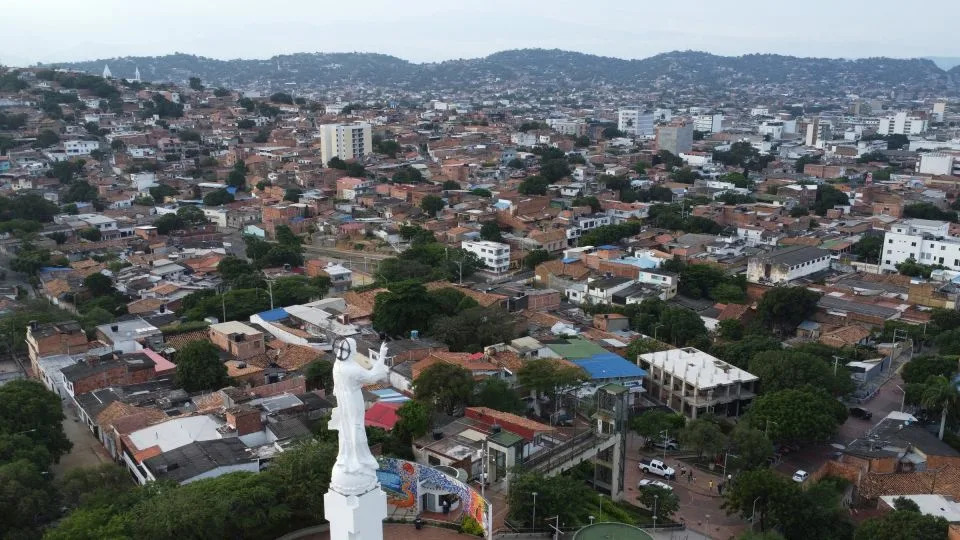
This aerial view shows the city of Cucuta near to the Venezuelan border in Colombia on January 4. - Schneyder Mendoza/AFP/Getty Images
Still, a person familiar with DEA operations warned that inflammatory comments and high‑profile actions in the region, such as the raid on Venezuela’s Nicolás Maduro, could increase safety risks for DEA personnel in Colombia and elsewhere.
Resources, Reach, And Regional Comparisons
In recent years the DEA’s presence in Colombia has expanded into the agency’s largest overseas operation, officials say. The U.S. provided roughly $210 million in assistance to Colombia this fiscal year, including about $31 million earmarked for agricultural support, according to U.S. State Department data. Sánchez‑Silvestre said that U.S. help with aviation, training, technology and intelligence exchange remains crucial.
U.S. officials contrast the relatively steady cooperation in Colombia with a more fraught relationship the DEA has sometimes had with Mexican authorities — for example, visa restrictions for DEA agents after a 2020 arrest — which officials say has complicated efforts to limit drug flows.
Why Cooperation Matters
Sánchez‑Silvestre warned of the consequences if bilateral cooperation faltered: criminal groups would strengthen financially and militarily, undermining security in both countries. “These are the highest figures in the last 30 years since we began this fight against drug trafficking,” he said, noting that the seizures prevented billions of doses from reaching consumer markets.
The DEA did not respond to a request for comment for this report.
Help us improve.


