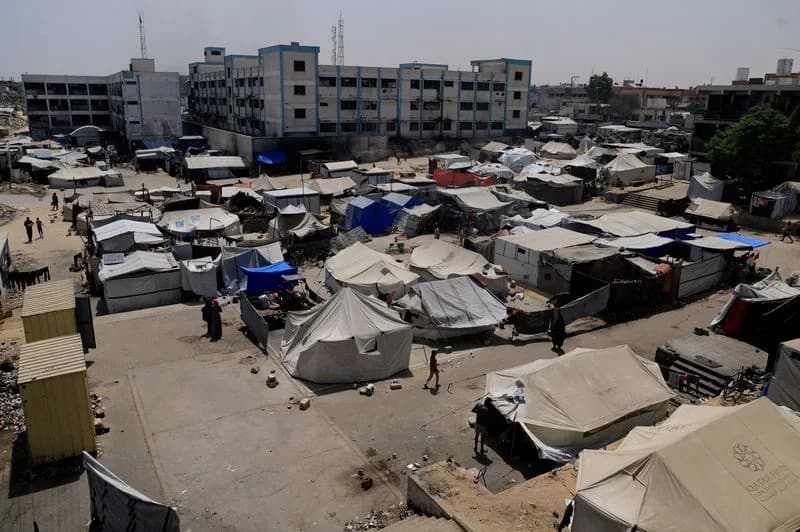
The Trump administration has spent the past year pressuring the International Criminal Court over Gaza-related investigations, imposing sanctions on judges, prosecutors and rights groups. At its annual assembly in The Hague, ICC member states reaffirmed support and pledged practical cooperation, even as legal challenges to warrants for Israeli leaders continue. Advocates warn U.S. measures have chilled war-crimes documentation and urge member states to pass protections to preserve the court’s independence and global accountability norms.
Trump’s Pressure on the ICC Appears to Be Unraveling as Member States Rally

For nearly a year, President Donald Trump has mounted an unprecedented campaign to undermine the International Criminal Court (ICC), targeting its Gaza-related probes with sanctions and threats. This week’s annual assembly in The Hague signaled that he is far from achieving his goal: ICC member states reaffirmed their support for the court and signaled they will continue to cooperate — including on investigations that target Israeli officials.
Member states push back
Delegates from the ICC’s 125 member countries met for their first annual assembly since U.S. measures began disrupting the lives of court staff and those who collaborate with it. Rather than yielding to Washington, governments used the meeting to publicly endorse the court’s independence and to outline practical steps to ensure it can keep operating.
“It’s been a constructive mood, with many states leaning in to work together and project support for the court,” said Liz Evenson, international justice director at Human Rights Watch.
Warrants, legal debate and cooperation
In late 2024 the ICC issued arrest warrants for Israeli Prime Minister Benjamin Netanyahu and former defense minister Yoav Gallant on allegations of war crimes and crimes against humanity related to the Gaza conflict; both men deny wrongdoing. Israeli authorities have challenged the warrants, citing alleged prosecutorial misconduct, but ICC judges and outside experts have upheld the factual basis cited by the prosecutor.
Germany provided a fresh sign of cooperation this week when it transferred a Libyan suspect to ICC custody after detaining him in July, underscoring member states’ willingness to assist the court’s enforcement efforts.
Sanctions and a chilling effect
The Trump administration has broadened an earlier approach of pressuring the court, using U.S. financial power and threats of further penalties to create what many observers describe as a chilling effect. Sanctions have targeted judges, prosecutors, Palestinian rights groups and a U.N. special rapporteur. Those designated have reportedly lost access to banking services, commercial platforms and travel, and some organizations and individuals have suspended cooperation out of fear of secondary consequences.
“We never accept any kind of pressure,” said Tomoko Akane, a judge from Japan and president of the ICC, during the assembly.
Calls for concrete protections
Supporters of the ICC pressed member states to take stronger legal measures to shield the court from extra-legal interference. Nicolas Guillou, a French ICC judge subject to U.S. sanctions, urged the European Union to adopt protections preventing European entities from complying with potential U.S. penalties. Other advocates called on states to pass laws requiring domestic cooperation with ICC arrest warrants and to treat non-cooperation consistently — whether it involves leaders in Israel, Russia or elsewhere.
“States can’t have double standards. If they want arrests, they need to treat all non-cooperation the same,” said Liz Evenson.
Broader implications and the humanitarian context
Defenders of international justice argue that an independent tribunal to prosecute atrocity crimes is essential for global stability. Critics of the U.S. approach warn that weakening the ICC would embolden perpetrators and erode long-standing norms governing armed conflict and civilian protection.
The legal debate over the Gaza warrants has unfolded against continuing humanitarian suffering. ICC judges concluded there were reasonable grounds to believe Israeli actions — including restrictions on food, water and medical supplies and attacks appearing to target civilians — could amount to serious international crimes. Israel imposed a near-total blockade for months this year and continues to restrict crossings and shipments, while humanitarian groups report desperately insufficient supplies and infrastructure damage that leaves civilians exposed going into winter.
What’s next
Some observers fear the U.S. might escalate by sanctioning the ICC as an institution, a step that would have sweeping global consequences. For now, the assembly in The Hague showed growing cohesion among member states and renewed calls for concrete measures to protect the court and the people who document atrocities. That emerging solidarity suggests the ICC may be more resilient than its critics predicted — even as legal and political battles continue.
Help us improve.