
After meeting President Trump, Benjamin Netanyahu returned to Israel to public praise even as US officials privately accused him of "slow-walking" a 20-point October ceasefire plan. Israel has withheld full aid access to Gaza and insists phase two — including a technocratic governing board and an international security force — cannot proceed until Hamas disarms and returns the final captive’s body. Four factors help explain Netanyahu’s stance: dependence on a hard-right coalition, a desire to preserve military freedom of action, opposition to measures that could enable a two-state outcome, and domestic political vulnerabilities that a renewed conflict could politically advantage him.
Why Netanyahu Might Prefer the Gaza Ceasefire to Remain Fragile — Four Key Reasons

US President Donald Trump, right, called Israeli Prime Minister Benjamin Netanyahu a ‘hero’ during his visit to Trump’s Florida estate on December 29, 2025, saying he had lived up to Trump’s ceasefire plan ‘100 percent’ [Jonathan Ernst/Reuters]
Israeli Prime Minister Benjamin Netanyahu returned from a visit to the United States after meeting President Donald Trump, who publicly praised him and said Israel had “lived up to the plan 100 percent.” Behind the public gestures, however, US officials have privately expressed frustration at what they describe as Netanyahu’s “slow-walking” of a 20-point ceasefire plan negotiated in October.
Under that agreement, Gaza would move to a second phase once all captives (alive and dead) were exchanged, aid deliveries allowed, and front lines frozen. Phase two envisions negotiations to create a technocratic “board of peace” to administer Gaza and the deployment of an international security force to help stabilize the enclave. Israel, however, has not permitted all required aid into Gaza and insists the second phase cannot begin until Hamas returns the body of the last remaining captive. Netanyahu has also demanded Hamas’ disarmament before Israel withdraws its forces — a demand Hamas rejects and Palestinians say must be decided internally.
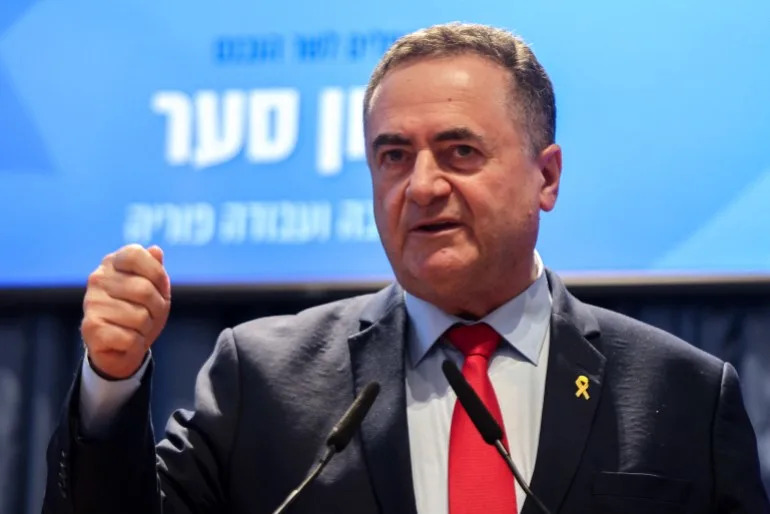
Israeli Defence Minister Israel Katz [Menahem Kahana/AFP]
Four Reasons Netanyahu May Prefer the Status Quo
1. Political Dependence on a Hard-Right Coalition
Netanyahu leads one of Israel’s most right-leaning coalitions in history. Hardline partners such as National Security Minister Itamar Ben-Gvir and Finance Minister Bezalel Smotrich oppose the ceasefire, object to releasing Palestinian prisoners and press for occupation rather than a phased drawdown. Defence Minister Israel Katz has also expressed resistance to fully implementing the October terms, at one point suggesting Israeli forces would remain in Gaza and pave the way for expanded settlement activity — comments he later walked back under apparent US pressure.
2. Desire To Preserve Military Freedom Of Action
Allowing an international stabilization force into Gaza would constrain Israel’s operational freedom: it could limit large-scale re-entry, targeted strikes and pursuit of Hamas remnants. Politically, such a deployment would internationalize a conflict Israel treats as primarily a national security issue and could be portrayed domestically as a concession to outside powers, undermining Netanyahu’s narrative of Israeli sovereignty and strategic autonomy.
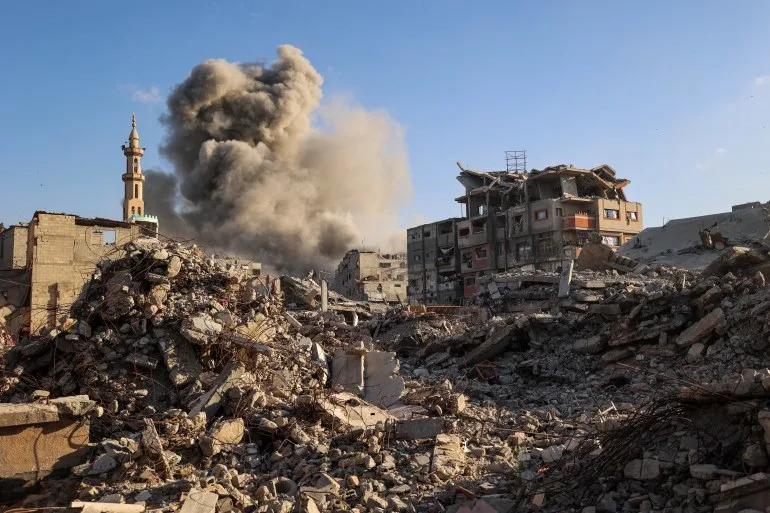
Smoke rises from an Israeli strike on Gaza’s Bureij refugee camp on October 19, 2025, in one of the near-daily attacks Israel has carried out since the ceasefire went into effect [Eyad Baba/AFP]
“If Netanyahu allows a foreign military force into Gaza, he immediately denies himself a large degree of his freedom to operate,” said Israeli political analyst Nimrod Flaschenberg. “Ideally, he needs things to remain exactly where they are but without alienating Trump.”
3. Opposition To Steps That Could Lead Toward A Two-State Outcome
While the ceasefire does not explicitly endorse a two-state solution, it calls for dialogue toward a “political horizon for peaceful and prosperous co-existence.” Netanyahu has opposed a two-state framework for years; in September he denounced recognition of a Palestinian state as “insane.” Senior ministers have moved to make a viable Palestinian state more difficult to achieve — for example, by approving new settlement plans that would sever occupied East Jerusalem from the West Bank. Finance Minister Smotrich said the project would “bury the idea of a Palestinian state.”
4. Domestic Political Vulnerabilities That Could Benefit From Renewed Conflict
Netanyahu faces significant domestic pressures: an ongoing corruption trial, heated debate over conscripting ultra-Orthodox students, and scrutiny over failures before and during the October 7 attacks. Each issue risks fracturing his coalition and weakening his electoral standing. A renewed conflict with Hamas, Hezbollah or external actors could allow him to reframe himself as a wartime leader, tamp down criticism and rally public support around a national emergency narrative.

Israeli Finance Minister Bezalel Smotrich holds a map near the settlement of Maale Adumim showing a land corridor known as E1, in which Israel plans to build thousands of settler homes and which Smotrich says would ‘bury the idea of a Palestinian state’ [Menahem Kahana/AFP]
What This Means
The interplay of coalition politics, security calculations, ideological goals and personal political survival helps explain why Netanyahu might resist moves that would cement a full transition to phase two of the ceasefire plan. For international mediators, the challenge is to balance pressure for implementation with incentives that address Israel’s security concerns while preserving the humanitarian and political gains intended by the October agreement.
Note: All facts presented here are based on the account of the October ceasefire plan and public statements by Israeli and US officials referenced in the original report.


