Unregulated mining across the Mekong basin is expanding rapidly, with satellite analysis identifying over 2,400 sites—including at least 77 rare-earth operations—discharging mercury, cyanide, arsenic and other heavy metals into rivers that support more than 70 million people. The pollution crosses borders, harms rural and Indigenous communities, and threatens fisheries, agriculture and drinking water. Researchers call for coordinated cross-border monitoring, supply-chain transparency and independent health testing to limit further damage.
Unregulated Mining Is Poisoning the Mekong: 2,400 Sites and 77 Rare-Earth Operations Threaten Rivers and Communities

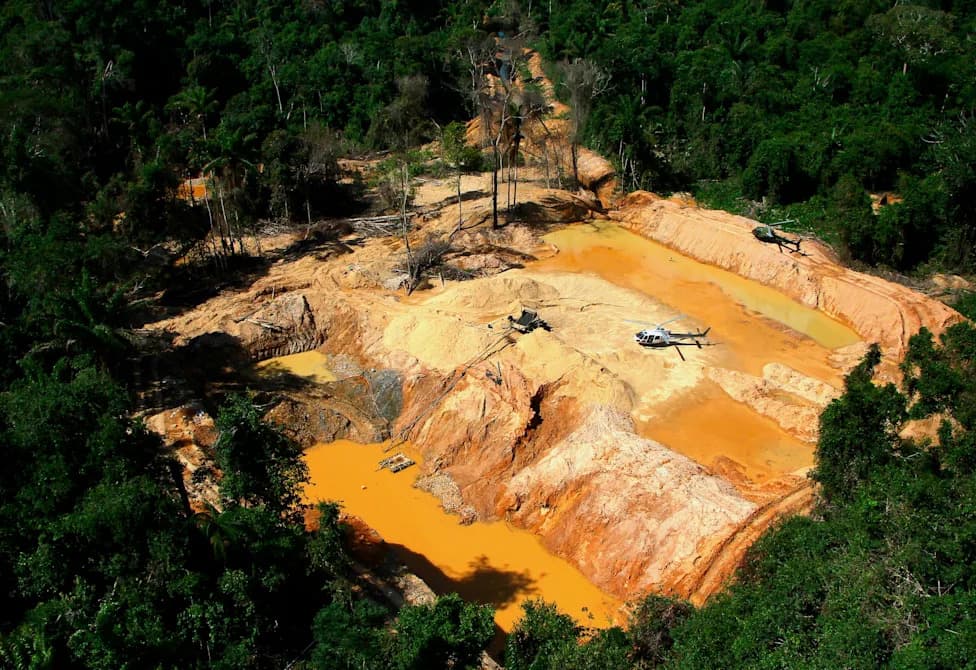
Unregulated mineral extraction across the Mekong basin is accelerating faster than governance and environmental protections can respond. From jade fields in Myanmar's northern highlands to informal gold pits along the banks of Laos and Cambodia, mining is expanding through some of Southeast Asia's most vulnerable ecosystems—often outside national regulation and public scrutiny.
Shadow economies and fractured governance
Since the 2021 political upheaval in Myanmar, mining for gold, tin, rare earths and jade has proliferated in areas controlled by armed groups, militias and companies linked to the military. Satellite imagery and field investigations show a steep rise in mining footprints across Kachin and Shan states, with new access roads and tailings ponds appearing near headwaters that feed the Mekong system.
"These mines are fragmenting ecosystems, contaminating sediments and disrupting some of the most biodiverse freshwater systems in Asia," said Brian Eyler, director of the Stimson Center's Southeast Asia Program. "If this trend continues unchecked, we risk irreversibly degrading fisheries and food systems relied on by tens of millions of people."
Growing pollution: heavy metals, sediment and health risks
Researchers report that mercury and cyanide used in informal gold processing have entered tributaries that flow into the Mekong. Sediment runoff from hillside mines has clouded waters critical to rice farming and inland fisheries. New analyses link toxic discharges—mercury, cyanide, arsenic and other heavy metals—to waterways that sustain more than 70 million people for food, drinking water and irrigation.
A Mekong River Commission adviser summarized the transboundary risk: "Contamination from mining doesn't disappear at borders. It travels, accumulates and eventually enters people—through fish, fields and drinking water."
Data and local monitoring
Satellite analysis identified more than 2,400 mining sites along rivers in mainland Southeast Asia, including at least 77 rare-earth operations—many unregulated and draining into the Mekong, Salween and Irrawaddy systems. Independent tests in northern Thailand found heavy metal concentrations in rivers and soils that exceeded national pollution thresholds in locations downstream from Myanmar mines.
Researchers note alarming examples: sampling along the Salween detected arsenic at levels up to five times Thailand's safety limit, prompting calls for urgent health monitoring among Indigenous and river-dependent communities. Local testing in Thaton and Sob Ruak placed water and sediment at high risk according to Thailand's Pollution Index.
Cross-border consequences and supply-chain contradictions
Many upstream operations are linked to international demand—raw materials are frequently transported to processing facilities across borders before entering global technology and clean-energy supply chains. This raises a stark contradiction: minerals that power electric vehicles and solar panels are contributing to river pollution that undermines food security and public health in the Mekong basin.
Communities on the frontline
Rural and Indigenous communities are among the hardest hit. Residents report cloudy water, declining fish stocks and lost livelihoods. "The river used to feed all of us," said Saeng Lee of the Romphothi Foundation in Chiang Rai. "Now the water is cloudy, the fish are fewer and people are afraid to use the river for drinking or farming. Mining has damaged the livelihoods of thousands."
What researchers recommend
Experts say a narrow window for effective action remains. Recommended steps include coordinated cross-border monitoring and data sharing, independent water and soil testing in affected communities, greater transparency in rare-earth and mineral supply chains, and regional environmental standards tied to trade and investment. Public-health surveillance and emergency response plans are also needed where contamination exceeds safety limits.
Progress will be difficult in areas where governance is fragmented or contested by armed groups, but researchers stress that isolated national responses are insufficient: only coordinated regional action and transparent supply-chain measures can begin to address the scale of environmental and human harm now visible in the Mekong basin.
Help us improve.