The article examines growing threats to community-managed forest concessions (CFCLs) in the Democratic Republic of Congo’s Haut-Katanga mining belt, where rising demand for cobalt is increasing land pressure. Despite securing formal titles, communities such as Lukutwe face armed blockades, overlapping mining permits and environmental incidents, including a toxic spill linked to Congo Dongfang Mining. Weak enforcement, political marginalisation and illegal logging undermine conservation efforts, leaving locally managed reserves vulnerable.
Protected Forests in DRC’s Cobalt Belt: Communities Fight Mining Pressure and Environmental Risk
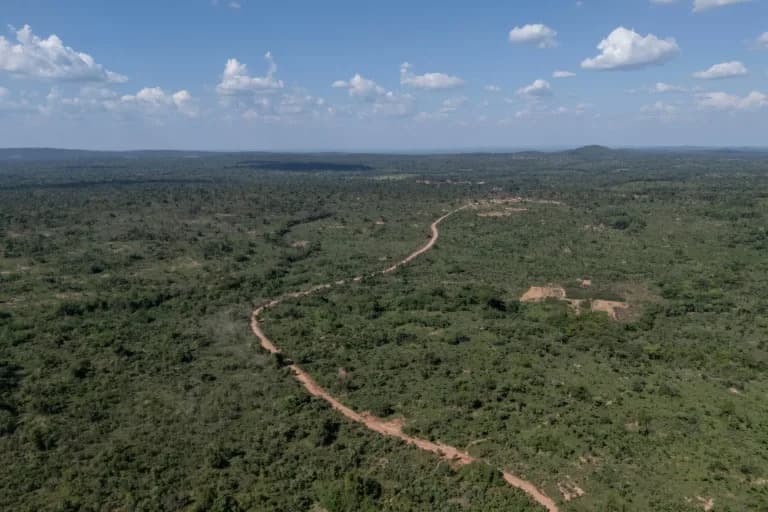
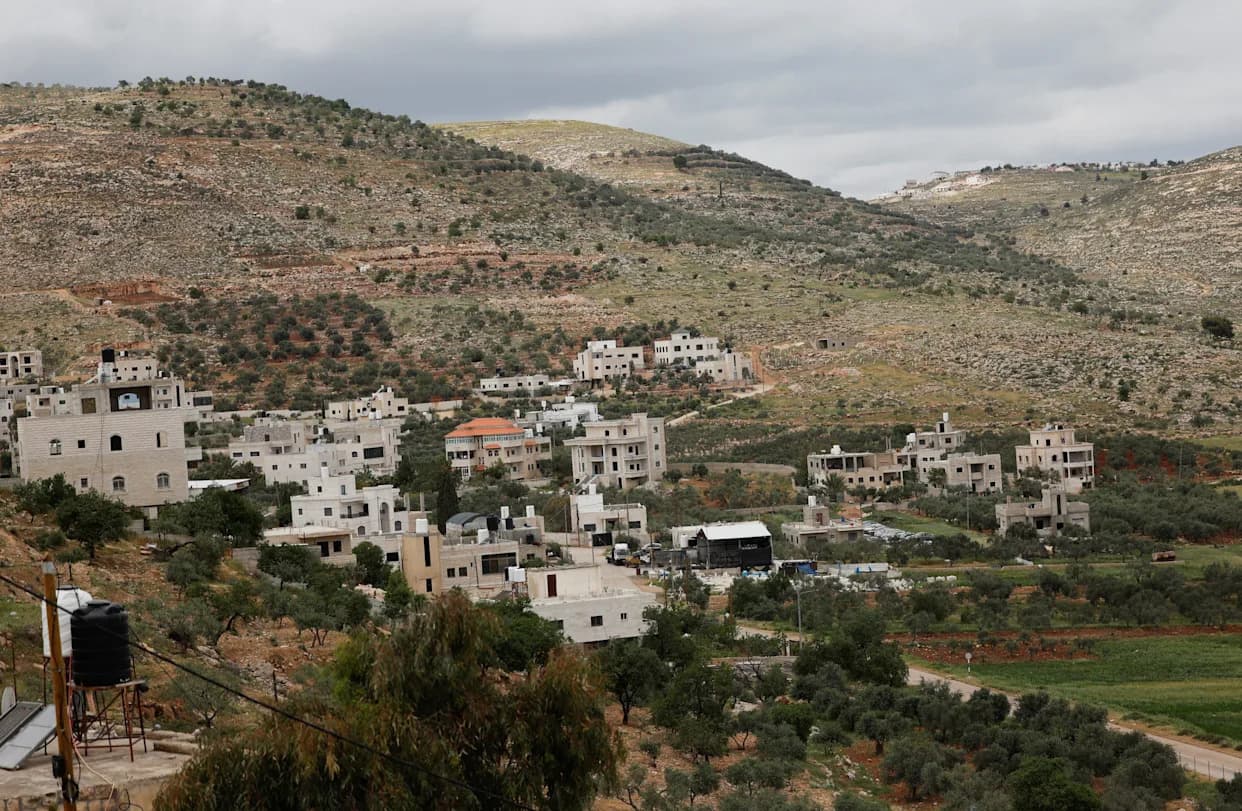
The forest area in Likasi, in the Democratic Republic of Congo, stretches across an area where mining companies are hunting for precious metals (Glody MURHABAZI)(Glody MURHABAZI/AFP/AFP)
Valery Kyembo was leading an inspection of his community’s titled forest reserve in Lukutwe, deep in the Democratic Republic of Congo’s (DRC) mineral-rich Haut-Katanga, when two armed soldiers blocked the path to a developing mine. A gate barred access and one soldier raised his rifle — a clear warning that Kyembo should turn back rather than enter the reserve.
Communities Secure Titles, But Face Growing Threats
As global demand for cobalt surges — the DRC supplies roughly 70% of the world’s cobalt — communities such as Lukutwe are racing to protect customary lands. Lukutwe’s leaders obtained an official community forest concession to formalise land rights after watching a decade earlier as the mining firm SEK, a unit of Australia’s Tiger Resources, displaced villages nearby.
What Community Forest Concessions (CFCLs) Are
Introduced in 2016, community-managed forest concessions (known by their French acronym CFCL) enable indigenous and local communities to manage forests, pursue sustainable projects, reforest, regulate charcoal production and set aside conservation zones. In Haut-Katanga there are currently 20 reserves covering about 239,000 hectares, with another 12 under consideration.
"They effectively constitute a safeguard against pressure over their land... relocations and expropriations by mining companies," said Heritier Khoji, an agronomy professor at the University of Lubumbashi who specialises in the region’s forests.
Environmental and Mining Pressures
The DRC’s southern provinces are dominated by Miombo woodlands — the world’s largest dry tropical forest ecosystem — but they are shrinking under agricultural expansion, logging and mining. Between 2001 and 2024, the Lualaba and Haut-Katanga provinces lost about 1.38 million hectares of tree cover, much of it along the copper-cobalt belt, according to Global Forest Watch.
Many CFCLs sit beside or overlap mining permits. For example, the Kambala forest initiative (still pending full approval) overlaps an exploration permit held by MMG Kinsevere SARL, a unit of Australia’s MMG Limited whose main shareholder is China Minmetals. Environmental incidents have also heightened fears: a spill from a facility run by Congo Dongfang Mining (CDM), a subsidiary of China’s Huayou Cobalt, flooded Lubumbashi suburbs in November and triggered a government suspension of the company's operations.
Gaps Between Law And Practice
In principle, companies that overlap or affect CFCLs should seek community consent and compensate communities. In practice, residents report miners sometimes obtain licences or build access roads despite concessions, and enforcement of laws and decrees is inconsistent. "Obtaining the concession is a safeguard against land pressures, but the difficult application of laws… is an obstacle," Khoji said.
Community brigades — volunteer patrols tasked with monitoring boundaries and access points — often struggle to stop incursions. Local leaders also point to illegal logging and charcoal production by groups from Lubumbashi that cut and sell wood in the regional capital, sometimes attacking residents who try to protect the concession.
Economic And Political Challenges
Forest concessions can take time to yield economic benefits, and scarce funds discourage some residents from prioritising conservation. Politics and limited influence mean poorer communities often cannot compete with well-connected companies seeking mineral access. A road recently cut through part of CFCL Katanga to reach a mine is a stark reminder that titled land can still be vulnerable.
Responses And Accountability
Community leaders say their CFCL documents are currently their main legal protection. The DRC’s environment and mines ministers, along with mining companies SEK and MMG, were contacted for comment but did not respond before publication. The situation illustrates a wider policy challenge: balancing responsible mineral development with environmental protection, customary rights and local livelihoods.
Conclusion: Community forest concessions in the DRC’s cobalt belt provide a vital legal tool for local stewardship, but overlapping licences, weak enforcement, environmental incidents and economic pressures leave these protected areas and the people who depend on them vulnerable.
Help us improve.