NASA is testing Axiom-built AxEMU lunar spacesuits underwater at the Neutral Buoyancy Lab in Houston to rehearse tasks such as rock collection and teamwork in simulated microgravity. The AxEMU is designed for greater mobility and broader fit than Apollo-era and ISS suits, and engineers are refining life-support systems and tool integration. Recent dual-suit trials assessed how multiple astronauts move and work together in full gear. Artemis II (planned for April 2026) will validate Orion systems before a targeted Artemis III landing near the moon’s south pole in 2027.
Underwater Trials Put Axiom’s AxEMU Moon Suits Through Their Paces Ahead of Artemis Moonwalks

NASA astronauts are conducting underwater rehearsals of next-generation lunar spacesuits as part of preparations for upcoming Artemis missions that will return humans to the moon and build experience for future Mars exploration.
Testing takes place at NASA’s Neutral Buoyancy Lab in Houston — a 6.2-million-gallon pool traditionally used to simulate microgravity. Astronauts wear weighted mock-ups of the new Axiom-built suits and run through realistic surface tasks including rock collection, negotiating uneven terrain and coordinating movements with a partner.
What the AxEMU brings
The suits, called the AxEMU (Axiom Extravehicular Mobility Unit), are designed to provide greater mobility and a wider fit range than Apollo-era suits and the current extravehicular gear used on the International Space Station. Engineers are studying how astronauts bend, twist, grip and maneuver in the suits while refining life-support systems, glove dexterity and integration of scientific tools for lunar surface operations.
Dual-suit trials and teamwork
NASA recently completed its first fully integrated dual-suit run using two AxEMU units simultaneously. Astronauts Loral O’Hara, who has flown to the ISS, and Stan Love, a veteran astronaut and former spacewalker, operated together so teams could assess how multiple crew members move and work in tandem — a critical capability for the surface missions planned under Artemis.
Where this fits in the Artemis timeline
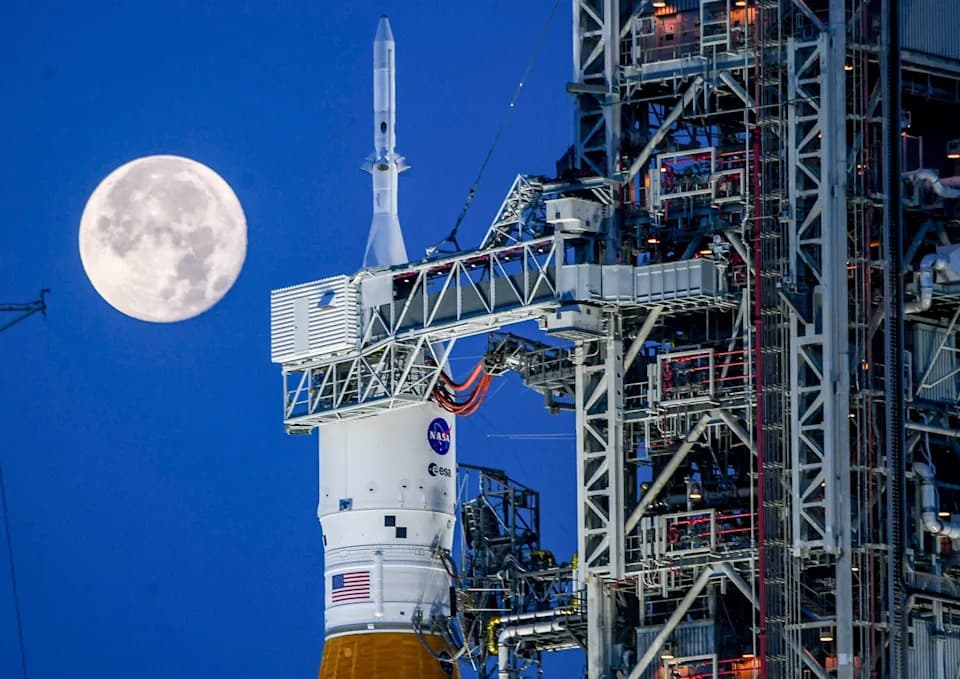
Artemis II, scheduled for launch in April 2026, is planned as a crewed lunar flyby. Its roughly 10-day mission will validate Orion’s life-support systems and other critical hardware before the program attempts a crewed lunar landing. NASA named the Artemis II crew in April 2023: Commander Reid Wiseman; Pilot Victor Glover, who would become the first person of color to fly on a lunar mission if the flight proceeds as planned; Mission Specialist Christina Koch, designated as the first woman assigned to a lunar mission; and Mission Specialist Jeremy Hansen of the Canadian Space Agency, the first Canadian chosen for a moon-bound crew.
If Artemis II goes as planned, NASA will move toward Artemis III, currently targeted for 2027, which aims to land astronauts near the moon’s south pole. Those surface teams are expected to rely on AxEMU suits and other systems now being tested — one piece of a broader effort to prepare hardware, procedures and crews for longer human missions farther into the solar system.
Note: Names and mission dates reflect agency announcements and are subject to change as testing and flight schedules evolve.
Help us improve.