The LIGO–Virgo–KAGRA network issued an alert for event S251112cm, a gravitational-wave candidate that may involve a sub-solar-mass object — far lighter than known stellar black holes or neutron stars. If confirmed, the signal could indicate a primordial black hole formed in the first seconds after the Big Bang and might relate to the dark-matter problem. However, the candidate could be a false alarm (estimated false-alarm rate about one per four years) and its sky localization is vast, making follow-up difficult. Scientists say multiple, independently confirmed events would be needed to claim a discovery.
Gravitational-Wave Alert S251112cm: Could This Be the First Hint of a Primordial Black Hole?

Scientists have flagged an unusual gravitational-wave signal that may point to the long-sought existence of primordial black holes — objects formed in the first seconds after the Big Bang rather than from dying stars. The candidate event, labeled S251112cm, was picked up by the international LIGO–Virgo–KAGRA network and stands out because one object involved appears to be far lighter than any known stellar remnant.
What was detected?
On Nov. 12 the network issued an automated alert for S251112cm. Analysis suggests the merger may have involved an object with a mass below that of the Sun — a "sub-solar" mass — which is far lighter than typical stellar black holes (about 5–100 solar masses) or neutron stars. Gravitational-wave astronomer Christopher Berry posted the alert online, noting it as a "potentially from a subsolar mass source." Durham University theoretical physicist Djuna Croon commented that "if this turns out to be real, then it's enormous. This is not an event we can explain by conventional astrophysical processes."
Why this is unusual
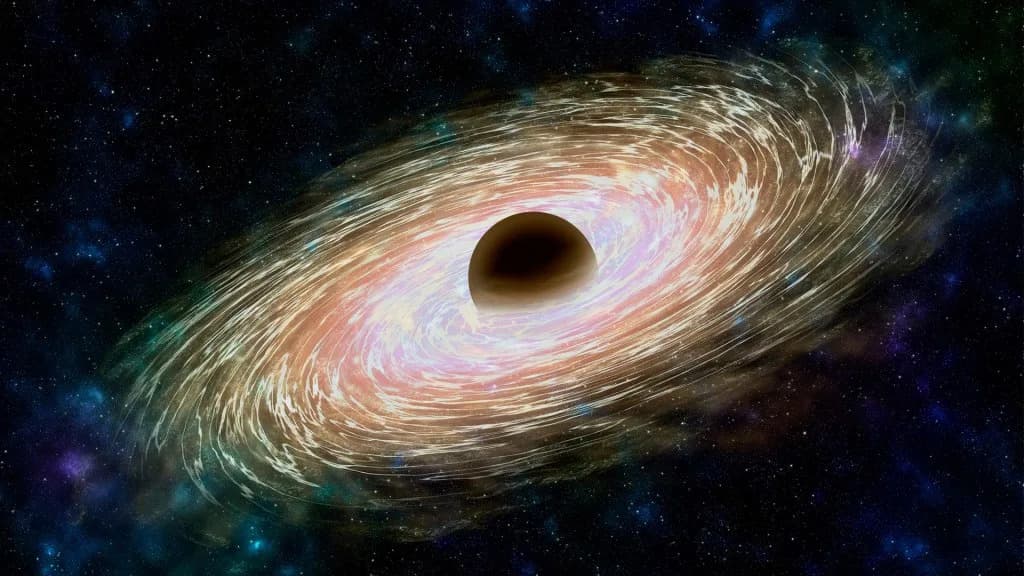
Known stellar black holes and neutron stars form from the collapse of massive stars and therefore have masses generally above the Sun. A confirmed sub-solar-mass compact object would be difficult to explain with conventional stellar evolution and would point toward a primordial origin — black holes created by extreme density fluctuations in the hot, early universe.
Primordial black holes and dark matter
Primordial black holes (PBHs) are a hypothetical class that could span a tremendous mass range — from far lighter than everyday objects to many times the mass of the Sun. Because PBHs would not require stars to form, they are sometimes called "non-astrophysical" black holes. If they exist in sufficient numbers today, PBHs could influence cosmic structure and have even been proposed as a possible component of dark matter, the unseen substance inferred only through gravity.
Complications and caution
There are several important caveats. First, the instrument teams caution this candidate could be a false alarm caused by detector noise: current estimates put the false-alarm rate for events of this type at roughly one every four years. Second, the gravitational-wave localization is large — about 6,000 times the apparent width of the Moon — making any search for an electromagnetic counterpart extremely challenging. Finally, even if the signal is genuine, a single unusual event is unlikely to provide conclusive proof of primordial black holes; a population of similar, independently confirmed detections would be needed.
"If this turns out to be real, then it's enormous. This is not an event we can explain by conventional astrophysical processes." — Djuna Croon, theoretical physicist
What comes next?
Researchers will continue examining the gravitational-wave data for telltale features in the inspiral "hum" that can reveal the masses and properties of the merging objects. Observing more such candidates, improving detector sensitivity, and complementary electromagnetic or neutrino searches (if a counterpart is found) would all help confirm whether S251112cm points to primordial black holes or to a statistical or instrumental fluke.
Bottom line: S251112cm is an intriguing, potentially groundbreaking candidate that deserves close scrutiny, but it remains provisional. Only more detections and careful analysis can determine whether we are seeing the first hints of primordial black holes or simply a rare false alarm.
Help us improve.