Mexico has intensified efforts to block illegal firearms trafficked from the United States, seizing over 17,000 guns in the past year and tracing roughly 70% to U.S. sources. A 2021 lawsuit against eight U.S. manufacturers raised industry accountability but was limited by a Supreme Court ruling under the Protection of Lawful Commerce in Arms Act. A separate civil case against five Arizona dealers continues in discovery, while the U.N. and Inter-American Court are examining industry responsibility. Diplomacy, legislation and litigation are being pursued together to disrupt the crime-gun pipeline that fuels violence on both sides of the border.
Mexico’s Push to Stop Illegal U.S.-Sourced Guns and Curb Global Violence

As the United States records hundreds of mass shootings this year, it can be easy to forget that rising gun violence is a global problem. Citizens on both sides of the U.S.-Mexico border endure the same scourge, and Mexican authorities say much of it traces back to firearms that are illegally trafficked from the United States.
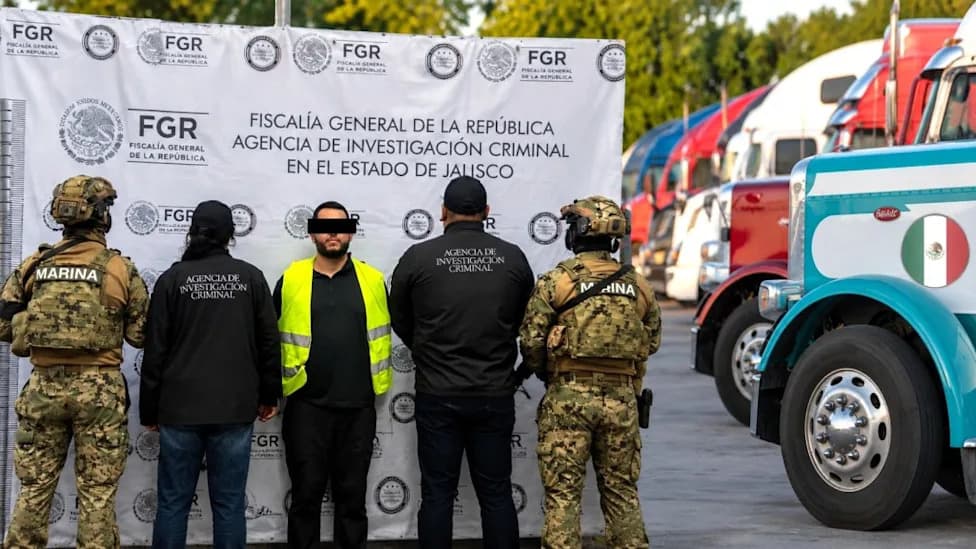
Under President Claudia Sheinbaum’s administration, Mexican authorities say they have stepped up enforcement, seizing more than 17,000 illegal firearms in the past year—roughly double the rate under the previous government. Mexico’s Security Ministry reports that about 70% of those weapons were traced to the United States.
Most illicit firearms that reach Mexico originate in American gun stores supplied by U.S. manufacturers. In late September, U.S. and Mexican officials announced a first-of-its-kind cooperative initiative to address cross-border trafficking and strengthen joint enforcement efforts.
In 2021 Mexico filed a landmark lawsuit against eight U.S. gun manufacturers—including Smith & Wesson—accusing them of enabling trafficking through lax distribution practices and by selling through dealers known to supply traffickers. The action drew international attention and brought the role of the gun industry into sharper focus.
The evidence presented in Mexico’s complaint included warnings from law enforcement and, reportedly, from industry insiders urging manufacturers to stop doing business with dealers linked to trafficking. Independent estimates cited in public reporting suggest that between 250,000 and 500,000 firearms are still illegally trafficked each year from the United States into Mexico.
The U.S. Supreme Court ultimately held that the suit was barred by the Protection of Lawful Commerce in Arms Act (PLCAA), which limits civil liability for gun manufacturers. Importantly, the Court’s decision was narrow: it rejected arguments for blanket immunity and left open possible liability in other circumstances, albeit with a higher burden of proof.
Mexico has since filed a second suit against five Arizona gun dealers accused of contributing to the crime-gun pipeline; that case was not halted by the Supreme Court’s ruling and is currently in discovery. Legal actions like these could open new pathways to reduce trafficking where other measures have fallen short.
Beyond litigation, Mexico’s efforts have prompted wider regional and international engagement. In 2023 the U.N. High Commissioner for Human Rights published a report examining the gun industry’s contribution to violence, and Mexico has requested an advisory opinion from the Inter-American Court of Human Rights on industry accountability.
In the United States, the Bipartisan Safer Communities Act of 2022 explicitly outlawed cross-border gun trafficking. Lawmakers from both major parties and successive administrations have acknowledged the need to address illegal arms flows—an issue that gained broader public attention through coverage of Mexico’s legal actions.
What’s next: Stopping the crime-gun pipeline will require sustained, multi-pronged efforts: stronger bilateral cooperation, targeted enforcement of trafficking laws, industry reforms to curb risky distribution practices, and continued litigation where appropriate. Progress on all these fronts would reduce violence and benefit communities in both countries.
Authors: Jonathan Lowy, president of Global Action on Gun Violence; and Pablo Arrocha Olabuenaga, legal adviser to Mexico’s Ministry of Foreign Affairs.
Help us improve.