Short summary: Current evidence points to a slow fading of the universe rather than an abrupt end. Star formation will eventually cease, galaxies will merge into larger elliptical systems, and dark energy-driven expansion will isolate local structures. Over trillions to hundreds of trillions of years, stars will fade and the cosmos will grow darker, though new discoveries could change this view.
How Might the Universe End? A Clear Look at the Cosmic Future

Whether the universe will literally "end" is unknown, but current evidence suggests it will remain our cosmic home for an unimaginably long time. The universe — all space, time, matter and energy — began about 13.8 billion years ago in the Big Bang and has been changing ever since. Observations of galaxies, stars and cosmic expansion allow astronomers to forecast several plausible long-term scenarios.
How scientists predict the future
We predict cosmic futures by extrapolating observed trends: watching how galaxies form stars, how they interact, and how the expansion of space evolves. Extrapolation is useful but uncertain — new physics or surprises could change the picture. Interpolation (filling gaps between known data points) is far safer, but long-range forecasts naturally carry increasing uncertainty.
Stars: light for billions to trillions of years
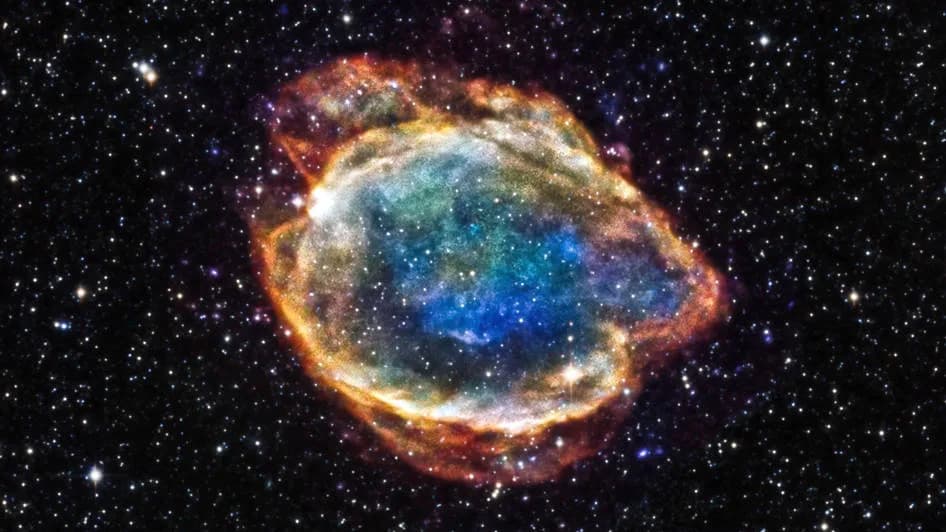
Good news for Earth: the Sun, a medium-sized yellow star, will continue shining for roughly another 5 billion years — it is about halfway through its ~10-billion-year main-sequence lifetime. A star's life depends on its mass: massive, hot blue stars burn out quickly, while small, cool red dwarfs can live for trillions of years. The current epoch, when bright stars are common, is known as the stelliferous era and will last up to roughly 1014 years in total before star formation effectively ceases.
Galaxies: mergers, morphology, and the Local Group
Galaxies grow by accreting smaller systems and by merging. In clusters, hundreds of galaxies fall together and collide, transforming delicate spiral galaxies into large, disordered elliptical systems. Our Milky Way and the Andromeda galaxy are expected to interact and likely merge in a few billion years; although individual stars rarely collide, the combined galaxy will look dramatically different.
Cosmic expansion and dark energy
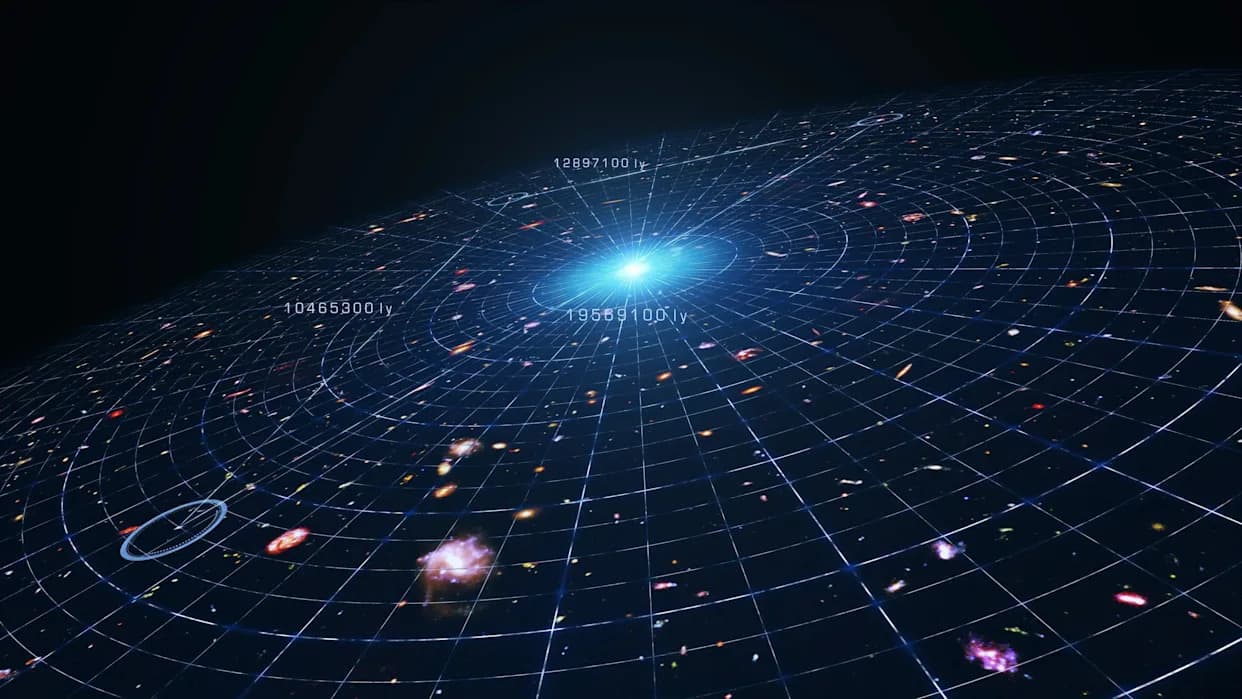
The universe's expansion began with the Big Bang and is shaped by the tug-of-war between gravity and dark energy. Observations indicate expansion is currently accelerating due to a mysterious component called dark energy. If this acceleration continues, distant galaxies will recede faster and faster, eventually slipping beyond our observable horizon. The Local Group — the gravitationally bound collection that includes the Milky Way — will remain together even as the rest of the cosmos fades from view.
A slow fade into the far future
Putting these pieces together yields the most widely accepted scenario today: over the next tens to hundreds of trillions of years, star formation will shut down and galaxies will be dominated by old, red, faint stars that slowly cool. Groups and clusters will relax into a few massive elliptical systems. In the very long run — across subsequent eras measured in quadrillions to vastly larger timescales — stellar remnants, brown dwarfs and black holes will dominate; eventually black holes themselves will evaporate via Hawking radiation over stupendously long timescales, leaving a cold, dilute cosmos.
Uncertainties and perspective
New observations or breakthroughs in fundamental physics could change this story: dark energy might evolve, or unknown processes could intervene. Even without dramatic surprises, the universe's transformation is gradual and unimaginably slow. That perspective can feel wistful, but it also highlights that we live in a rich, active epoch full of bright stars and many discoveries to be made. Humanity and its curiosity have billions — and perhaps trillions — of years to explore and learn.
Help us improve.