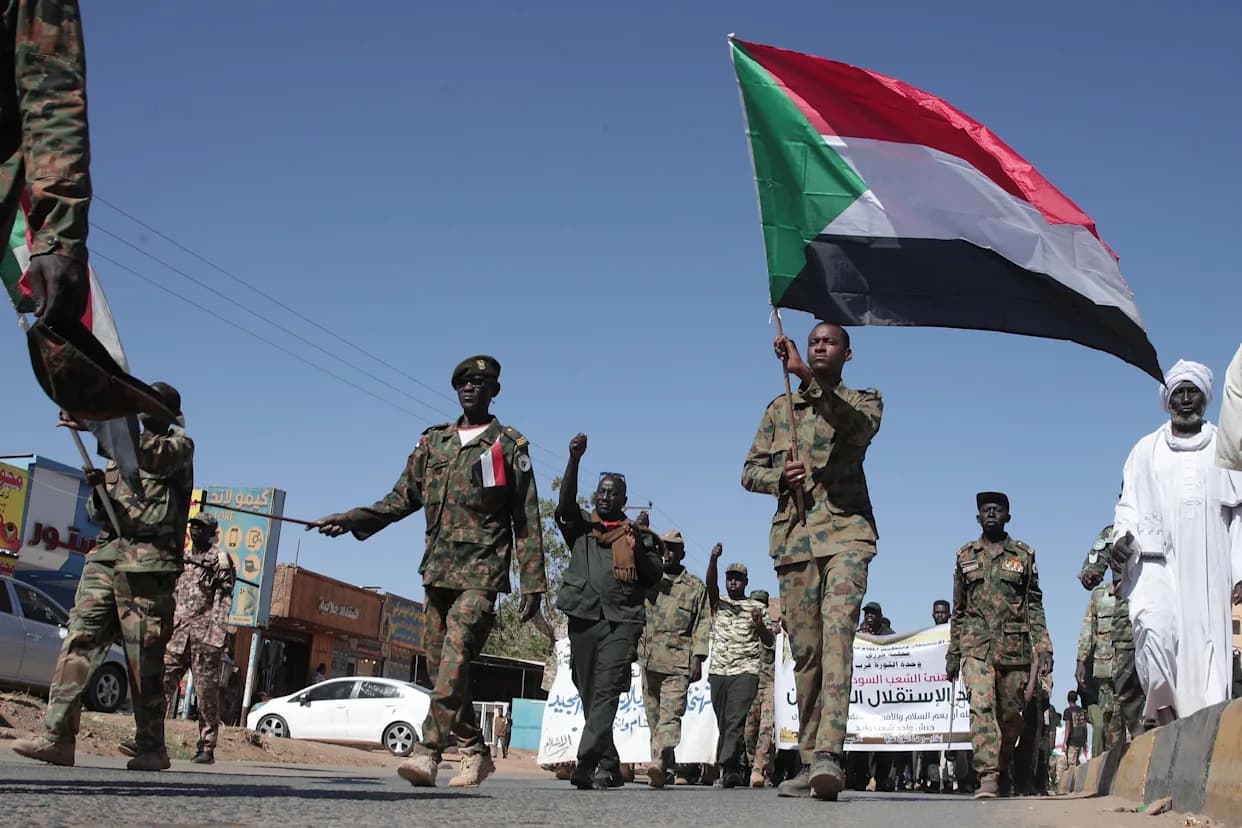
President Trump’s pledge to push for a ceasefire in Sudan has refocused international attention on a conflict that has killed over 150,000 people and displaced around 14 million. Experts are skeptical a durable truce is likely, citing Gulf rivalries, alleged external military support for combatants, and limited U.S. leverage or staffing. The fall of El Fasher and reports of mass atrocities underscore the urgency; analysts say meaningful pressure, such as an arms embargo and targeted sanctions, plus a well-resourced diplomatic mission, would be needed for any lasting progress.
Trump’s Sudan Ceasefire Push Draws Skepticism as Gulf Rivalries and Weak U.S. Leverage Persist
President Trump’s recent pledge to press for a ceasefire in Sudan has brought renewed attention to a conflict that aid groups call the world’s worst humanitarian emergency. Officials and analysts welcome the spotlight but express deep skepticism that a durable truce will materialize given competing Gulf interests, alleged external military support for combatants, and limited U.S. diplomatic leverage.
A devastating two-year war
Sudan descended into open warfare in April 2023 when fighting erupted between the Sudanese Armed Forces (SAF), led by General Abdel Fattah al-Burhan, and the paramilitary Rapid Support Forces (RSF), commanded by General Mohamed Hamdan Dagalo (commonly known as "Hemedti"). Two years on, the conflict has inflicted catastrophic human costs: independent estimates put deaths above 150,000, roughly 14 million people have been displaced, and about half of the country’s roughly 50 million people face acute food insecurity. Famine conditions were declared in some areas beginning in 2024, and U.S. officials have concluded that RSF forces have committed acts that meet the threshold of genocide.
Gulf rivalries and outside influence
Observers say the fighting has been amplified by outside patrons. Saudi Arabia, the United Arab Emirates (UAE) and Egypt all see Sudan as strategically valuable for Red Sea access and regional influence. Analysts argue those relationships have encouraged escalation rather than restraint.
“A lot of the conversations that are happening right now between Washington and Riyadh and Washington and Abu Dhabi aren’t actually about Sudan, but are about these middle powers that have risen in terms of their ability to project force, to project influence, to project power, and their competition with each other,”
— Kholood Adair, director of Confluence Advisory
U.N. panels and some lawmakers have reported credible allegations that the RSF received external military support; the UAE denies supplying weapons. Analysts say those dynamics complicate any effort to broker a credible ceasefire.
Questions about U.S. strategy and leverage
President Trump announced on Nov. 19, following a meeting with Saudi Crown Prince Mohammed bin Salman, that he would use his influence to seek a ceasefire between the SAF and RSF. But many experts say the administration has yet to demonstrate the political will or tools to force a halt to the fighting.
Senator Marco Rubio and other U.S. officials have called for cutting off weapons to the RSF, though public statements have not explicitly singled out every suspected external backer. Former National Security Council Africa Director Cameron Hudson called recent diplomatic language vague and lacking enforceable mechanisms.
“There are no consequences… We’ve called on you to stop, but if you don’t stop, there’s no consequence to not stopping,”
— Cameron Hudson
Hudson and other specialists say a meaningful U.S. strategy would include stronger measures such as a targeted arms embargo, sanctions on key backers, and a clearly resourced diplomatic push — including appointment of a high-level special envoy and creation of a dedicated team. Critics note the administration has not yet named the federally required special envoy for Sudan and say staffing cuts at U.S. foreign policy and development agencies have eroded institutional capacity to manage a complex peace effort.
El Fasher and the human toll
The capture of El Fasher by RSF forces last month alarmed the international community. Satellite images and survivor testimonies documented mass killings and sexual violence in and around the city. Analysts say RSF redeployments eastward suggest a strategic push to seize Khartoum and the Red Sea coast, and that momentum on the battlefield reduces incentives for either side to negotiate.
“They don’t see a reason to stop, because they have the momentum now,” said Kholood Adair, describing the RSF’s current posture.
Potential levers and a long road ahead
Some observers note that recent U.S. actions — such as designating the Muslim Brotherhood as a terrorist organization — could be used to pressure certain networks that support the SAF. Others call for renewed enforcement of the 2005 arms embargo on Darfur and targeted sanctions against the RSF leadership.
Yet nearly all analysts warn that any political settlement will be difficult and that rebuilding Sudan — its institutions, communities and the trust between citizens — will require sustained international commitment over years.
Sources: Interviews and reporting with regional experts, former U.S. officials, and analysts (quotes credited to Areig Elhag, Kholood Adair, and Cameron Hudson).
Help us improve.