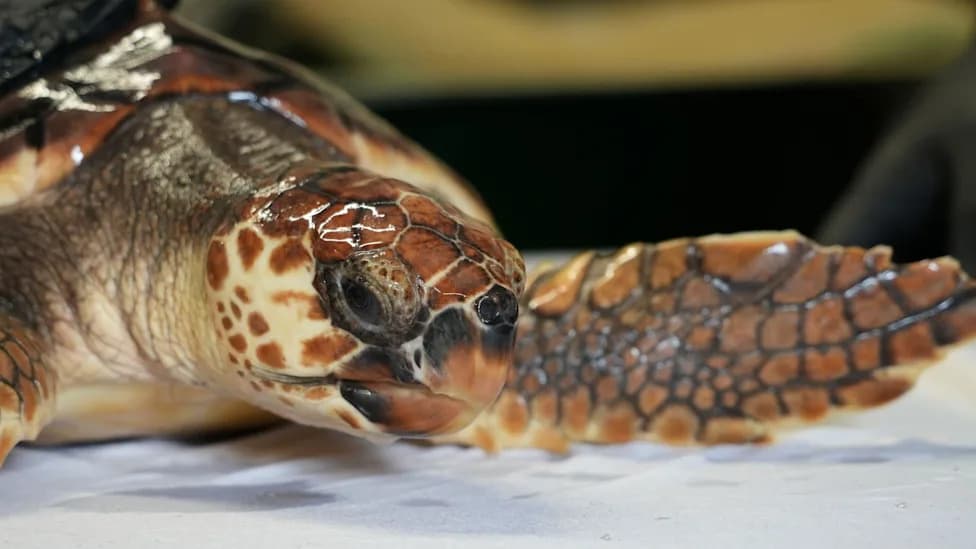
Molly, a 170‑pound loggerhead estimated to be 25–30 years old, was released in the Florida Keys after a team removed a 10.1‑pound tumor in a three‑hour operation. Rescuers initially found her entangled in commercial fishing lines and tethered to a crab trap. The Turtle Hospital stabilized her with fluids, antibiotics and a pressure wrap before surgery and fitted her with a satellite tracker to monitor her recovery. More than 100 people watched her return to the ocean at Higgs Beach.
Molly the Loggerhead Survives 10.1‑lb Tumor and Returns to the Florida Keys

Molly, a 170‑pound loggerhead sea turtle estimated to be 25–30 years old, was released back into the warm waters of the Florida Keys after surgeons removed a life‑threatening 10.1‑pound tumor and she completed months of rehabilitation.
In August, a charter fisherman found Molly entangled in commercial fishing lines that had tethered her to a crab trap. Rescuers discovered the lines wrapped around a large mass on the left side of her head. Staff at The Turtle Hospital in Marathon, Florida—where Molly was taken—found she had several tumors but that one was especially dangerous.
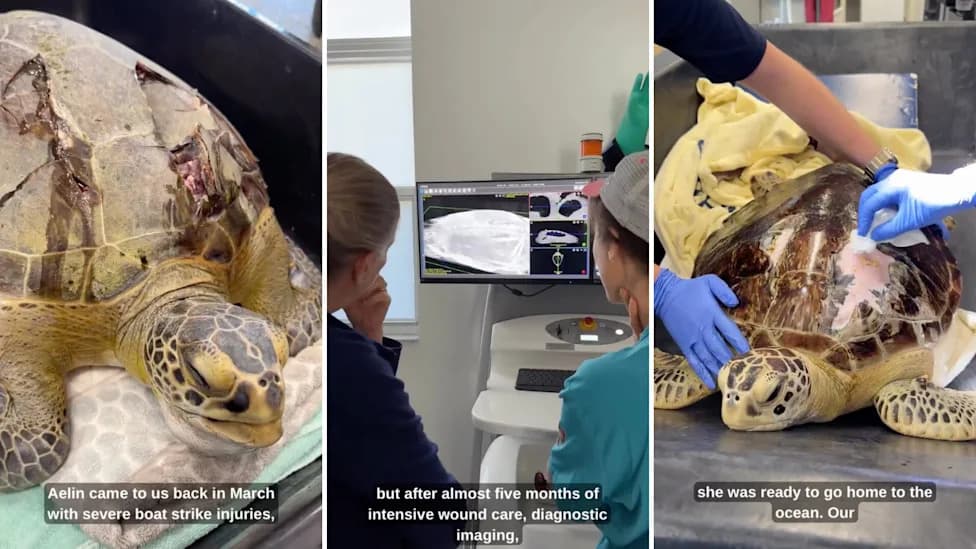
"It was taking all her good blood, and she was anemic when she came in," said Bette Zirkelbach, manager of The Turtle Hospital. Hospital staff stabilized Molly with fluids, antibiotics and vitamins and applied a pressure wrap to the large growth to control bleeding while she improved enough for surgery.
Molly underwent a three‑hour operation to remove the 10.1‑pound tumor—the largest tumor the hospital said it has successfully excised. After follow‑up bloodwork confirmed she had recovered sufficiently, staff prepared her for release.
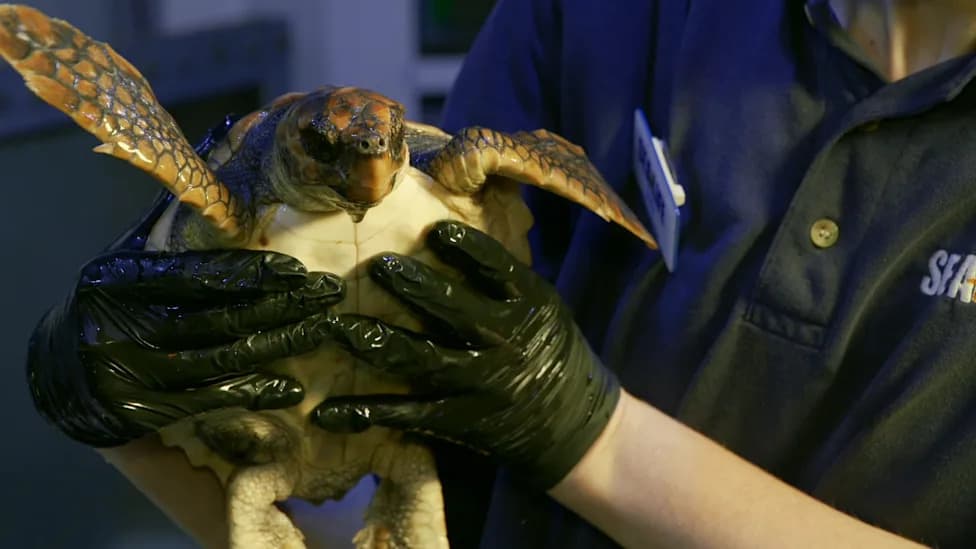
Before returning her to the ocean, rescuers fitted Molly with a satellite transmitter provided by the Sea Turtle Conservancy so the hospital and the public can follow her progress. The device, attached to the underside of her shell using a non‑heat epoxy, costs roughly $5,000 and is expected to remain in place for six months to two years.
With the tracker secured, Molly was transported by a "turtle ambulance" to Higgs Beach in Key West, where more than 100 people gathered to watch. Carried to the shoreline, Molly wasted no time and swam away once she reached the water.
"Molly has helped so many people around the world fall in love with sea turtles. ... She beat the odds," Zirkelbach said.
Visitors Tristan and Tori Edsel, who traveled from Columbia, South Carolina, were among those who attended the release. "I think she beat all odds with the tumor … and then she successfully got to go back to where she’s from, the ocean," Tristan said.
Why this matters
Molly’s rescue highlights the hazards sea turtles face from fishing gear and the important role of small rehabilitation centers in wildlife conservation. Tracking her movements will help researchers and the public monitor her recovery and learn more about post‑release outcomes for rehabilitated sea turtles.
Help us improve.