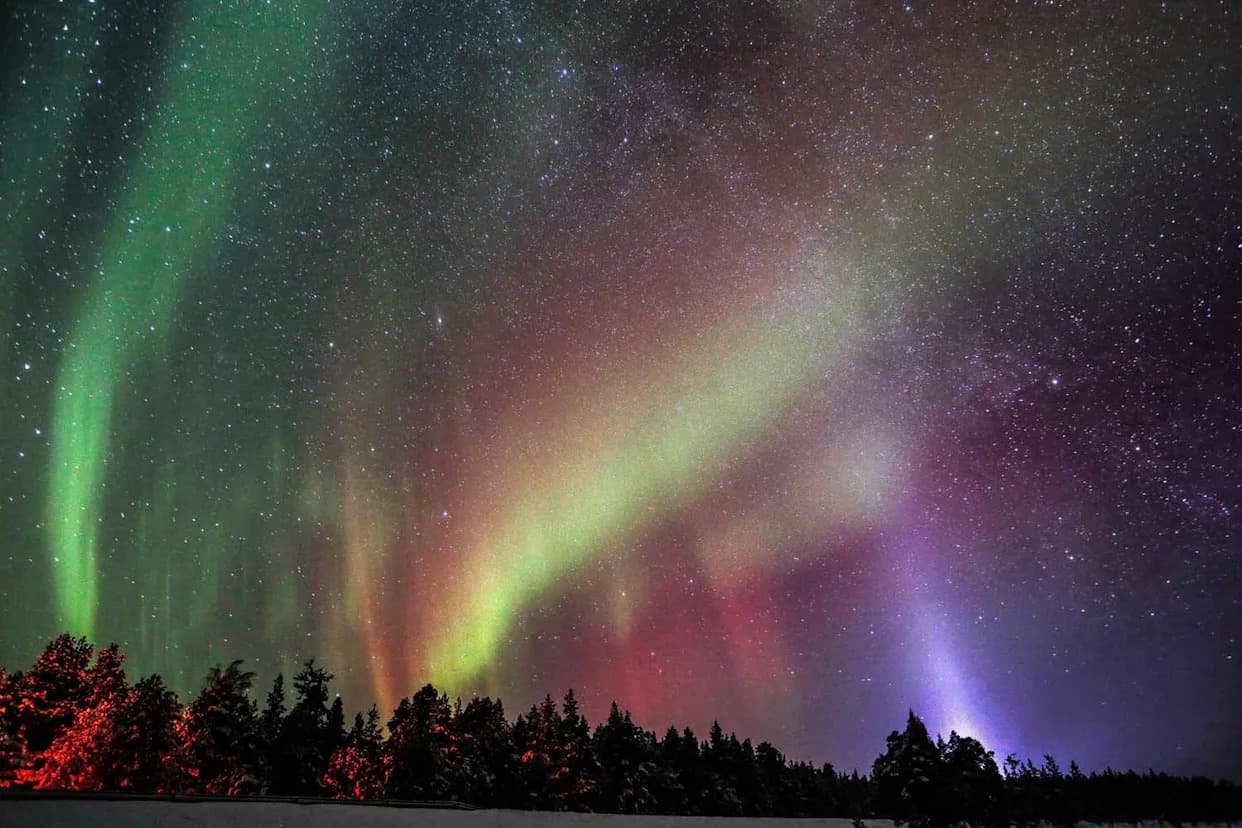
Jim Foerch — known as Mr. Jim — has presented planetarium programs at the Grand Rapids Public Museum for 16 years. The museum launches a weekend holiday musical dome show, Let It Snow, running through year-end, and a daily 3 p.m. northern-lights program featuring full-sky, real-time video. A former teacher and long-time amateur astronomer, Foerch tailors talks to all ages and notes that the current solar maximum raises the chance of visible auroras.
‘Mr. Jim’ Brings the Cosmos to Life at Grand Rapids Public Museum — New Holiday Dome Show and Daily Aurora Program
Visitors to the Grand Rapids Public Museum know him simply as Mr. Jim. For 16 years, Jim Foerch has guided audiences under the planetarium dome, turning a dark theater into a lively classroom for people of all ages.
Seasonal and daily programs
Starting this weekend, the museum debuts a seasonal musical light show, Let It Snow, pairing familiar holiday tunes with immersive dome visuals. The program runs on weekends through the end of the year. In addition, the planetarium now offers a daily 3 p.m. presentation about the northern lights that uses full-sky, real-time video instead of static slides.
How it began
"Starting in 1988 when I looked through a telescope and saw the moons and cloud bands of Jupiter, I said, ‘I need to find out how to do this,’"
That first glimpse of Jupiter led Foerch to the James C. Veen Observatory in Lowell Township and into the Grand Rapids Amateur Astronomical Association. He spent years teaching math and science in Grand Rapids Public Schools — including alternative high schools and community and adult education — and in 2009 he became a presenter at the Grand Rapids Public Museum.
Sharing the sky
"There are two parts to astronomy," Foerch says. "I love going out late at night and looking at marvelous things, but I also equally like sharing it, whether it's with first graders or with adult groups." He tailors explanations for each audience, giving students just enough detail to engage curiosity and adding more for older visitors.
About the aurora and why now
Foerch explains the aurora borealis in straightforward terms: the sun occasionally ejects charged particles that travel to Earth, penetrate the magnetosphere near the poles, and excite atmospheric atoms so they glow. We are currently near a solar maximum in the sun's roughly 11-year cycle, which raises the chance of strong auroral displays — especially away from city lights.
The planetarium's new northern-lights show highlights how recent technology captures full-sky, near real-time footage, giving viewers a more immediate experience than traditional photo slideshows.
Keeping current
Foerch keeps up with astronomy by reading professional publications such as Sky & Telescope and following discoveries from ground- and space-based telescopes. He enjoys sharing recent finds — from interstellar visitors to newly discovered exoplanets — and reminding audiences that Earth is one small world in a vast cosmic neighborhood.
Whether presenting holiday music beneath swirling lights or explaining the science behind auroras, Mr. Jim brings enthusiasm and clarity to the planetarium every day.
Help us improve.