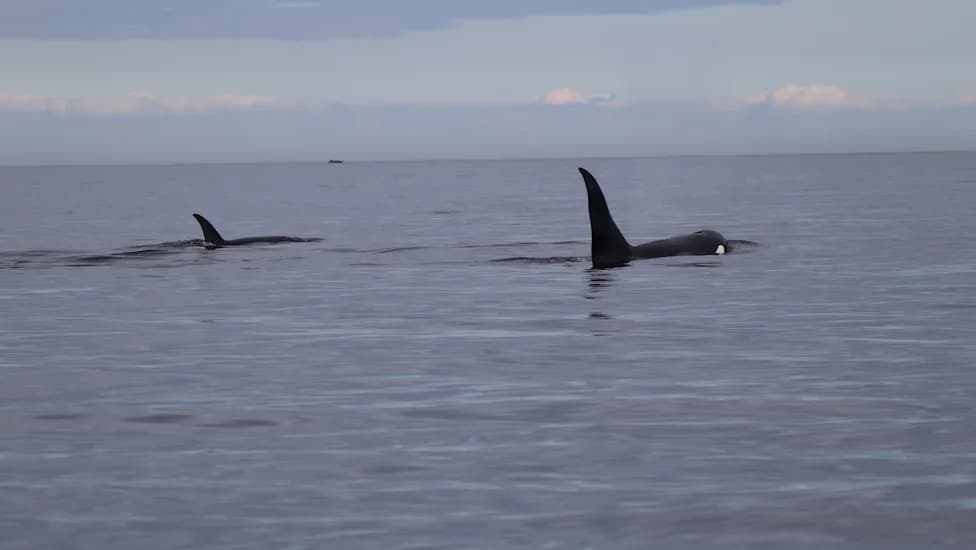
Researchers observed a new Southern Resident orca calf, J64, swimming with its mother J16 and J Pod near Active Pass, B.C. The calf appeared socially integrated and showed behaviors consistent with nursing, promising signs for an endangered population. Southern Resident killer whales face threats such as low Chinook salmon abundance, pollution and underwater noise, and only about half of calves survive past their first year. Conservation efforts focus on habitat restoration, reducing disturbance and restoring salmon runs to improve calf survival.
Hope for Endangered Orcas: New Calf J64 Spotted with J Pod Near Active Pass
Researchers reported a promising sighting in British Columbia waters in September: a newly born orca calf, designated J64, was observed swimming with its family group, J Pod, near Active Pass off Mayne and Galiano islands.
What researchers observed
The calf, born to female orca J16, remained close to its mother and appeared well integrated into the pod's social structure. Several younger females spent time near the newborn — a sign of social acceptance and potential alloparental support.
"This calf was where it was supposed to be, right alongside its mom. It was pretty socially well integrated, a lot of young females were spending a lot of time around this calf," said Michael Weiss, research director at the Center for Whale Research.
Observers also recorded behaviors consistent with healthy early development, including frequent surfacing and positioning indicative of nursing attempts. Weiss said those behaviors are encouraging signs for the calf's immediate health.
"The pattern suggested that it was kind of in that nursing position. So all of those are good signs," Weiss added.
Why this sighting matters
Southern Resident killer whales are listed as endangered under Canada's Species at Risk Act. Their long-term decline has been linked to reduced prey availability—especially Chinook salmon—water pollution, vessel traffic and underwater noise that can interfere with echolocation.
J Pod is estimated at roughly 70 individuals after peaking in the 1990s, according to population data compiled by federal agencies. Early survival is precarious for orca calves: researchers estimate that only about half of calves survive beyond their first year, and calf survival depends heavily on the mother's nutritional condition and access to sufficient prey.
"These first few months are really quite difficult and quite critical," Weiss said. "Every single birth we can get in this population is really, really precious."
Conservation efforts and outlook
Conservationists are pursuing multiple strategies to help Southern Residents recover. Actions include restoring and protecting habitat, reducing underwater noise and vessel disturbance, and rebuilding salmon runs—particularly Chinook—through measures such as improving fish passage, modifying dam operations, removing obsolete barriers, and updating turbine systems.
Other hopeful sightings elsewhere include a young orca, L128, photographed with its pod near Seattle and a pod of 10 killer whales sighted off Orange County, California. While single sightings do not guarantee population recovery, they provide important data and hope for ongoing conservation work.
Long-term recovery will depend on sustained efforts to increase prey abundance, reduce pollution and disturbance, and protect critical habitat so calves like J64 have the best chance to reach maturity.
Help us improve.