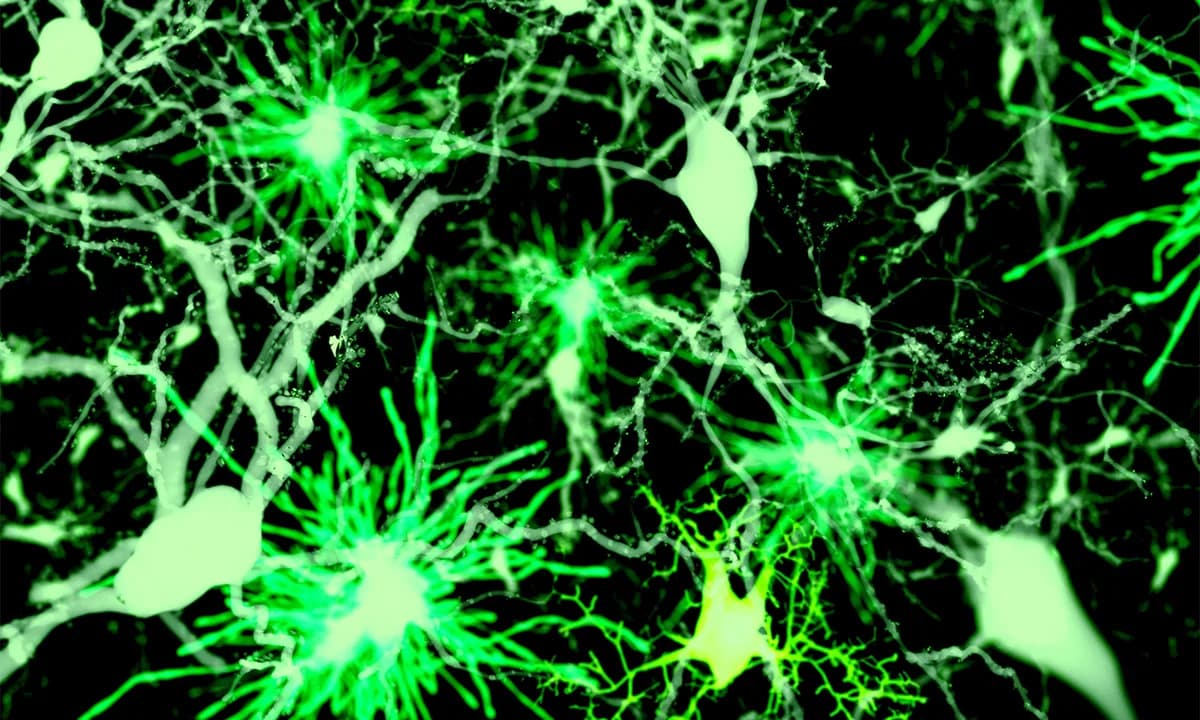
The largest diffusion MRI analysis to date of 3,802 people aged birth to 90 finds that brain wiring changes in five distinct phases rather than by steady gradual change. Researchers identified turning points at about ages 9, 32, 66 and 83, corresponding to transitions from childhood to adolescence, a strong topological peak in the early 30s, and two aging stages. The study links synaptic pruning, rising white-matter efficiency in adolescence and later white-matter decline to these shifts, offering a framework for when brains may be most able or vulnerable.
The Brain Rewires in Five Life Phases — Turning Points at ~9, 32, 66 and 83

New research using diffusion magnetic resonance imaging reveals that the human brain does not rewire itself in a steady, linear fashion but instead moves through five distinct structural phases from birth to about 90 years. The analysis of 3,802 diffusion MRI scans mapped large-scale patterns of neural wiring and identified four major turning points that mark broad shifts in brain network organization. The study was led by Dr. Alexa Mousley and colleagues and published in Nature Communications.
Key findings
Researchers identified five broad wiring epochs and four turning points where the brain's network topology changes substantially:
- Childhood (until ~9 years) — Early life features an overproduction of synapses followed by pruning, growth in gray and white matter, a peak in cortical thickness and stabilization of cortical folding.
- Adolescence (~9 to ~32 years) — White-matter volume increases and network organization becomes more refined, with faster, more efficient whole-brain communication and an increase in short, efficient neural paths.
- Adult plateau (starts ~32) — A pronounced topological turning point occurs in the early 30s; after this the brain settles into a long adult epoch with relatively few major reorganizations and gradual compartmentalization of some regions.
- Early aging (~66) — Analyses point to a subtler but measurable reorganization that culminates in the mid-60s, likely reflecting beginning white-matter degeneration and reduced connectivity.
- Late aging (~83) — Marked by further connectivity decline and greater reliance on particular brain regions.
Biological mechanisms
Infants begin life with a surplus of synapses; pruning during infancy and childhood removes less active connections and strengthens frequently used pathways. During adolescence, increasing white-matter myelination supports faster signal transmission and greater network efficiency. In later decades, degeneration of white matter and vascular or systemic health factors can reduce connectivity and alter network balance.
Implications
According to the research team, these wiring epochs help explain when the brain may be most capable or most vulnerable. For example, the childhood and adolescent transitions align with windows for learning and for the emergence of some psychiatric conditions, while the aging phases relate to cognitive decline and dementia risk. Senior author Professor Duncan Astle notes that variations in wiring patterns are linked to attention, language and memory differences, and identifying turning points may clarify when brain networks are most susceptible to disruption.
Related work
Separate recent research from Ohio State University, published in Network Neuroscience, analyzed more than 1,000 scans and found a strong, consistent link between a region's connectivity pattern and its activity across diverse cognitive tasks. Together, these studies strengthen the view that connectivity is a central organizing principle of brain function.
Limitations and takeaways
These results describe average trajectories across large samples; individual brains vary widely in timing and pattern. The findings are observational and describe associations rather than direct causes. Still, mapping major turning points in wiring provides a useful framework for understanding development, mental health vulnerabilities and aging, and may guide future research on when interventions are most likely to help.
Help us improve.