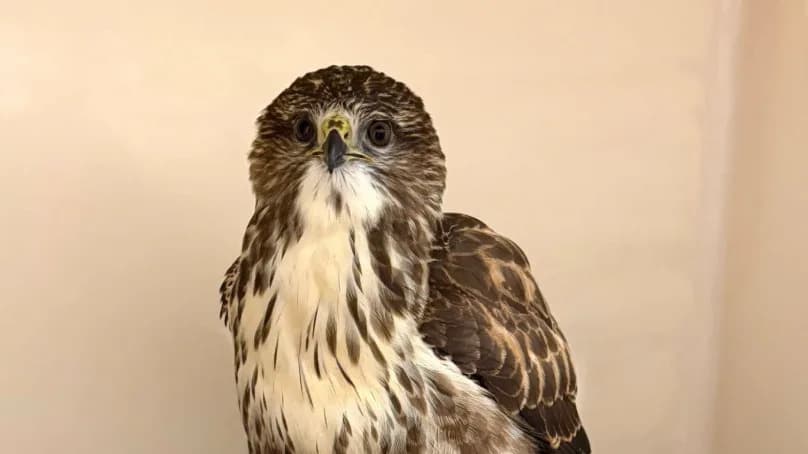
The female bald eagle known as Hope — a beloved mascot at Curtner Elementary in Milpitas — was electrocuted on power lines the night of Nov. 3 after a neighborhood outage around 9 p.m. Examiners found burns and singed feathers consistent with a mid-span electrocution. Experts note large raptors are especially vulnerable to power infrastructure, and PG&E says it has retrofitted many poles to be more bird-safe. Local observers speculate a younger visiting female may have contributed to Hope being displaced, though that remains unconfirmed.
‘Hope,’ Curtner Elementary’s Beloved Bald Eagle, Electrocuted on Power Lines
Students at Curtner Elementary in Milpitas watched a lone bald eagle perch in a redwood one recent afternoon — one of a pair that had become the school’s beloved mascots since arriving in 2017. On the night of Nov. 3, the female eagle known as Hope was killed after coming into contact with overhead power lines, following an outage in the neighborhood at about 9 p.m. that utility crews later traced to the bird.
Investigation and injuries: Wildlife investigators who examined the carcass found small burns on Hope’s left foot pad and the back of her right leg, singed feathers on both sides of her body and especially severe damage to her right wing. Officials concluded these injuries are consistent with an electrocution that occurred mid-span — where lines sag between poles — rather than at a pole top.
Why raptors are vulnerable: Large raptors like bald and golden eagles are particularly at risk around power infrastructure because their wingspans (roughly 5.5 to 8 feet for adult bald eagles) can bridge energized conductors. A U.S. Fish and Wildlife Service forensic review of 417 electrocuted raptors found nearly 80% were bald or golden eagles. National analyses estimate millions of birds die each year from collisions with or electrocutions on power lines.
Utility response and safety measures: A PG&E spokesperson said poles and lines near the nest had been retrofitted with coverings and other protections and that the company spaces lines at least five feet apart where feasible. PG&E also reported large-scale efforts to reduce bird electrocutions, including tens of thousands of pole and tower modifications and recent pole replacements in designated “Raptor Concentration Zones.”
Still, local observers say those protections do not extend into some nearby residential streets where Hope was killed. An amateur photographer who has followed the pair for years said a neighborhood photographer captured an image of the eagle hanging from the wires; that photo was not available for publication.
Local context and possible cause: Neighbors and local birdwatchers reported tension at the nest in the days before Hope’s death, when a younger female showed up. Some residents speculate an altercation or harassment by the younger bird could have driven Hope off the nest and onto the mid-span wires, but investigators have not confirmed the sequence of events and the interloper theory remains unproven.
Condition and community reaction: Examiners noted Hope appeared healthy before the incident, with normal body fat and muscle and evidence of recent feeding. Internal findings suggested she was preparing for breeding season. Curtner Elementary’s principal and local photographers described the pair as a community fixture — so much so that they were adopted as the school’s mascots — and the deaths have left neighborhood residents saddened and concerned.
What’s next: Wildlife and utility officials say minimizing bird electrocutions requires continued investment in avian-safe infrastructure, targeted retrofits near known nests and better coverage in residential areas near raptor habitat. Observers continue to monitor the remaining adult and the young female that has stayed in the area.
Help us improve.