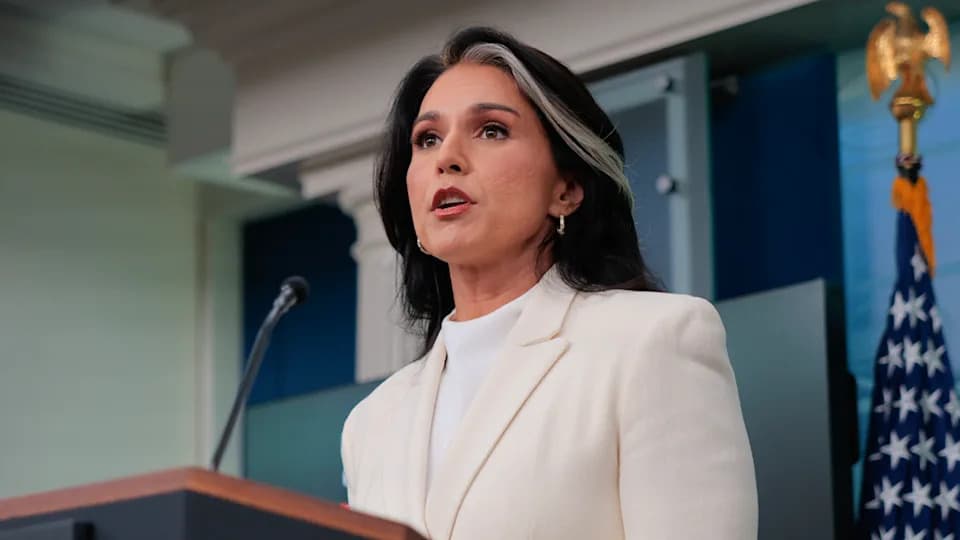
The DNI's office dispatched a team to a classified CIA archive in early April to retrieve files on JFK, RFK and MLK, completing a transfer to the National Archives by about 2 a.m. The operation — led on site by Paul Allen McDonald II and involving Amaryllis Fox Kennedy — exposed tensions between Tulsi Gabbard’s ODNI and the CIA as they implemented a presidential declassification order. Sources said exchanges at the archive were tense but that both sides ultimately coordinated the transfer while preserving chain of custody. Recent releases of tens of thousands of related records have added detail about CIA knowledge of Lee Harvey Oswald without overturning the lone‑gunman conclusions.
Inside the Operation: How ODNI 'Hunters' Retrieved Classified CIA Files on JFK, RFK and MLK

In early April, a team acting on behalf of the Director of National Intelligence, Tulsi Gabbard, arrived unannounced at a classified CIA archival facility in the Washington area to take custody of still‑classified records relating to the assassinations of John F. Kennedy, Robert F. Kennedy and Martin Luther King Jr.
The delegation, which sources say included a Defense Intelligence Agency official temporarily assigned to the DNI’s office, confronted archival staff and pushed to transfer documents to the National Archives so they could begin a declassification process ordered by the president.
The operation on site
According to multiple people familiar with the episode, the on‑site effort was led by Paul Allen McDonald II, a DIA official on temporary assignment to the DNI. He reportedly told staff they were "on a mission" from the director. Also present was Amaryllis Fox Kennedy, a CIA veteran and daughter‑in‑law of Robert F. Kennedy Jr., who focused on digitization efforts.
Security and archival staff coordinated with ODNI and CIA personnel over several hours to determine which records would be moved and to preserve required procedures for chain of custody. Sources said the transfer and related coordination extended into the early morning hours, concluding around 2 a.m. when a large cache of documents was moved to the National Archives facility in College Park, Maryland.
Tensions and coordination between agencies
People familiar with the encounter described a tense moment at the archive's entrance, including raised voices. One source said the CIA did not expect to receive direction "from a higher government agency" that morning, and that the DNI's team presented written authority asserting ODNI's legal power to remove records without prior CIA approval.
Other accounts described a more collaborative exchange and emphasized that the CIA was not opposed to releasing materials as long as proper procedures were followed. Both agencies later issued a joint-style statement saying they were working together to release and declassify records of public interest and to execute the administration's declassification directive.
What was at stake
The operation was carried out under the shadow of a presidential executive order instructing the DNI and intelligence agencies to declassify records related to the JFK, RFK and MLK assassinations. A 45‑day deadline in the order to review certain files had already lapsed, and officials in the DNI's office were reported to be frustrated with the pace of progress.
In March and April, the National Archives began releasing tens of thousands of related records — roughly 80,000 documents tied to the Kennedy assassination and about 70,000 related to Robert F. Kennedy. Analysts say the releases provided greater detail about what the CIA knew concerning Lee Harvey Oswald, but to date have not overturned the official conclusions that Oswald acted alone in 1963 or that Sirhan Sirhan was responsible for Robert Kennedy's killing in 1968.
Context and implications
Officials described the episode as emblematic of broader tensions that can arise when one federal intelligence office seeks direct custody of another agency's holdings. The exchange also highlighted political pressure — from the White House and public demand — for greater transparency on long‑standing national tragedies that continue to draw public interest and conspiracy theories.
White House and intelligence spokespeople affirmed confidence in both the DNI and the CIA leadership and called for focus on the document review and release effort rather than internal discord. Sources confirmed the agencies took steps to preserve chain of custody, maintain security and use official vehicles for the transfer to the National Archives.
Reporting: Phil Stewart, Jonathan Landay and Erin Banco.
Help us improve.