Aldrich Ames, a former CIA counterintelligence officer who spied for the Soviet Union and Russia, has died at 84 while serving a life sentence at FCI Cumberland, Maryland. Ames—whose betrayals are believed to have compromised more than 100 operations—revealed 10 agent identities; U.S. officials say at least nine of those agents were executed. Arrested in February 1994 after a months-long investigation, Ames pleaded guilty and his wife received a five-year sentence.
Aldrich Ames, CIA Double Agent Behind Devastating Cold War Breaches, Dies at 84
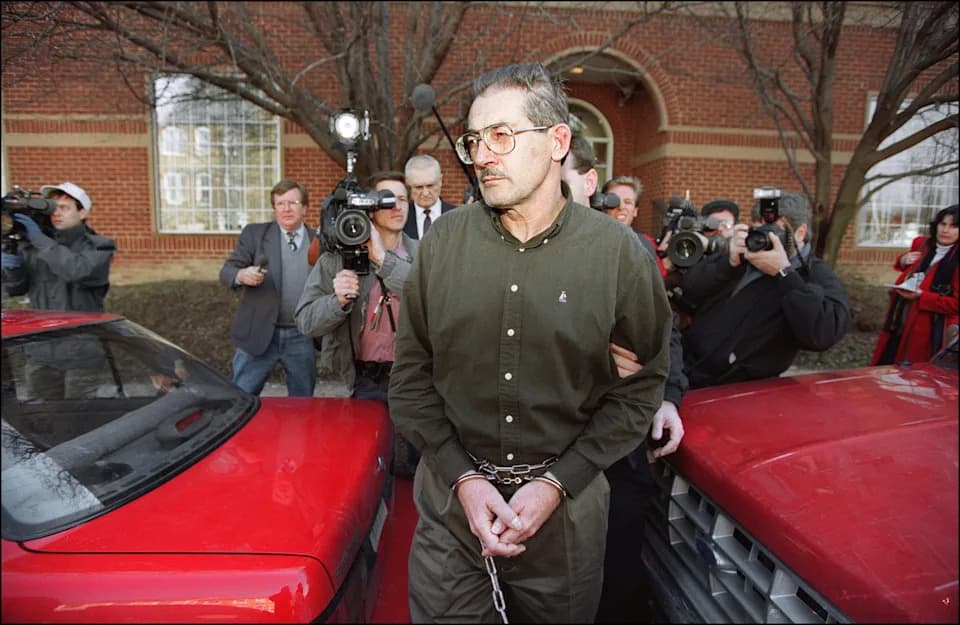
A former CIA agent, Aldrich Ames turned to espionage when he fell on hard times. / Credit: Luke Frazza / Getty Images
The Bureau of Prisons confirmed that Aldrich Ames, a former Central Intelligence Agency counterintelligence officer who spied for the Soviet Union and later for Russia, died Monday at age 84 at the Federal Correctional Institution in Cumberland, Maryland. Ames had been serving a life sentence without the possibility of parole.
Career, Betrayal and Consequences
A 31-year CIA veteran, Ames is believed to have compromised more than 100 intelligence operations and betrayed numerous assets who were subsequently imprisoned or executed. Prosecutors said he exchanged highly sensitive information for substantial payments that funded an ostentatious lifestyle.
In a guilty plea, Ames acknowledged that he had compromised “virtually all Soviet agents of the CIA and other American and foreign services known to me” and admitted providing the Soviet Union and Russia with a “huge quantity of information on United States foreign, defense and security policies.” He revealed the identities of 10 agents; the Defense Department has said at least nine of them were executed.
Warning Signs Missed
Throughout his career there were numerous warning signs: polygraph tests that indicated deception, sudden unexplained wealth, deteriorating job performance and problems with alcohol. Despite those indicators, the CIA repeatedly missed or disregarded the red flags and promoted him to posts of increasing sensitivity.
Background and Espionage Timeline
Born in River Falls, Wisconsin, in 1941, Ames spent part of his childhood in Southeast Asia while his father worked for the agency. After high school and an aborted stint at the University of Chicago, he joined the CIA in 1962 in a clerical role and later earned a history degree from George Washington University in 1967.
His early overseas assignments included Ankara, Turkey, where he worked on recruiting Soviet targets. Personal problems — including alcohol abuse and a divorce — followed. In Mexico City (1981–1983) he met Rosario, a Colombian Embassy cultural attaché and a CIA asset; she later became his accomplice and was charged in the case.
Facing mounting financial pressures in 1985, Ames approached Soviet handlers and initially accepted $50,000 in exchange for the names of several KGB officers secretly working for the FBI. He later handed over a list of CIA assets, an act the 1994 Senate Intelligence Committee said inflicted “a crippling blow” on U.S. operations. The KGB reportedly promised him more than $2 million for continued cooperation.
Ames continued spying for roughly nine more years while serving in Rome and later overseeing operations in Western Europe and Czechoslovakia. He met handlers in cities such as Vienna, Bogotá and Caracas and also worked at the CIA's counternarcotics center.
Investigation, Arrest and Conviction
As the CIA and FBI searched for the source of repeated compromises, investigators focused on Ames in 1993. After months of surveillance, he was arrested on Feb. 21, 1994, in Arlington, Virginia, days before a scheduled trip to Moscow. Nearly two months later, Ames and his wife pleaded guilty to charges related to their espionage; Rosario Ames received a five-year prison sentence.
Then-CIA Director R. James Woolsey called Ames “a malignant betrayer of his country who killed a number of people who helped the United States and the West win the Cold War,” saying those agents died because “a murdering traitor wanted a bigger house and a Jaguar.”
In an interview with The New York Times after his arrest, Ames said money was the primary motivator but added that years of contact with a Pravda correspondent led him to believe the Soviet threat had been exaggerated. "I know what's damaging and I know what's not damaging," he told the Times, "and I'm going to act on that."
Legacy
The Ames case prompted widespread reforms inside U.S. intelligence agencies, intensified internal security reviews and remains one of the most damaging intelligence betrayals in American history. The Bureau of Prisons confirmed Ames’s death at the federal facility in Cumberland, Maryland, where he had been serving his sentence.
Help us improve.