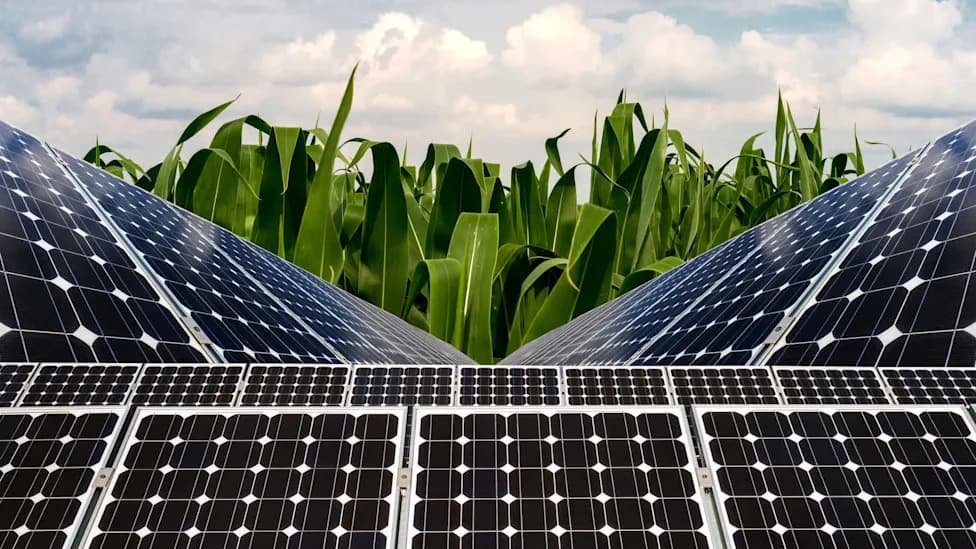
Agrivoltaics — placing solar panels above cropland or pasture — can expand Washington’s renewable energy supply while keeping farms productive. A state-funded feasibility study modeled energy and crop outcomes for apples, lettuce and berries and surveyed 100+ farmers. After learning about agrivoltaics, 55% of farmers grew more interested and 57% would consider hosting a system. The 2025 Senate Bill 5445 encourages distributed systems, but broader collaboration is needed to scale the approach.
Farmers Can Power Washington: Agrivoltaics Offers a Win–Win for Energy and Agriculture

Agrivoltaics — installing solar panels above cropland or pasture — offers a practical way for Washington to expand renewable energy while keeping farms productive. As the state moves away from fossil fuels, electrification of homes, businesses and industry will raise electricity demand, complicating efforts to decarbonize.
Large-scale solar could occupy tens — and possibly hundreds — of thousands of acres in the coming years. Rooftop solar is valuable, but even optimistic estimates suggest it would meet, at best, less than 30% of Washington’s energy needs. Because farmland is often flat, cleared and accessible, it becomes an obvious target for ground-mounted solar, a prospect that has produced tension in rural communities.
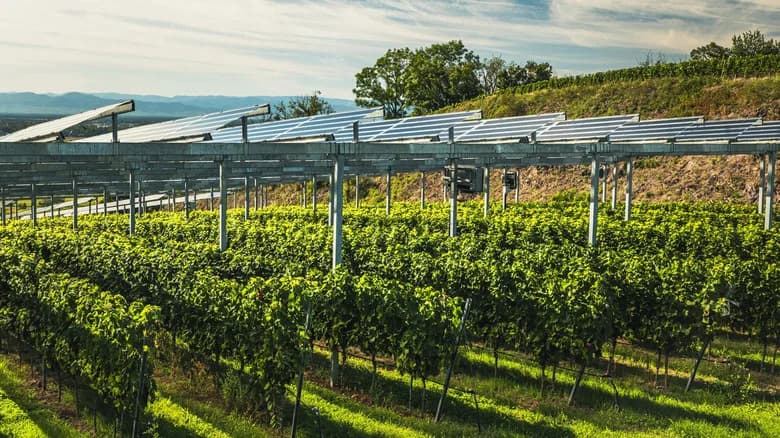
Agrivoltaics presents a compromise: design and site arrays so farming continues below and between panels. Solar panels cast partial shade rather than complete darkness, allowing many crops and smaller livestock to thrive underneath. When panels are mounted higher, they can accommodate taller crops, trellised fruit or grazing animals beneath them.
Partial shade can reduce sunburn and heat stress on fruits and vegetables, improve animal welfare, and in some cases lower irrigation needs. Solar panels and support structures can even replace or complement farm infrastructure such as trellises or shade cloth, helping offset costs.
In a Department of Commerce–commissioned feasibility study funded by Climate Commitment Act revenue, we worked with Washington State University, American Farmland Trust, The Nature Conservancy and researchers at the University of California, Santa Barbara. Our research combined advanced field-scale modeling of joint solar production and crop yield/quality for apples, lettuce and berries with a survey of more than 100 Washington farmers about solar energy and agrivoltaics.
Findings show strong potential. Farmers surveyed were substantially more supportive of agrivoltaics than of converting farmland solely to solar. Specifically, 55% of respondents became more interested in combining solar with agriculture after learning about agrivoltaics, and 57% said they were moderately or very interested in hosting an agrivoltaic system.
Washington residents place high value on protecting agricultural and natural lands while also supporting a rapid transition to renewable energy. In 2025 the Legislature passed Senate Bill 5445 to encourage a broader diversity of distributed energy systems, including agrivoltaics — a promising first step.
To scale agrivoltaics responsibly will require continued collaboration among farmers and ranchers, solar developers, scientists and policymakers. Key next steps include developing best-practice designs, compatible crop-system pairings, fair leasing and revenue models, and streamlined siting and permitting processes. With thoughtful planning, agrivoltaics can help meet rising energy demand without sacrificing productive farmland or important natural areas.
Help us improve.