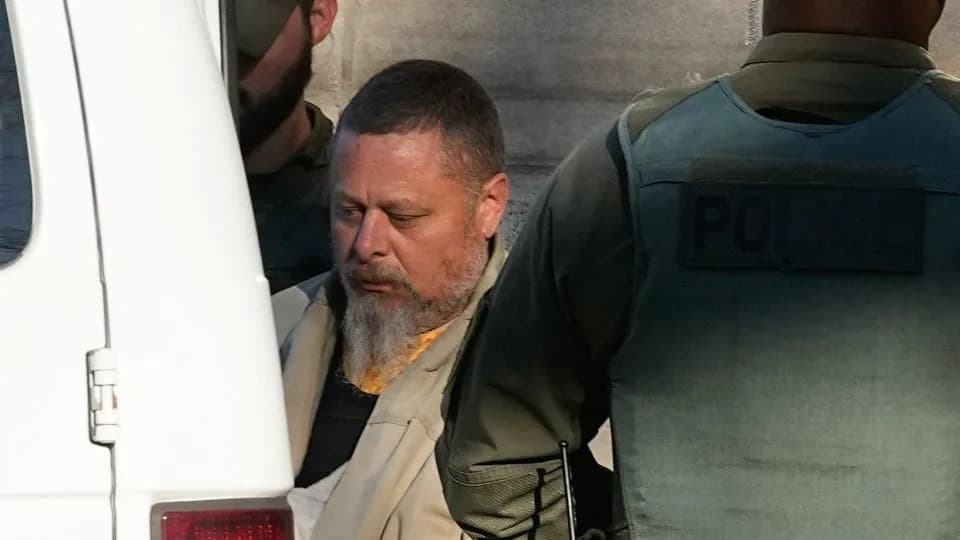
Joseph DeAngelo, the man arrested in 2018 as the Golden State Killer, told investigators he had an alter ego called "Jerry" who forced him to commit rapes, murders and burglaries, prosecutor Thien Ho writes. DeAngelo's statements—mumbled denials alongside admissions that he "didn't want to do it"—undermined an insanity defense by showing he understood the wrongfulness of his acts. Linked to the crimes through DNA and genetic genealogy, DeAngelo pleaded guilty in June 2020 to 13 murders and other offenses to avoid the death penalty.
“Jerry Made Me Do It”: Prosecutor Says Golden State Killer Claimed an Alter Ego Compelled His Crimes

Joseph DeAngelo, arrested on April 24, 2018 and later identified as the Golden State Killer, told investigators during his initial interrogation that an alter ego he called "Jerry" forced him to commit a string of rapes, murders and burglaries in the 1970s and 1980s, Sacramento County District Attorney Thien Ho writes in his book.
DeAngelo, a former police officer and mechanic taken into custody at his Citrus Heights home, was placed in an interrogation room and left under observation for roughly two hours. Ho describes DeAngelo's stillness and near-motionless demeanor: "He had an uncanny ability to sit there for half an hour and not even move," Ho writes.
When questioned, DeAngelo reportedly mumbled and often stared blankly. At times he denied involvement, saying, "I've done nothing, I've done nothing," but he also made statements suggesting an internal struggle with another personality.
"I did all that . . . I didn't have the strength to push him out. He made me. He went with me. It was like, in my head, I mean, he's a part of me. I didn't want to do those things. I pushed Jerry out and had a happy life. I did all those things. I've destroyed all their lives . . . I raped. So now I gotta pay the price."
According to Ho, DeAngelo appeared to be attempting to lay groundwork for a dissociative identity defense by claiming "Jerry" controlled him. Ho argues the attempt was amateurish and undermined any insanity defense under California law, which requires a defendant not to understand the nature or wrongfulness of his acts. By admitting he knew he "didn't want to do it," DeAngelo demonstrated awareness of the wrongfulness, Ho writes.
Ho also recounts earlier episodes in which DeAngelo allegedly feigned illness or mental disturbance to avoid consequences—for example, an incident in 1979 when DeAngelo allegedly acted as if having a heart attack after being detained for shoplifting. Ho characterizes those behaviors as manipulative rather than genuine.
Investigators ultimately linked DeAngelo to decades of violence through DNA testing and genetic genealogy. In June 2020, he pleaded guilty to 13 murders and numerous other crimes to avoid the death penalty. DeAngelo's criminal history appears to have begun with a series of residential burglaries in Visalia between 1974 and 1975; his first known homicide is believed to be the September 1975 killing of Claude Snelling, who was shot after trying to stop the abduction of his daughter.
DeAngelo has also been identified by investigators by the earlier monikers the Visalia Ransacker, the East Bay Rapist and the Original Night Stalker. Thien Ho's book offers a detailed account of the arrest, interrogation and legal strategy as prosecutors and detectives pieced together the decades-long case.
Help us improve.