Scientists used cosmic dust preserved in Arctic seafloor sediments to reconstruct about 30,000 years of sea-ice history, far exceeding the roughly 50-year satellite record. The absence or presence of space-derived particles in sediment layers indicates past ice cover, and the dust chronology was linked to biological indicators that reveal ecosystem responses. Findings show ice extent tracked both atmosphere and ocean changes, and researchers urge more sampling to refine projections of future Arctic change.
Space Dust Reveals 30,000 Years of Arctic Sea-Ice History — What It Means for a Warming World
Researchers reconstructed roughly 30,000 years of Arctic sea-ice change by analyzing microscopic cosmic dust preserved in seafloor sediments. This long sedimentary record extends far beyond the roughly 50 years of satellite observations and reveals how shifts in ice cover, ocean temperatures, and marine productivity have been linked over millennia.
How the method works
Tiny particles continuously fall from space and settle on the ocean surface. When the sea is open, those particles pass through the water column and accumulate in seafloor layers; where sediments lack these grains, scientists infer that sea ice blocked the particles from reaching the bottom. By sampling sediment cores from different Arctic locations and dating the layers, researchers can reconstruct past periods of open water and ice cover.
Main findings
The team found that Arctic sea-ice extent historically tracked both atmospheric changes and shifts in ocean temperature. Periods with reduced ice coincided with more open water and greater light penetration into the upper ocean, which affected primary productivity. By comparing the cosmic-dust chronology with biological indicators preserved in the sediments (such as shell-bearing organisms and other proxies of nutrient uptake), the study linked changes in ice cover to shifts in food-web dynamics on the seafloor.
"If we can project the timing and spatial patterns of ice coverage decline in the future, it will help us understand warming, predict changes to food webs and fishing, and prepare for geopolitical shifts," said lead author Frankie Pavia.
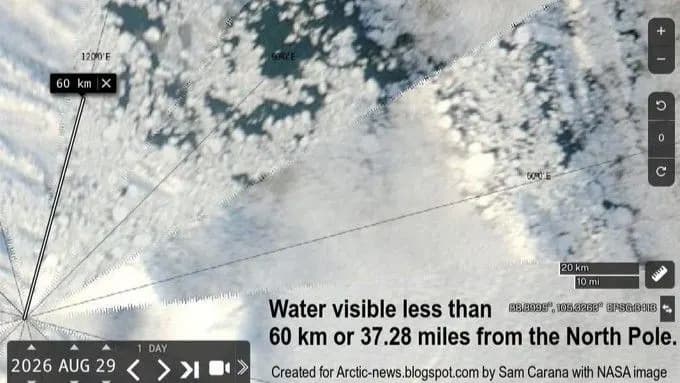
The authors emphasize that the Arctic is warming faster than many other regions, and that loss of sea ice amplifies regional warming through feedbacks like greater solar absorption by open water. These changes cascade through ecosystems and have implications for fisheries, food security, and human communities far beyond the polar region.
"It's like a big equation with many unknowns, and now you can tackle more of them," said marine geochemist Walter Geibert, who was not involved in the study.
Why this matters
This sediment-based record provides critical context for interpreting recent and future Arctic change. Extending reconstructions back 30,000 years helps scientists test climate models and improve projections of how fast and where ice loss may occur. The researchers call for additional, geographically broader sediment sampling to refine these reconstructions and better understand ecosystem responses.
What readers can do
While large-scale climate trends are driven by global emissions, individuals can support mitigation and resilience by reducing energy waste, advocating for strong climate policies, and supporting research and conservation efforts. Raising awareness about Arctic change helps connect distant polar processes to everyday impacts on food systems, weather extremes, and economic stability.
Help us improve.