Quick summary: Texas skies can turn orange when sunlight passes through a thicker layer of atmosphere or when large particles from storms, dust or wildfire smoke dominate the air. Rayleigh scattering removes blue light at low sun angles, while larger dust and smoke particles cause Mie scattering that enhances reds and oranges. Soil type and burned fuels influence the exact hue, and dense smoke or dust can create deep orange or sepia skies even in daytime.
Why Texas Skies Are Turning Orange — Sunlight, Dust and Smoke Explained

Depending on where you are in Texas, you may notice an orange or reddish tint to the sky over the next few days. These dramatic hues aren’t always just a sunset effect — they result from how sunlight interacts with the atmosphere and the particles suspended in it.
How sunlight and the atmosphere change sky color
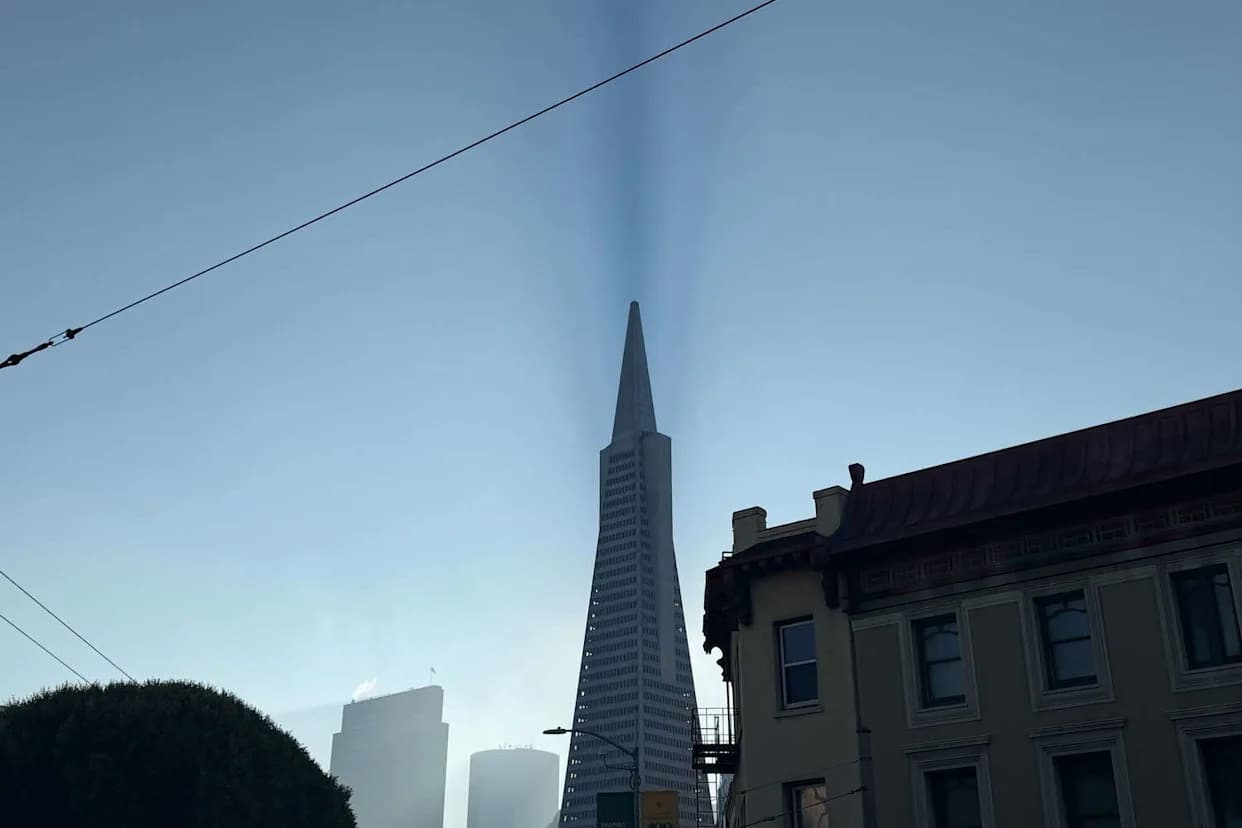
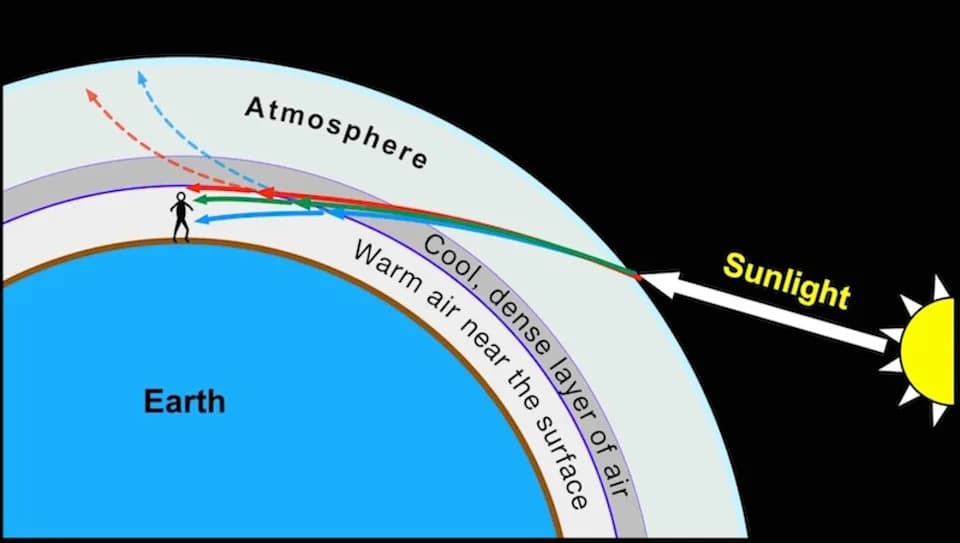
When the sun is low on the horizon — at sunrise, sunset or during late-afternoon storms — sunlight travels through a much thicker slice of the atmosphere than at midday. That longer path increases collisions between light and air molecules, dust and other particles. Shorter wavelengths (blue and violet) scatter more easily, while longer wavelengths (red, orange and yellow) pass through more directly. As a result, the direct light you see becomes richer in reds and oranges.
Thunderstorms and warm-hued skies
Thunderstorms often develop in the late afternoon and evening. Thick clouds, abundant moisture and the sun’s low angle amplify scattering of shorter wavelengths (a process known as Rayleigh scattering), which can leave the sky looking unusually warm before, during or after a storm.
Dust storms: Mie scattering and soil color
Dust storms produce larger airborne particles than molecular air — these particles interact with sunlight through Mie scattering, which tends to favor reds and oranges. When dust dominates the air, shorter blue wavelengths are blocked and the sky takes on orange-brown tones. The exact shade depends on particle size and concentration: heavy dust can create dark orange, rust-colored or even deep red skies.
Soil and material effects:
- Iron-rich soils: deep orange or red
- Pale sand: yellowish tones
- Volcanic ash: gray or brown hues
Wildfire smoke and smoky skies
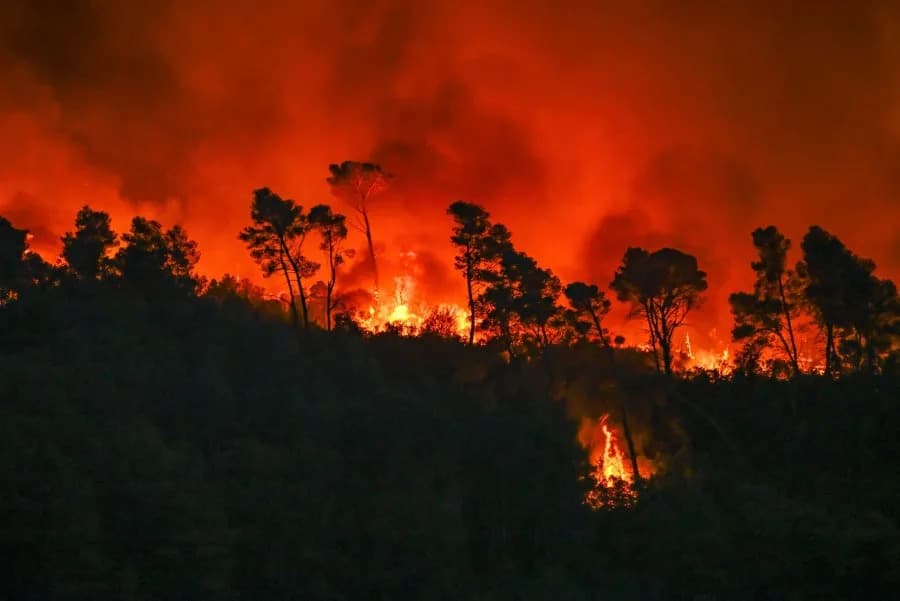
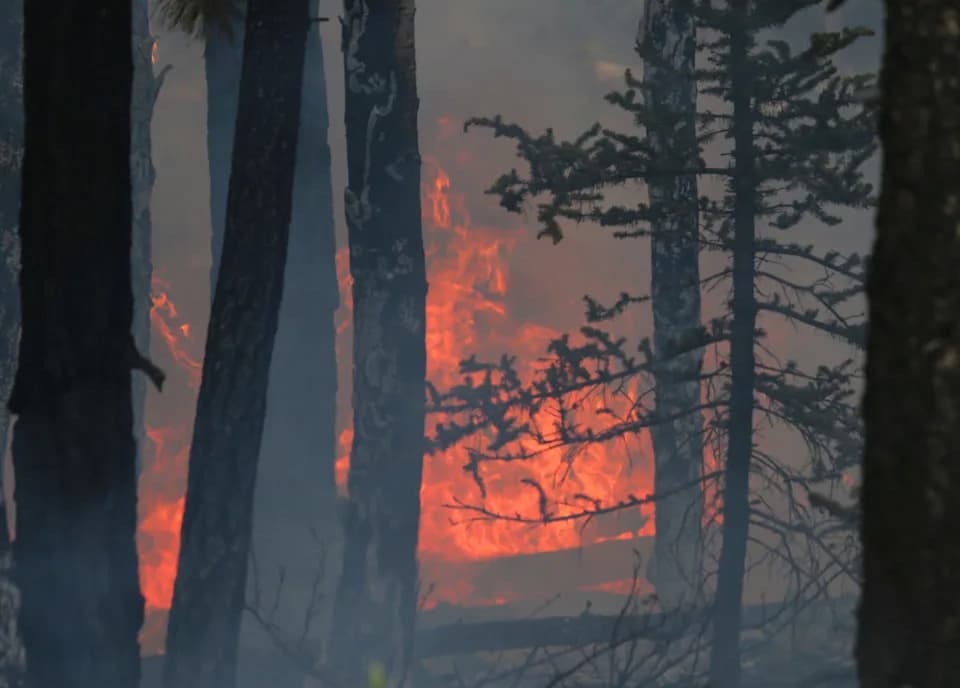
Wildfires don’t color the sky directly — smoke does. Soot, ash and organic aerosols are larger than air molecules and filter out blue light via Mie scattering. Different fuels produce different smoke characteristics: pine forests often yield a yellow-orange haze, grassland fires create finer, grayer smoke and subtler tones, and peat or dense-understory burns can produce darker, browner or redder skies. When smoke reaches higher layers of the atmosphere, colors can become more vivid: the sun may appear as an orange or red disk, daytime skies can take on a smoky yellow cast, and sunsets may shift toward purple. Dense smoke can produce sepia or dark orange skies even at midday.
What to expect and simple safety tips
The intensity and duration of orange skies depend on the particle source (storm clouds, dust or smoke), particle concentration and sun angle. If the color comes from wildfire smoke or heavy dust, air quality may be poor. Take simple precautions: limit outdoor exertion, keep windows closed, use air purifiers if available, and follow local health advisories.
Bottom line: Orange skies in Texas are caused by the same optical physics that create colorful sunrises and sunsets, amplified by clouds, dust or smoke. The particular hue — from pale yellow to deep rust or sepia — depends on the types and concentrations of particles in the air.
Help us improve.