Harvard astronomer Avi Loeb has suggested that interstellar object 3I/ATLAS, which will pass about 170 million miles from Earth and later approach Jupiter, experienced a "non-gravitational acceleration" that steered it near Jupiter's Hill sphere. Loeb proposes this adjustment could indicate deliberate "seeding" of Jupiter with technological devices and urges targeted observations by spacecraft such as Juno. Most scientists and NASA favor a conventional cometary explanation — asymmetric outgassing driven by solar heating — but agree that additional observations can clarify the cause. The encounter offers a rare chance to test natural and unconventional hypotheses about interstellar visitors.
Could Interstellar Visitor 3I/ATLAS Be Deploying 'Sentinels' Near Jupiter? Harvard Astronomer Urges Closer Look

Interstellar object 3I/ATLAS is slated to make a relatively close pass of Earth — roughly 170 million miles — before continuing on a highly eccentric trajectory through the solar system. About three months after that encounter, its projected path brings it near Jupiter, where recent measurements suggest an intriguing change in course.
Harvard astrophysicist Avi Loeb, who has long championed the possibility that some interstellar visitors could be artificial, highlighted on his blog that 3I/ATLAS experienced a measurable "non-gravitational acceleration" after its recent perihelion. That subtle push, he notes, nudged the object toward the outer boundary of Jupiter’s gravitational domain known as the Hill sphere.
The Hill sphere marks the region within which a planet's gravity can retain orbiting objects against the Sun's influence. Loeb points out that the object's adjusted trajectory will bring it to within about 53 million miles of Jupiter on March 16 — roughly 160,000 miles from the Hill sphere's edge — and argues that, without the non-gravitational acceleration, 3I/ATLAS would have missed that boundary.
"If we find technological satellites of Jupiter that we did not send, it would imply that Jupiter is of interest to an extraterrestrial civilization," Loeb wrote, suggesting the object could be "seeding" Jupiter with small devices or probes.
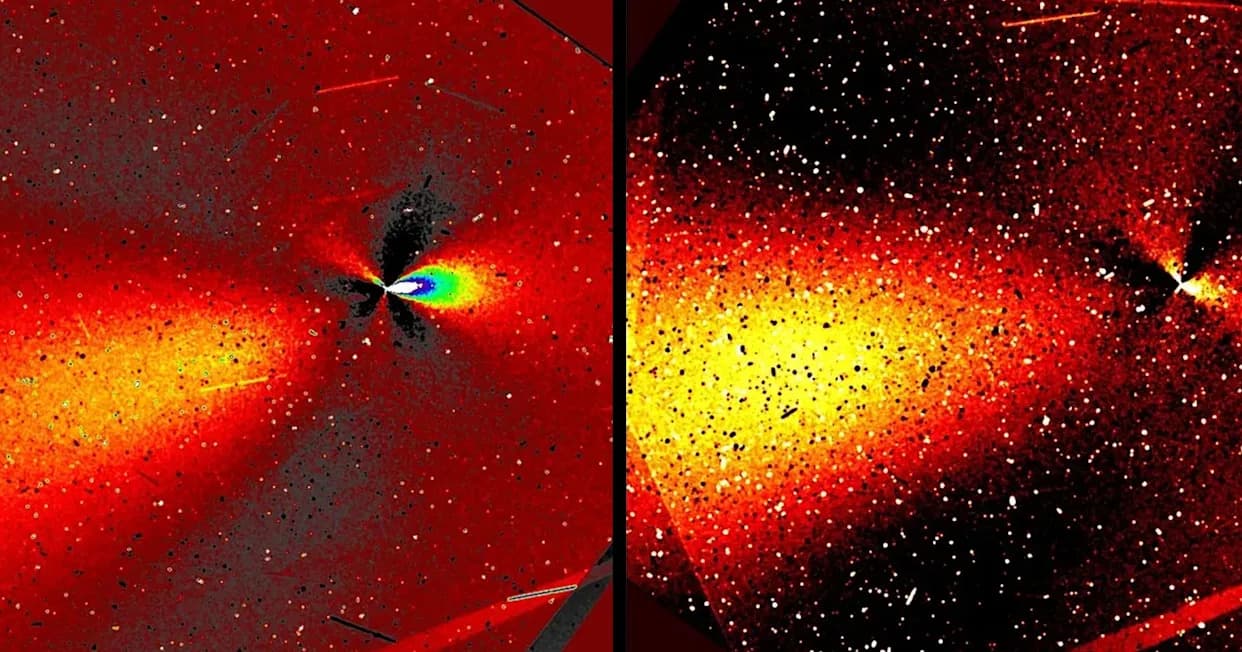
Many in the scientific community dispute an artificial explanation. NASA and other researchers point to substantial evidence that 3I/ATLAS is behaving like a comet: sunlight-driven heating at perihelion can cause asymmetric outgassing, which produces measurable non-gravitational acceleration. During a recent public briefing, NASA associate administrator Amit Kshatriya rejected Loeb's speculation and emphasized the cometary interpretation.
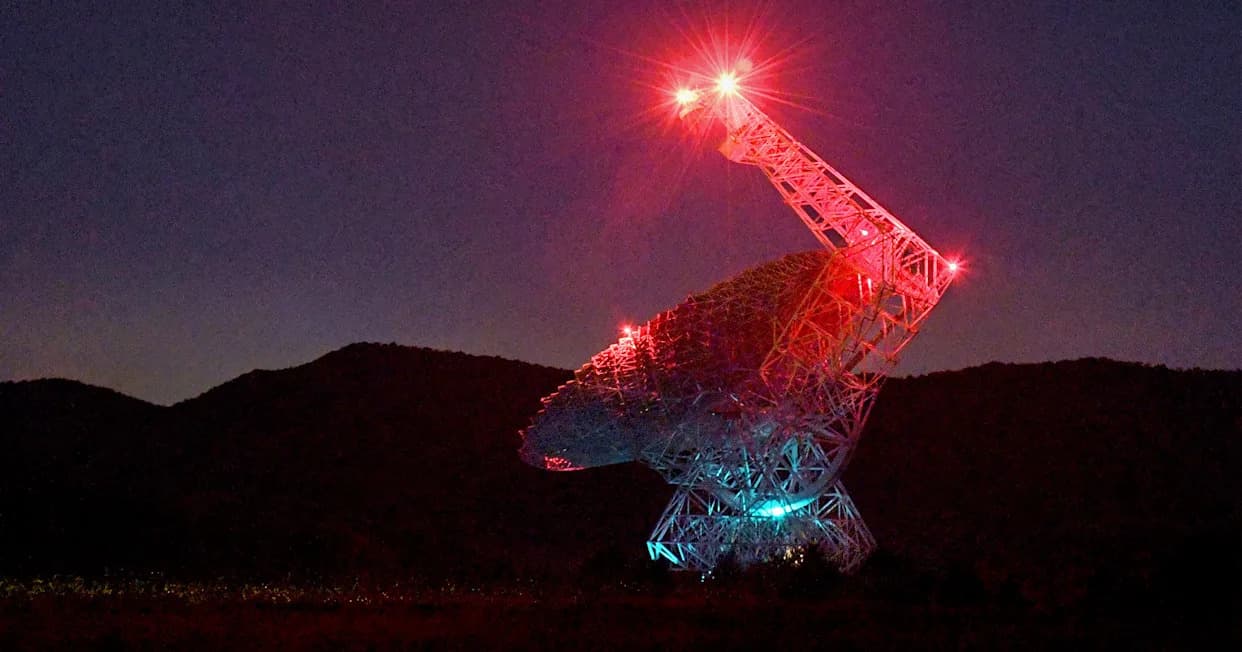
Loeb counters that the magnitude of the observed acceleration appears "finely tuned" to alter the object's minimum approach to match Jupiter's Hill radius, and he has called for targeted observations. He recommends that NASA's Juno spacecraft, currently in orbit around Jupiter, and other observatories monitor the object closely during its March–June passage to search for potential artificial satellites or other anomalous signatures.
Why this matters
Finding unexplained technological objects near Jupiter would be a paradigm-shifting discovery with profound implications for how humanity understands its place in the cosmos. Equally important, robust observational follow-up can help discriminate between natural processes (like outgassing) and less conventional possibilities. For now, the mainstream view favors a natural cometary origin, while Loeb urges humility and open-minded, evidence-driven investigation.
What to watch
- Trajectory updates and refined orbit determinations for 3I/ATLAS as more observations arrive.
- Measurements of outgassing, coma structure, and any persistent non-gravitational forces.
- Opportunities for Juno and ground-based or space telescopes to observe the object as it passes near Jupiter.
Whether natural or artificial, 3I/ATLAS presents an opportunity to test models of small-body dynamics, improve our understanding of interstellar visitors, and exercise rapid-response observation strategies. Continued, careful observation and analysis will be essential to resolve the competing explanations.
Help us improve.