David Baron’s The Martians recounts how 19th- and early 20th-century observers mistook perceptual artifacts for artificial canals on Mars. Percival Lowell’s authority and zeal turned a mistranslated term into a popular conviction, while psychological experiments and higher-resolution observations later revealed the markings to be illusory. Baron uses the episode to illustrate confirmation bias, motivated reasoning, and informational cascades—and warns that similar dynamics now amplify dangerous falsehoods about vaccines, climate, and elections.
The Man Who Wanted to Believe: How the Mars 'Canals' Became a Cautionary Tale

We accept many truths without personally verifying them: the Holocaust occurred, George Washington was the first U.S. president, vaccines do not cause autism, climate change is real, the Earth is round, there is no life on the Moon, and the 2020 election was not stolen. I have no direct proof for each of these claims, yet I accept them because I trust reliable sources. Our firsthand evidence covers only a tiny fraction of what we believe; most convictions rest on the testimony of others. This dependence is unavoidable and adaptive, but it also opens the door to serious error.
From Schiaparelli’s “canali” to a global craze
David Baron’s book The Martians tells a vivid story of how a plausible-looking but false belief gained wide acceptance. The tale begins on August 23, 1877, when Giovanni Schiaparelli, director of Milan’s Brera Observatory, took advantage of a close approach of Mars to map the planet. Schiaparelli reported familiar light and dark regions—interpreted by many as seas and continents—and also described hundreds of long, narrow streaks that sometimes vanished, sometimes appeared like pen lines, and sometimes seemed doubled, a phenomenon he called “gemination.” He labeled these features "canali," meaning "channels" in Italian, but the term was widely mistranslated into English as "canals," a word that evoked artificial waterways and intelligent design.
Percival Lowell and the rise of conviction
Percival Lowell, an erudite and wealthy American, became the central figure in the canal story. Intrigued by Schiaparelli, Lowell relocated to the American Southwest to study Mars with advanced telescopes. Over time he came to see the linear markings repeatedly and, interpreting them as a global irrigation system, argued that an old and technologically sophisticated civilization inhabited Mars. Lowell combined careful astronomical data—orbital periods, size estimates, and density—with extravagant inference. His persona—polished, confident, and persuasive—helped turn a speculative idea into a public sensation.
"The canals of Mars have begun to double," he telegraphed at one point, and later wrote that the planet seemed to demonstrate "a mind certainly of considerably more comprehensiveness than that which presides over the various departments of our own public works."
Challenges from psychology and sharper telescopes
Skepticism grew on two fronts. First, critics suggested the canals might be psychological artifacts: the brain imposing straight lines on ambiguous visual detail. Edward Walter Maunder tested this idea by asking observers—initially schoolboys, later trained astronomers—to copy maps of Martian markings from a distance after the canals had been erased. Many volunteers drew straight lines where none existed, demonstrating how expectation and pattern-seeking can generate spurious structure.
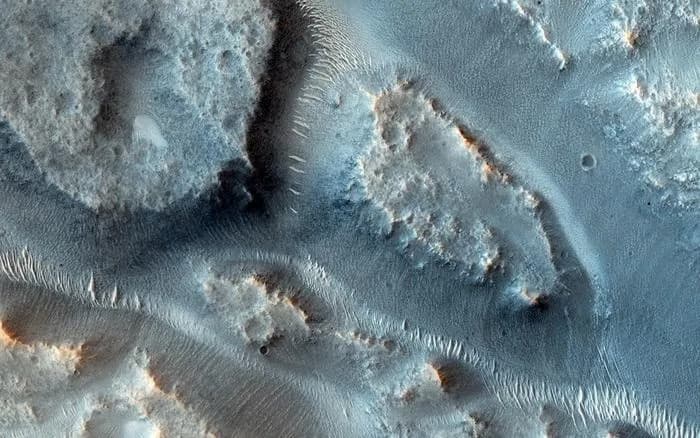
Second, better telescopes and clearer photographs eventually resolved the issue observationally. Eugène-Michel Antoniadi, who had once been sympathetic to the canal idea, used more powerful instruments and steady seeing to show that the supposed canals were not continuous linear features but irregular streaks and diffuse knots. Large, higher-resolution images of Mars produced in the early 20th century showed a planet without geometric canals. Even some original observers later conceded that natural features and perceptual errors had been mistaken for engineered waterways.
Lessons: confirmation bias, motivated reasoning, and informational cascades
Baron uses the episode to illuminate cognitive and social processes that enable false beliefs to spread. Confirmation bias—favoring evidence that supports preexisting views—and motivated reasoning—shaping interpretation around what one wants to believe—played central roles. Lowell’s painstaking charts, elaborate names for canals, and repeated observations were not reliable proof but the scaffolding of conviction. Economists would describe the social spread as an informational cascade: people defer to perceived experts and social signals, setting aside private doubts and amplifying error.
The Mars canals ultimately did less tangible harm than many modern falsehoods, but the dynamics are familiar today. Charismatic figures can knit complex narratives, create cascades of belief, and resist correction. The crucial contemporary challenge is to identify and amplify the modern equivalents of Antoniadi—people who can marshal stronger evidence, communicate clearly, and persuade broad audiences before dangerous falsehoods become entrenched.
Final reflection
The story of the Martian canals is not simply a quaint historical curiosity. It is a reminder that careful-seeming reasoning, erudition, and even sincere curiosity do not guarantee truth. In an age of faster information flow and higher stakes—public health, democracy, and climate stability—understanding how belief forms, spreads, and is corrected is more important than ever.
Help us improve.