The National Rally has expanded its reach across many of France’s poorest regions as rising poverty and persistent economic grievances have reshaped voting patterns. INSEE data show about 1.2 million more people fell below the poverty line since 2017, and the national poverty rate rose to 15.4% by 2023. Mapping of regional poverty alongside legislative first-round results highlights strong National Rally gains in the deindustrialized northeast and along the Mediterranean. Political fragmentation and voter anger over economic and immigration issues help explain the party’s strengthened position.
Rising Poverty Fuels Le Pen’s National Rally Gains Across France

When Emmanuel Macron celebrated his election on May 7, 2017, he pledged to win over voters drawn to his far-right rival, Marine Le Pen. Seven years later, that mission looks unfinished: Le Pen’s National Rally has broadened its appeal, consolidated strongholds in regions hit hardest by economic decline, and become the largest single party in parliament.
Economic trends help explain some of the shift. According to France’s national statistics agency INSEE, roughly 1.2 million more people fell below the poverty threshold since 2017, and the national poverty rate rose from 13.8% to 15.4% by 2023 — its highest level in nearly 30 years of comparable data. Critics say tax cuts for businesses and a scaled-back wealth tax under Macron contributed to rising inequality and perceptions that his government favors the wealthy.
Maps and voting patterns
Analysis that maps region-by-region poverty figures (through 2021) alongside first-round results from the four legislative elections since 2012 shows a striking correlation: many of National Rally’s gains are concentrated in France’s poorest areas, particularly the deindustrialized northeast and departments along the Mediterranean coast. In the 2024 legislative election the party won 123 of 577 seats, up from 89 in 2022, marking its strongest parliamentary presence to date.
“We clearly see that the National Rally vote is very strongly correlated with issues of poverty, of difficulties with social mobility, and with voters who are most pessimistic about the future of their children or their personal situation,” said Luc Rouban, a senior researcher at Sciences Po who studies the party.
Local politicians describe a similar dynamic. François Ouzilleau, a former centrist candidate who lost to a National Rally deputy in Normandy, said the party "feeds off anger and people's problems," adding that many voters are willing to "test-drive" the National Rally after feeling let down by mainstream parties.
Beyond economics: immigration and identity
Poverty alone does not explain the party’s rise. Immigration, national identity and distrust of established institutions remain central to National Rally’s platform. Observers note parallels between the party’s rhetoric and the populist tactics used elsewhere in Europe and the United States, focusing on border control, skepticism toward the judiciary and promises to protect purchasing power by cutting migrant-related spending and reducing energy costs.
Laure Lavalette, a National Rally parliamentary spokesperson and representative for the southern Var department, argues the party’s message resonates because it is seen as defending working- and middle-class purchasing power. Var — historically poorer than the national average — went from zero National Rally deputies after 2017 to seven of eight seats after 2022, a pattern that repeated in 2024.
Political consequences and the road ahead
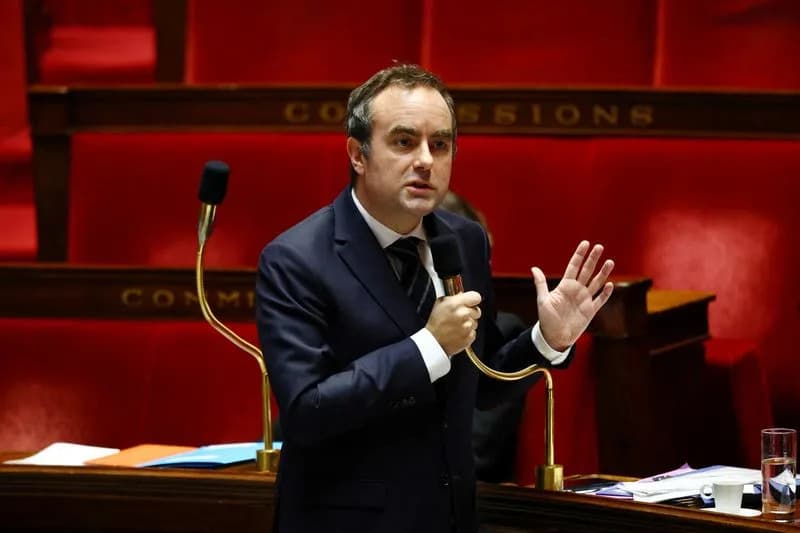
The fractured 2024 legislature produced successive fragile minority governments, and National Rally pushed for another dissolution of the National Assembly in hopes of gaining executive power. President Macron resisted, wary that fresh elections might install a National Rally prime minister for the remainder of his term. For now, a coalition of lawmakers continues to support Prime Minister Sébastien Lecornu, but the political balance remains fragile.
As voters in distressed regions weigh economic hardship, cultural concerns and a desire for change, National Rally’s foothold looks likely to endure unless tangible improvements in living standards, social mobility and public trust reverse the underlying trends that helped fuel its rise.
Reporting: William Jarrett.
Help us improve.