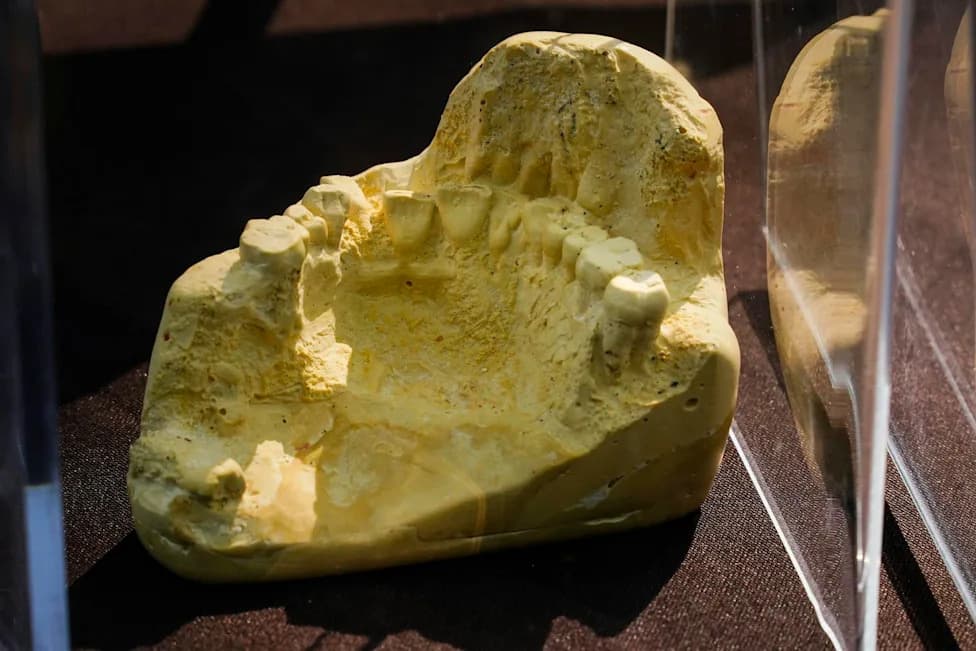
Human remains were discovered on Oct. 14 during a gas line installation in New Windsor, Orange County, at a site authorities say likely corresponds to the Murders Creek (modern Moodna Creek) burial ground. New York State Police believe the earliest burials there date to the mid–late 1700s, and the investigation is ongoing. Local historian Glenn Marshall says the remains may belong to a family missing for more than 200 years, but he will not name them until scientific identification is complete. Researchers hope universities will carry out further study when conditions allow.
Revolutionary‑Era Remains Unearthed in New Windsor Could Solve an 18th‑Century Mystery, Historian Says

Human remains uncovered during utility work in New Windsor, Orange County, may be linked to burials dating to the Revolutionary era, local authorities and historians say.
Discovery and official response
On Oct. 14, workers installing a gas line for Central Hudson Gas & Electric exposed human bones at a site in the Town of New Windsor. New York State Police responded and indicated the location is likely the Murders Creek burial ground (modern‑day Moodna Creek), where the earliest known interments are believed to date to the mid to late 1700s. The investigation is ongoing and the scene remains under official control.
Local historian's perspective
Town historian Glenn Marshall told local media he has long searched for a family reported missing from the late 1700s—a husband and wife and perhaps four or five relatives—and that the newly revealed remains fit the pattern he has been tracking. He said he will not publicly name the family until further research confirms any identification.
Next steps and scientific study
Authorities and local historians hope universities and forensic specialists will be able to conduct detailed studies once conditions permit. Potential analyses include careful archaeological excavation, osteological examination, radiocarbon dating, and DNA testing, which could help determine age, approximate date of death, ancestry, and whether additional burials exist at the site.
Officials emphasize that identification will require careful, respectful scientific work and coordination with legal authorities and descendant communities.
The discovery sheds light on a little‑documented chapter of local history and may provide answers to a centuries‑old mystery while also raising important questions about how best to study and honor the dead.
Help us improve.