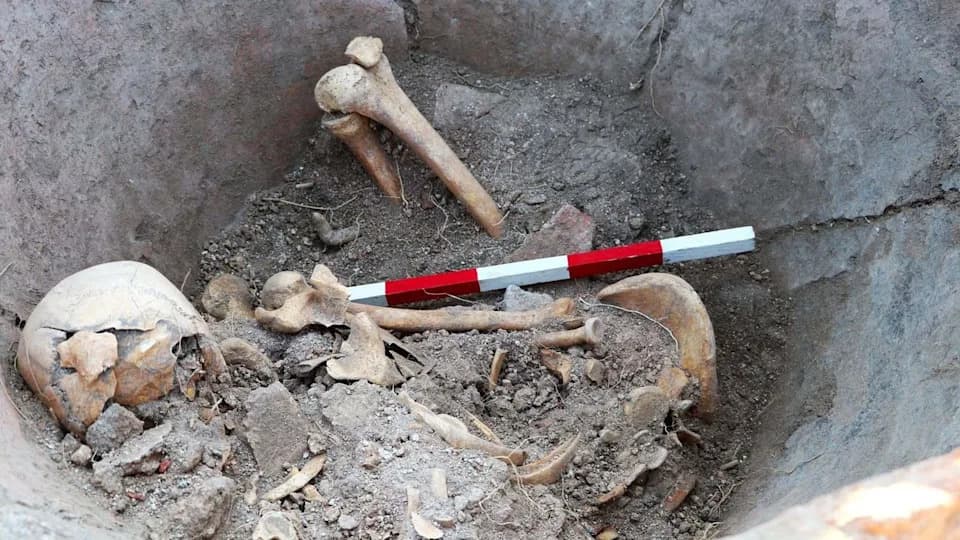
The Budapest History Museum team has uncovered a sealed limestone sarcophagus in Óbuda, dating to about 1,700 years ago, containing the complete skeleton of a young woman and dozens of grave goods. Recovered items include intact glass vessels, bronze figurines, roughly 140 coins, a bone hairpin, amber jewelry and traces of gold-threaded fabric. The coffin was hermetically sealed with metal clamps and molten lead and contained a thin layer of sediment that will be examined for further finds. Specialists say the quality and intact state of the burial suggest the deceased was likely of higher social standing.
Sealed 1,700-Year-Old Roman Sarcophagus Unearthed in Budapest, Packed with Jewelry, Coins and Glassware

Archaeologists in Budapest have uncovered a remarkably well-preserved Roman sarcophagus dating to roughly 1,700 years ago. The limestone coffin, discovered in Óbuda — the northern district that once formed part of the Roman town of Aquincum — was hermetically sealed: its stone lid fixed with metal clamps and molten lead. When conservators carefully raised the lid, they found a complete skeleton surrounded by dozens of grave goods.
Find and context
The sarcophagus lay amid the ruins of a neighborhood vacated in the 3rd century and later used as a burial quarter. While excavators also uncovered a Roman aqueduct and several simpler graves nearby, none matched the sealed coffin's preservation or wealth of accompanying objects.
Grave goods and what they reveal
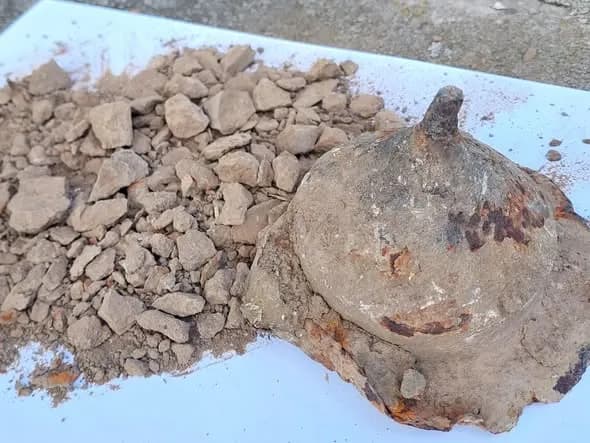
Inside the coffin the team recovered a striking assemblage: two intact glass vessels, several bronze figurines, about 140 coins, a bone hairpin, a piece of amber jewelry and fragments of fabric woven with gold thread. Excavators removed a c. 4 cm (1.5 in) layer of mud from the interior that will be examined for smaller objects or traces of organic material.
- Two complete glass vessels (flask and jar)
- Multiple bronze figurines
- Approximately 140 coins
- Bone hairpin and amber jewelry
- Traces of gold-threaded fabric
Who was buried here?
Personal items and the skeleton’s size indicate the burial likely belongs to a young woman. "The peculiarity of the finding is that it was a hermetically sealed sarcophagus. It was not disturbed previously, so it was intact," said Gabriella Fényes, lead archaeologist on the excavation. The careful placement of the body and the number of offerings suggest close family ties and deliberate ritual care.
"The deceased was buried very carefully by her relatives. They must have really loved who they buried here," Fényes said.
Gergely Kostyál, a Roman-period specialist and co-leader of the project, noted that by the fourth century sarcophagi were often reused. "This sarcophagus appears to have been made specifically for the deceased," he said, an observation that — together with the quality and quantity of goods — points to relatively high social status.
Next steps
Anthropologists are conducting a detailed analysis of the bones to determine the woman’s age, health, diet and possible geographic origins. Conservation specialists will continue to study the artifacts and the sediment from inside the coffin to recover any further small finds or organic remains.
Photographs released by the excavation team show gold jewelry, intact glassware and archaeologists examining the skull and other remains. For the team, the discovery carries both scientific importance and emotional weight, offering a vivid glimpse of personal grief and ritual practice from late antiquity.
"I was very touched by the care and expression of love that we were able to get a glimpse of," Fényes said. "Even now, I shudder to think how painful it must have been for the people at that time to bury this young lady."
Help us improve.