NASA released HiRISE images and supporting measurements of interstellar object 3I/ATLAS and said the body "looks and behaves like a comet." Harvard astronomer Avi Loeb responded that the agency prematurely dismissed alternative explanations, pointing to about a dozen anomalies—an unusually large inferred mass, a rare trajectory past inner planets, and reported tightly collimated jets—that he believes merit further study. The object will make its closest approach to Earth in December, offering another chance to collect data.
Avi Loeb Accuses NASA of Dismissing Alien-Spacecraft Theory After 3I/ATLAS Image Release

After a month-long government shutdown, NASA released new images of the interstellar visitor 3I/ATLAS—triggering a public clash between agency officials and Harvard astronomer Avi Loeb.
NASA's statement
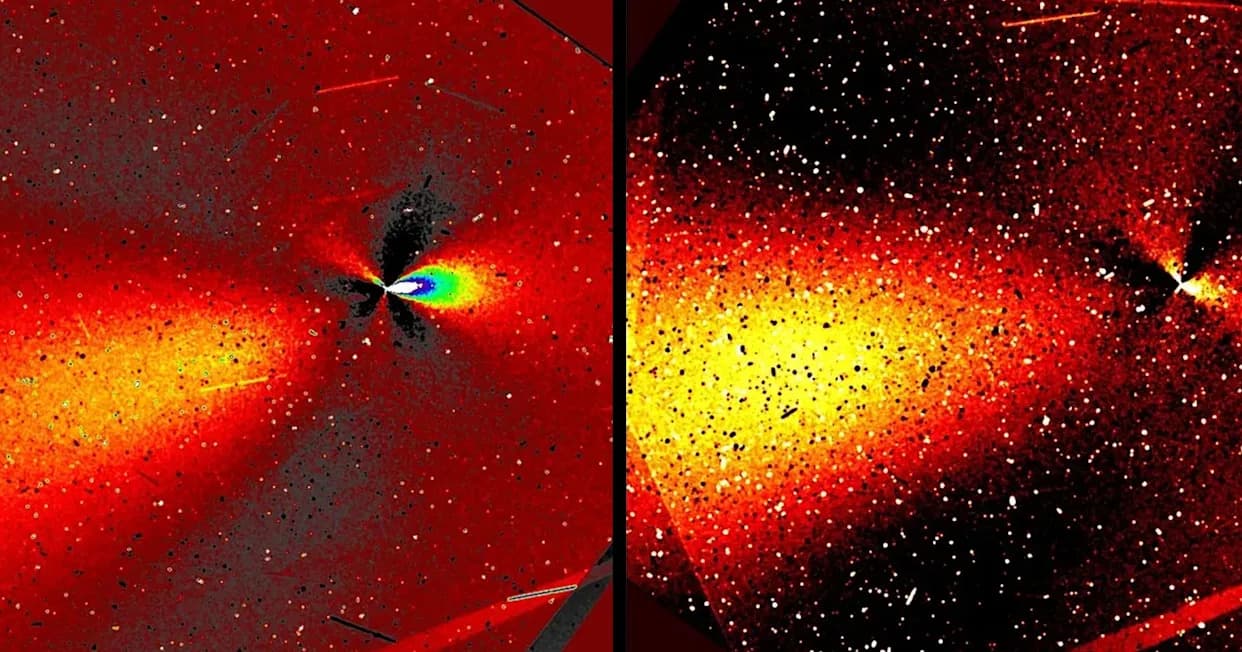
At a livestreamed briefing intended to "address the rumors," NASA associate administrator Amit Kshatriya said the object "looks and behaves like a comet" and that "all evidence points towards it being a comet." The agency published an image taken by the HiRISE camera aboard the Mars Reconnaissance Orbiter—delayed by the shutdown—and noted supporting ultraviolet measurements from the MAVEN spacecraft as well as prior observations from Hubble and the James Webb Space Telescope. Kshatriya described the view as a "fuzzy white ball" set against the blackness of space.
Loeb's response
Avi Loeb responded sharply in a blog post, accusing NASA of repeating an "official mantra" and prematurely dismissing alternatives, including his hypothesis that 3I/ATLAS could be artificial. Quoting Sherlock Holmes—"there is nothing more deceptive than an obvious fact"—Loeb argued the briefing offered "no big news" and said the agency should have emphasized what remains unexplained.
Points of contention
Loeb has cataloged roughly a dozen anomalies he believes warrant closer scrutiny. Among the items he highlights are:
- An unusually large inferred mass compared with typical interstellar visitors;
- A rare and improbable trajectory that passed near several inner solar system planets;
- Reports of large, tightly collimated jets pointing toward and away from the Sun, noted by some amateur observers;
- Ultraviolet and visible features that, in his view, are not fully explained by conventional comet models.
Loeb contends that if 3I/ATLAS is a natural icy body, its properties are unexpectedly favorable to detection, writing that "Mother Nature was kinder... by at least a factor of 100,000" compared with random expectations—an argument he uses to call for open-minded investigation.
What happens next
3I/ATLAS is expected to make its closest approach to Earth in December, offering another opportunity for both ground- and space-based telescopes to gather data before the object leaves the inner solar system. The exchange underscores a broader tension in science: when to rule out unconventional hypotheses to avoid distraction, and when to investigate anomalies that might point to new phenomena.
"Imaginative scientists master the humility to learn something new from anomalies rather than display the arrogance of expertise," Loeb wrote.
For now, NASA stands by its assessment that the evidence supports a natural cometary origin, while Loeb urges continued observation and scrutiny of the curious features.
Help us improve.