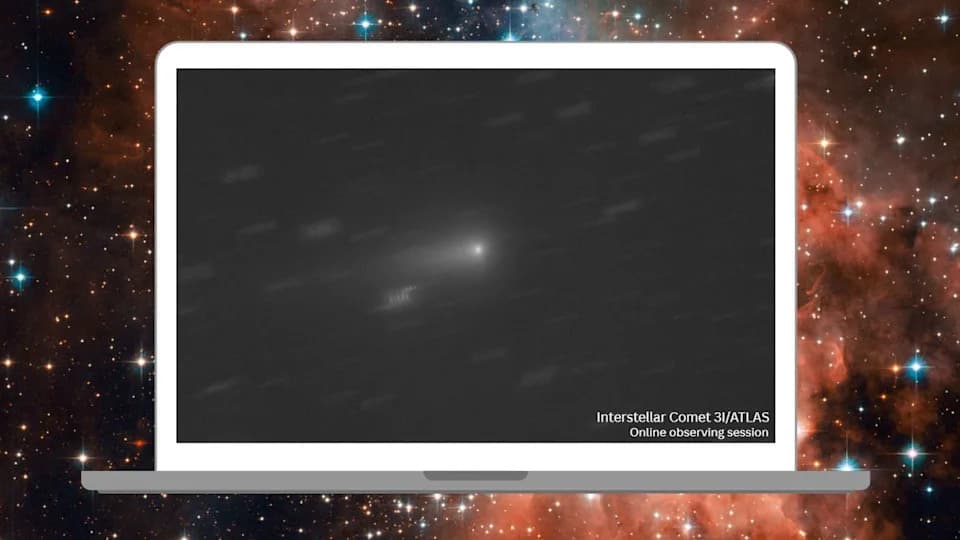
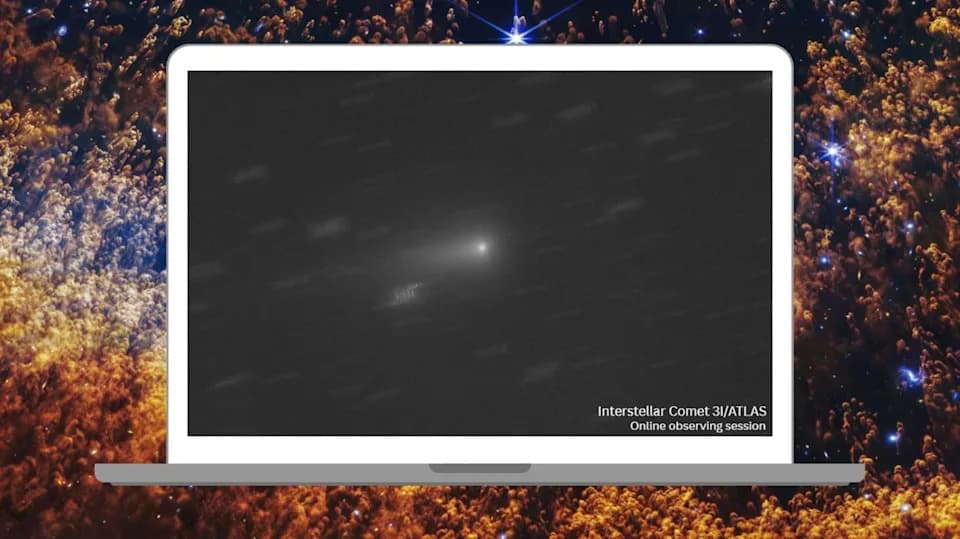
Comet 3I/ATLAS, discovered July 1, 2025 by NASA's ATLAS, is the third known interstellar object to pass through our solar system. Radio observations from the MeerKAT array recorded OH absorption features — signs of water-derived molecules in the coma, not an audio-style transmission — supporting a natural cometary origin. Trajectory and composition questions remain; NASA and ESA expect more data by early 2026, but the comet poses no threat to Earth and its precise origin is unlikely to be determined.
3I/ATLAS: Interstellar Comet Shows Radio Absorption Features — What Scientists Now Know

illustration of comet flying thru space - Nazarii_Neshcherenskyi/Shutterstock
Comet 3I/ATLAS, first detected on July 1, 2025 by NASA's ATLAS survey, has captured wide attention because it is an interstellar visitor and because radio telescopes have observed unusual features associated with it. Here’s a clear, up-to-date summary of what astronomers have actually detected and what it means.
What MeerKAT Saw
In late October, South Africa’s MeerKAT radio array observed the comet as it neared perihelion (its closest approach to the Sun). Early headlines described a "radio signal" from the comet, which led to speculation online that the object might be artificial. That interpretation is misleading. MeerKAT did not record an audio-style broadcast or an encoded transmission. Instead, astronomers detected absorption features in the radio spectrum produced by OH (hydroxyl) radicals — molecules created when water is dissociated by sunlight.
Why That Matters
OH absorption is a well-known signature in cometary radio observations and indicates the presence of water or water-derived molecules in the coma (the gas and dust envelope around the nucleus). The detection therefore supports the conclusion that 3I/ATLAS is a natural, active comet rather than an engineered probe. It does not, however, identify the comet’s birthplace.
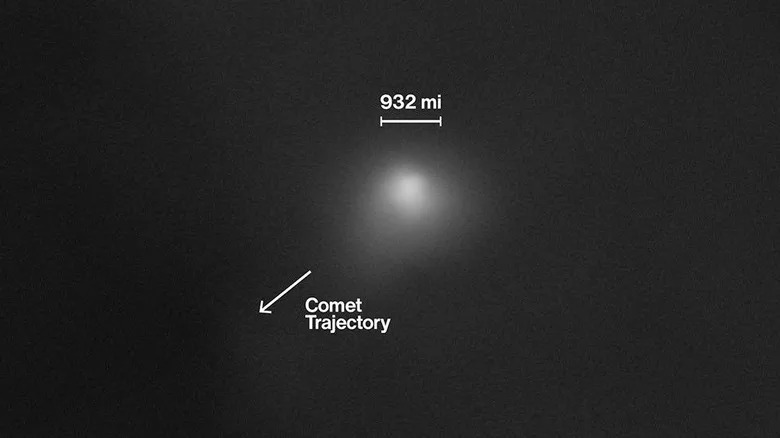
trajectory of comet 3I/ATLAS - NASA/JPL-Caltech/University of Arizona
How Rare Is This Event?
3I/ATLAS is only the third confirmed interstellar object observed traveling through our solar system — hence the designation "3I" (third interstellar). The earlier visitors were 1I/'Oumuamua (2017) and 2I/Borisov (2019). All three detections coming within the last decade reflect major improvements in survey capability, but the small sample size limits robust conclusions about the population of interstellar objects.
Trajectory and Origins
Trajectory analyses indicate 3I/ATLAS approached from a direction roughly perpendicular to the paths of the two earlier interstellar visitors, which appeared to come from near the Milky Way’s center. That difference suggests 3I/ATLAS may have originated in a galactic region that is not yet well surveyed, but current data are unlikely to tie the comet back to a specific star system.
Claims of an Artificial Origin
Professor Avi Loeb of the Harvard Center for Astrophysics has suggested publicly that 3I/ATLAS could be artificial, citing what he describes as unusual properties — a larger inferred mass, higher speed, and reports of elevated nickel in the coma. Many other astrophysicists reject that interpretation. They note that comets commonly display diverse and sometimes surprising behavior, compositional measurements from a distance can be uncertain, and a three-object sample is too small to define a norm for interstellar visitors.
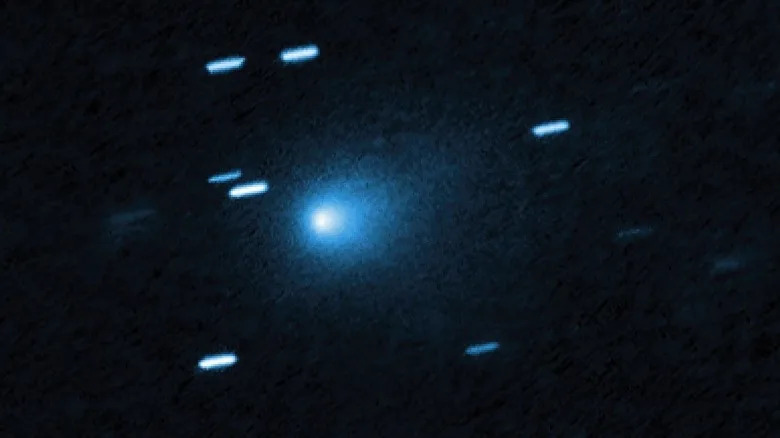
NASA image of comet 3I/ATLAS - Image: NASA, ESA, David Jewitt (UCLA); Image Processing: Joseph DePasquale (STScI)
“How can anyone claim to be an expert of interstellar objects when the sample size includes only two previously known examples?” — A. Loeb (paraphrased)
The recent MeerKAT observation — interpreted as molecular absorption rather than engineered signals — weakens the case for an artificial origin, though it does not settle the broader questions about the object's formation or history.
Safety and Ongoing Observations
Scientists are confident 3I/ATLAS poses no impact threat to Earth; it will not pass closer to us than the Sun. NASA and the European Space Agency are collecting imagery and other measurements, and more satellite and probe data are expected to be analyzed by early 2026. Even with additional data, pinpointing the comet’s exact origin is unlikely, but continued observations will improve our understanding of interstellar small bodies over time.
Bottom line: MeerKAT detected typical cometary OH absorption features around 3I/ATLAS — strong evidence the object is a natural, water-bearing comet. Claims that it is an alien probe remain speculative and are not supported by the radio data currently available.
Help us improve.