Monte Sierpe in Peru is a band of about 5,200 aligned pits stretching roughly 1.5 km. New drone imagery and microbotanical pollen analysis suggest the pits may have functioned first as a pre‑Inca barter marketplace and later been repurposed by the Inca for large‑scale accounting or tribute recording. The pits are organized into about 60 sections and contain pollen from maize and plants used in basketry; further radiocarbon dating and comparison with Inca khipu records are underway to test this hypothesis.
Peru’s Monte Sierpe: 5,200 Aligned Pits Could Be a Pre‑Inca Marketplace Later Reused for Inca Accounting

Stone‑age logistics? New evidence reshapes the mystery of Monte Sierpe
A nearly one‑mile (about 1.5 km) long band of roughly 5,200 regularly spaced pits in Peru’s Pisco Valley, locally known as Monte Sierpe or "serpent mountain," has puzzled researchers for decades. Recent drone surveys combined with microbotanical pollen analysis now provide fresh clues suggesting the pits may have first functioned as a pre‑Inca barter market and were later adapted by the Inca as a large‑scale accounting or tribute system.
What the surveys reveal
High‑resolution aerial imagery shows the pits are arranged into about 60 distinct blocks separated by open spaces. Each pit measures roughly 1 to 2 meters wide and 0.5 to 1 meter deep. Within blocks the pits display clear numerical patterns: for example, one sector contains 12 rows that alternate between seven and eight pits, suggesting intentional organization rather than random placement.
Pollen and plant remains point to trade
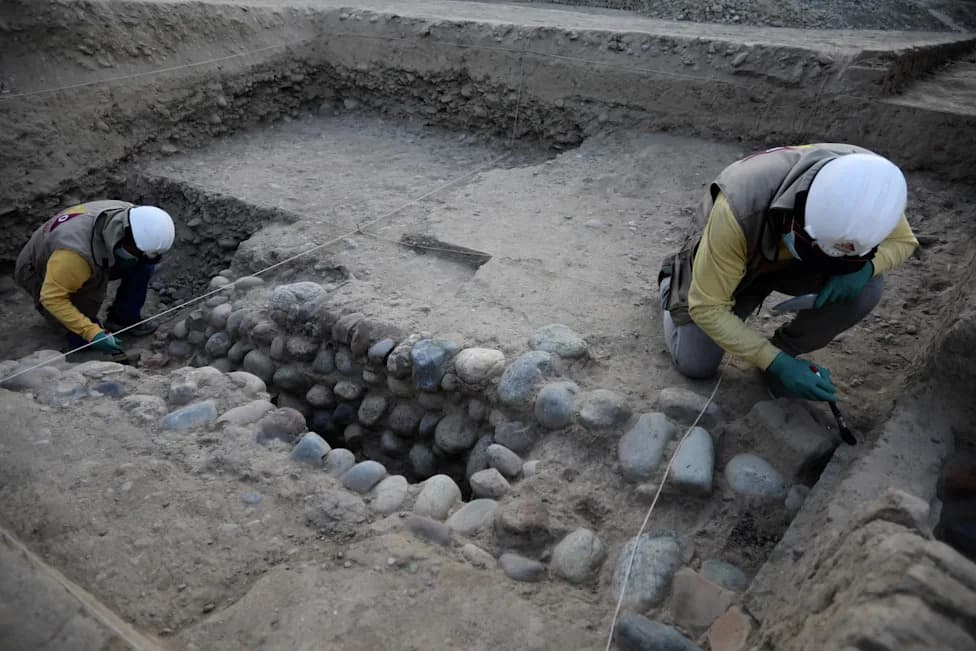
Microbotanical analysis of sediments from inside the pits recovered pollen from cultivated plants such as maize and wild species like reeds and willow commonly used for basketry. These findings support scenarios in which goods were placed in woven containers or lined pits for exchange. The researchers propose that commodities such as cotton, coca, maize and chili peppers could have been deposited in pits and exchanged in fixed quantities — effectively using pits as transaction slots.
Chronology and possible Inca use
Preliminary dating indicates primary use roughly 600 to 700 years ago, consistent with the Late Intermediate Period (about AD 1000–1400). Additional radiocarbon dating is underway to refine the timeline. Pollen from citrus — a plant introduced in the colonial era — indicates some continued activity after European contact, before the site was eventually abandoned.
From marketplace to accounting device?
Lead author Dr. Jacob Bongers, a digital archaeologist at the University of Sydney, and coauthor Professor Charles Stanish suggest the site may have originated as a regional marketplace used by pre‑Inca groups such as the Chincha and was later integrated into Inca administrative systems. The segmented layout recalls features of the Inca khipu, a knotted cord record‑keeping system. One khipu recovered from the Pisco Valley contains 80 cord groups and displays complex numerical relationships; researchers are comparing khipu records with pit layouts to test whether the pits served as a physical tally for tribute or redistributed goods.
"In a sense, Monte Sierpe could have been an 'Excel spreadsheet' for the Inca Empire," Bongers said, illustrating how a large, non‑written accounting system might have functioned.
Expert responses and remaining questions
Independent archaeologists commend the multidisciplinary approach but urge caution. Dr. Dennis Ogburn, an anthropologist at the University of North Carolina at Charlotte, notes the pollen evidence helps rule out many earlier speculative explanations, but he warns that marketplace behavior and formalized accounting are distinct social practices; more direct evidence is needed to confirm both roles.
Dr. Christian Mader of the University of Bonn describes the new interpretation as both interesting and plausible and highlights the study's broader contribution to understanding indigenous economic systems in the Andes.
Next steps
Ongoing work includes additional radiocarbon dating, extended microbotanical sampling and detailed comparisons between the pit layout and regional khipu records. If a numerical correspondence is established, Monte Sierpe would offer a rare, large‑scale example of how pre‑Hispanic Andean societies organized trade and recorded economic activity without a written script.
Researchers quoted: Dr. Jacob Bongers; Professor Charles Stanish; Dr. Dennis Ogburn; Dr. Christian Mader.
Help us improve.