The Maniq, one of Thailand's smallest ethnic minorities and the country's last hunter-gatherers, are pressing for permanent rights to forests they have used for generations. While many have partly settled to access schooling and healthcare, traditional hunting continues and often conflicts with conservation laws that bar private ownership. A recent law creating 'protected ethnic areas' promises use-rights but stops short of title deeds, and advocates warn that forestry rules may still limit meaningful land security. Maniq leaders say guaranteed, long-term land-use rights are essential for dignity, livelihoods and cultural survival.
Thailand’s Last Hunter-Gatherers Fight for Permanent Land Rights

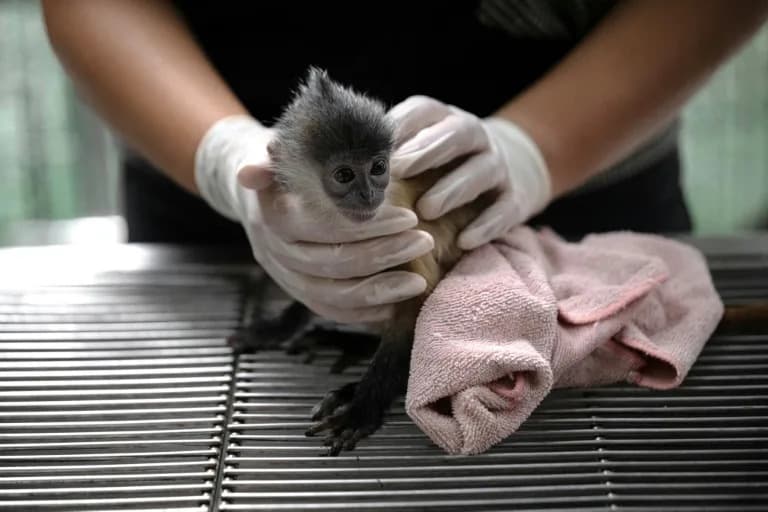
Deep in the rainforests of southern Thailand a young Maniq hunter runs through dense undergrowth with a blowpipe, fires a poisoned dart and, as his group closes in, a monkey falls. The kill follows a centuries-old tradition for the Maniq, one of Thailand’s smallest ethnic minorities and the country’s last hunter-gatherers. But because the forest is now a protected conservation zone, that hunt is technically illegal — a tension that lies at the heart of the Maniq's campaign for lasting land rights.
Tradition and a changing way of life
For generations the Maniq, who belong to the broader Negrito lineage, roamed the Malay Peninsula's rainforests as nomadic hunter-gatherers. Today only about 415 Maniq remain, scattered across the Banthat mountains of southern Thailand. Many communities have settled on the forest edge to access schooling, healthcare and other services, while still maintaining traditional practices.
Dan Rakpabon, 18, one of the community's youngest hunters, carried a recent kill back to the thap — seven leaf-covered bamboo shelters in a clearing in Pa Bon, Phatthalung province. He singed the carcass to remove the fur, butchered it and divided the meat so larger families received bigger portions. 'I feel happy every time we hunt. This is our food,' he said.
Livelihoods on the edge
Settling has brought practical challenges. Modern life requires cash: many men work on rubber plantations for roughly $3–8 a day, women weave pandanus leaf bags to sell, and several Maniq children travel some 10 kilometres to a nearby village to attend school during the week. 'One day my child came to me and said, “Today I can write my name.” Just hearing that made me proud,' said Jeab Rakpabon, a mother who supports her family through weaving.
Hunting is now intermittent rather than the primary source of food. 'I grew up following my father into the forest to hunt and forage,' said Tom Rakpabon, leader of the 40-strong Pa Bon community. 'Now we have to buy rice, meat and vegetables from the market.'
Law, conservation and land tenure
The forests the Maniq occupy are classified as conservation zones under Thai law, which bars private ownership and tightly restricts resource use. Under current regulations, established Indigenous communities on protected land can apply for 20-year usage permits, many of which have been granted. Officials say they are not opposed to traditional, low-impact practices: 'We are not concerned about the Maniq's traditional way of life. They do not destroy the forest,' said Chutiphong Phonwat, head of the Khao Banthat Wildlife Sanctuary.
Yet critics argue that temporary permits treat Indigenous residents as provisional occupants rather than permanent stewards of ancestral land. Communities that have lived in the same place for decades still need official permission for basic activities such as cutting trees or building houses. 'It's frustrating to live like this,' said Thawatchai Paksi, whose family settled after a marriage to a Thai rubber-grower. 'If the Maniq had land, we could stand on our own feet,' added local leader Sakda Paksi.
Hardships and discrimination
Some Maniq communities face severe hardship. In Satun province, a group has been reduced to begging after local resources dwindled and paid work proved scarce. 'If nobody gives us food, it's difficult,' said leader Jin Sri Thung Wa. The Maniq also encounter social stigma and derogatory language from outsiders. 'The Maniq are not savages,' said Tao Khai, leader of another community. Many families rely on daily wage labor and occasional hunting to survive.
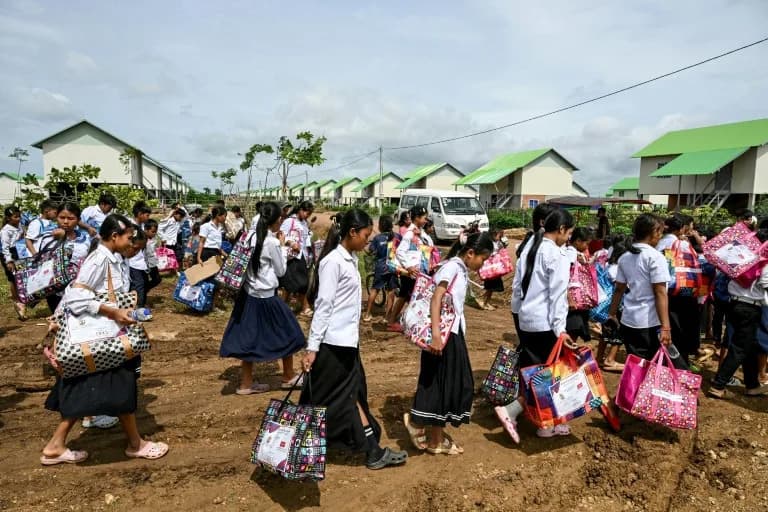
Children like 13-year-old Duan Srimanang travel by plantation vehicle each morning to attend school. Placed in classes by ability, Duan is learning to read and write alongside younger classmates. 'When I grow up, I want to have a job and earn money so I can take care of my mother and make her comfortable and happy,' she said.
Legal reform and its limits
In September, the Thai government introduced a law to create 'protected ethnic areas' intended to give Indigenous groups a more flexible regulatory framework. Anthropologist Apinan Thammasena said the law provides rights to use land in accordance with traditional practices but does not confer private title: 'Land security does not necessarily have to come in the form of ownership. It can come in the form of guaranteed, permanent rights to use the land.'
However, some lawmakers and advocates warn that core conservation regulations remain unchanged and could limit the law's effectiveness. MP Laofang Bundidterdsakul, who helped draft the bill, noted that forestry laws and permissions for infrastructure projects still apply, potentially restricting meaningful access to services like electricity and water.
Where forward?
Back in the forest clearing, as children do homework by headtorch and men return from hunts, the underlying aspiration is simple and persistent. 'This land was given to us only temporarily,' said Tao Khai. 'The Maniq want a home where we can live forever.' The debate over how to reconcile conservation, legal frameworks and Indigenous rights continues to shape the Maniq's future and offers a broader lesson about Indigenous stewardship and biodiversity.
Help us improve.