Digital reprocessing of a 1940s photograph of a mud stopper inscription reveals hieroglyphic signs that match the name Meretneith. The enhanced "rubbing" shows she may have borne the royal serekh—the emblem of kingship—indicating she could have held the equivalent status of a king in Egypt's First Dynasty. This evidence, together with her lavish tomb and administrative seals, suggests she served in varied ruling roles across a career that may have lasted decades.
New Digital Analysis Strengthens Case That Meretneith Was a Female King in Early Egypt
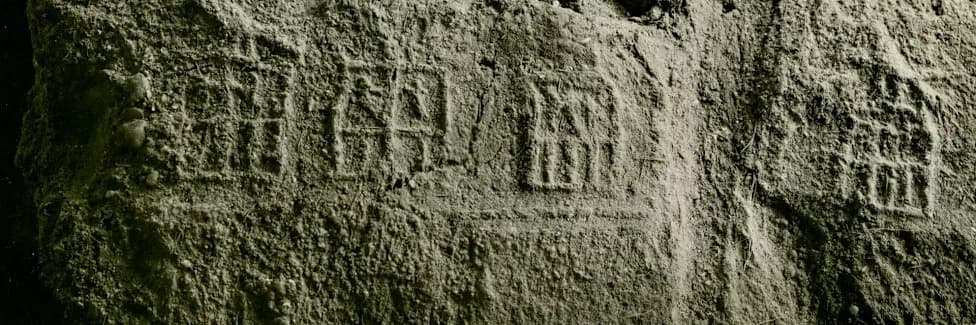
More than 5,000 years ago a royal woman named Meretneith (often written Merneith) lived in early dynastic Egypt. Recent digital reprocessing of a damaged 1940s photograph of a mud stopper inscription strengthens the case that she bore the royal serekh—the emblem of kingship—suggesting she may have held the equivalent status of a king during the First Dynasty.
A Muddy Dispute
The single textual source that could decisively clarify Meretneith's status is an inscription visible in a black-and-white photograph of a mud stopper (a plug used to seal pottery jars). The mud stoppers were excavated from an unknown tomb in Saqqara in the 1940s; of the original set of 13, only one photograph of an inscription survives in the archive of Egyptologist Walter B. Emery at the Egypt Exploration Society. The physical artefact and the original glass photographic plate are currently unlocated.
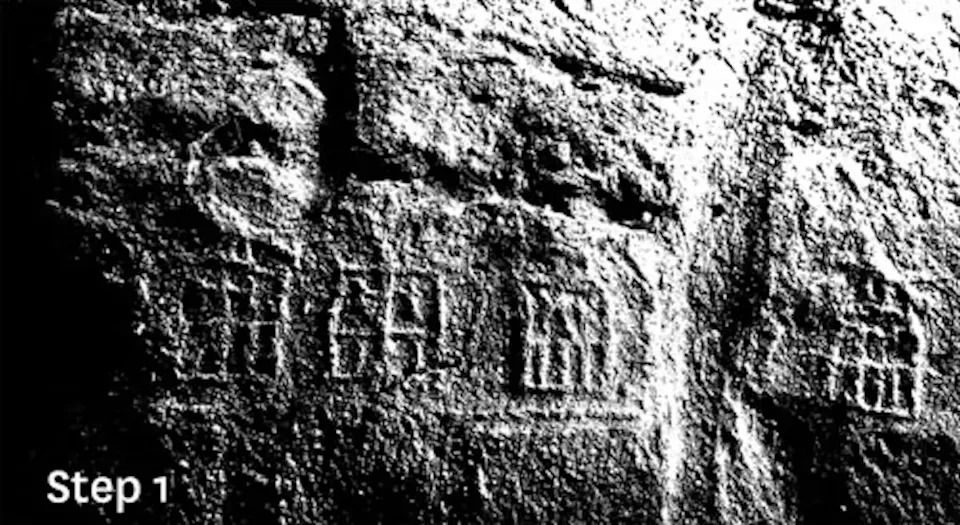
The first step was to add more contrast to a digital scan of the photograph. Credit: Susan Kelly
What a Serekh Means
Serekhs are early royal emblems combining a stylised palace facade, a patron deity and the ruler’s name. In the surviving photograph the inscription shows a row of four serekhs. Emery argued the first and fourth serekhs belonged to the king Djer and that the two middle serekhs recorded the name Meretneith. Many scholars challenged that reading, chiefly because the published photograph was of poor quality and Emery’s hand-drawn copy left room for doubt.
Digital Restoration Technique
Working with digital technician Crystal Miller (Macquarie University), researchers applied a multi-stage image-processing routine to a high-resolution scan of the archival photograph. The workflow involved contrast enhancement, colour inversion and conversion to a scalable vector graphic to create a crisp digital "rubbing" of the signs. By isolating the serekhs from the background and tracing their registered marks, the team produced a reproducible, high-clarity representation for close paleographic comparison.
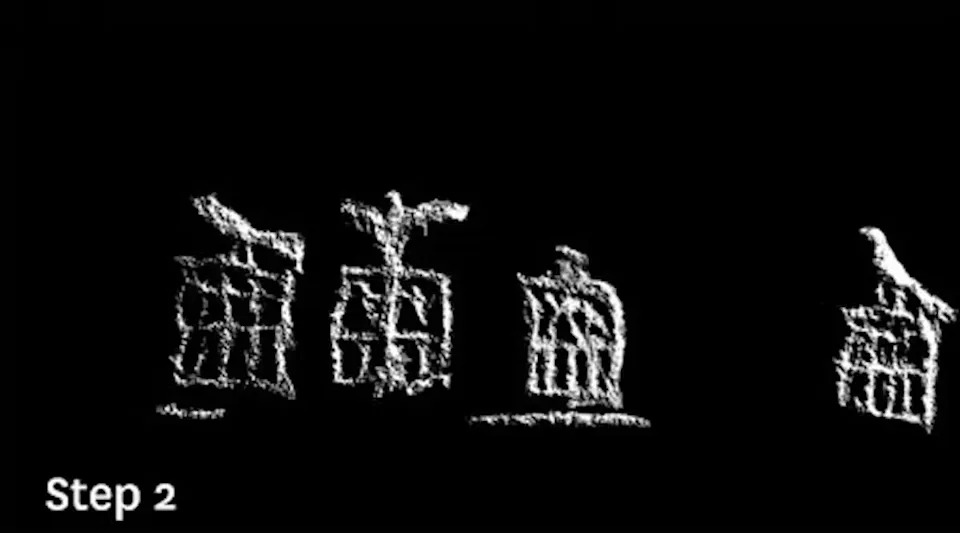
We isolated the serekhs from the background to perform further analysis. Credit: Susan Kelly
What The Signs Show
Analysis of the enhanced image shows that the name signs in the second and third serekhs match the main hieroglyphic sign used elsewhere to write Meretneith’s name. Based on these results, the researchers conclude the inscription identifies Meretneith with the principal royal mark used by rulers of this period.
That reading implies Meretneith was represented with the same emblem of rulership as male kings—a point that supports describing her as a female king (a woman holding the formal trappings of kingship), rather than only a queen in the later, narrower sense.
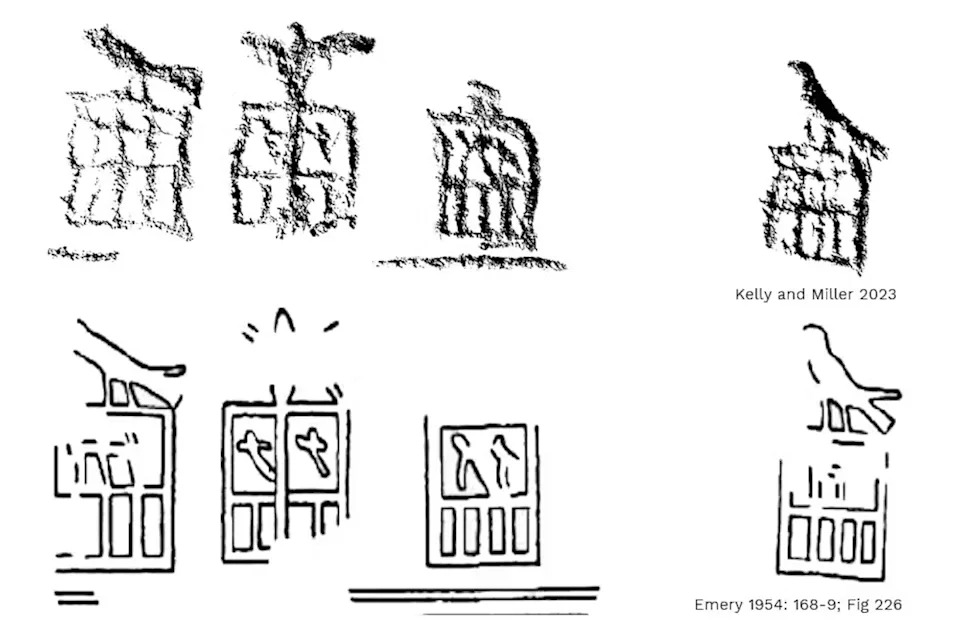
Comparison of our new digital 'rubbing' of the serekhs (originally attained in 2023) and Emery's hand drawings (1954). Credit: Susan Kelly
A Body Of Corroborating Evidence
This new inscriptional evidence complements other markers of Meretneith’s high status: an elaborate funerary complex in the royal cemetery at Abydos, inscriptions that pair her name with administrative titles and departments, and impressions bearing her name on royal tomb seals. Some studies estimate she exercised political authority for as long as 30 years in one capacity or another.
Political Roles And Implications
The researchers propose that Meretneith’s political career included distinct stages: appearances beside Djer’s serekh indicate co-regency, later seals record her as mother of a succeeding king, and other texts suggest she managed treasury and officials without adopting a conventional male royal title. The flexibility to move between these roles may have been afforded by her gender and family position within the early royal household.
Conclusion
While absolute proof would require discovery of additional contemporary texts or the rediscovery of the original artefact, the new digital rubbing provides strong supporting evidence that Meretneith was represented with a royal serekh and functioned as a ruler-equivalent in Egypt’s First Dynasty. The research, published in Prague Egyptological Studies, therefore reshapes how scholars view female political agency in Egypt’s formative centuries.
Note: The enhanced images and comparisons between the 2023 digital rubbing and Emery’s 1954 hand drawings accompany the published study. Lead image credit: Egypt Exploration Society.
Help us improve.