Reanalysis of 46 skulls from subsidiary graves at Umm el-Qaab finds 18 with perimortem trauma, including linear fractures and sharp-force wounds. The pattern supports Flinders Petrie’s century-old hypothesis that some attendants were sacrificed to accompany First Dynasty kings (c. 3078–2900 BCE) into the afterlife. The study also highlights limits of the preserved sample and calls for further analysis of the wider burial assemblage.
New Forensic Review Strengthens Case for Retainer Sacrifice Around Egypt’s First Kings
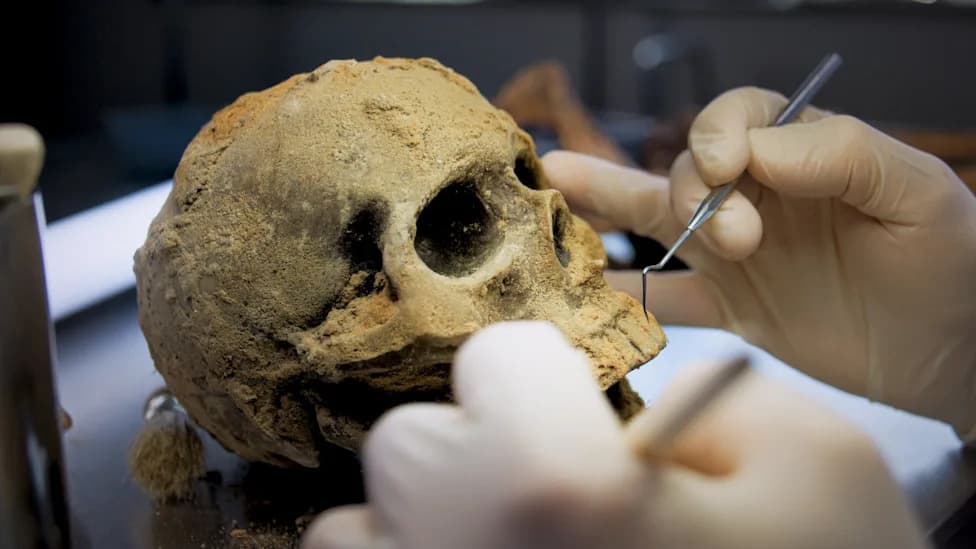
Illustrative generic image of a skull in a laboratory. (EvgeniyShkolenko/iStockphoto/Getty Images)
Archaeological reanalysis of skulls recovered from burials clustered around the tombs of Egypt’s earliest kings suggests that some attendants may have been killed to accompany rulers into the afterlife.
Background
In the 1920s, British Egyptologist Flinders Petrie excavated rows of subsidiary graves at Umm el-Qaab, near Abydos, surrounding First Dynasty royal funerary complexes (c. 3078–2900 BCE). Petrie preserved 46 skulls from those burials and brought them to England, but at the time he lacked methods to determine cause of death. That uncertainty left open competing explanations: ritual retainer sacrifice, epidemic or mass death, or another funerary practice.
Modern Forensic Reanalysis
Archaeologist Roselyn Campbell of Purdue University revisited Petrie’s collection using contemporary forensic techniques. Her new paper in Frontiers in Environmental Archaeology reports that 18 of the 46 skulls exhibit perimortem trauma consistent with potentially lethal injuries.
YouTube Thumbnail
Types Of Injuries Observed
The most frequent lesions are linear fractures across the skullcap, which are commonly produced by broad, flat implements. Several skulls also display sharp-force wounds, including what Campbell describes as a penetrative injury to the side of the head and a chopping injury near the eye. These injuries are interpreted as perimortem — sustained at or very near the time of death — rather than healed, postmortem damage.
"While it is certainly possible that some individuals may have died peacefully from some other cause and been buried around the royal funerary complexes, it is also clear that many of these individuals did experience perimortem trauma of some kind," Campbell writes, concluding that deliberate killing is a plausible explanation for many of the cases.
Archaeological Context And Interpretation
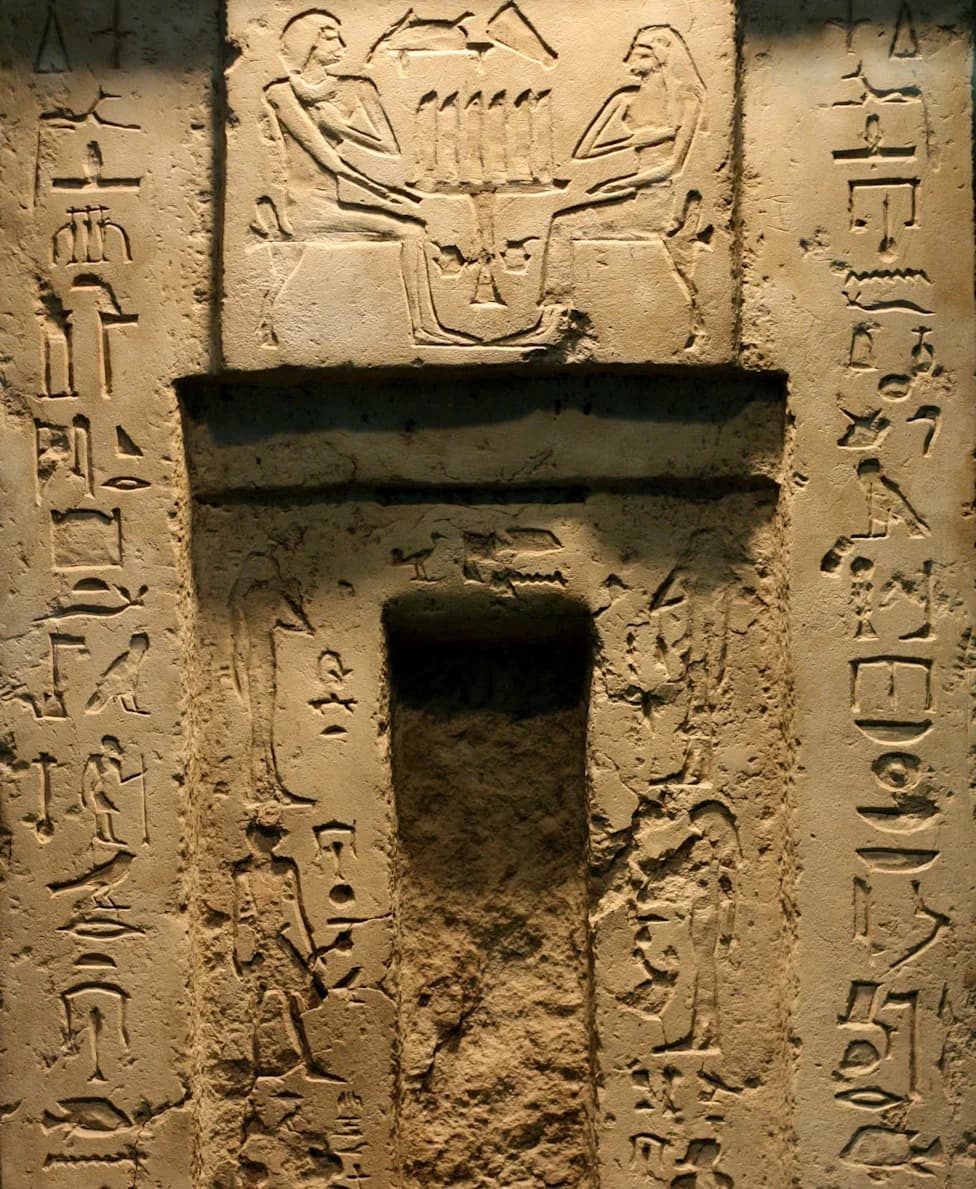
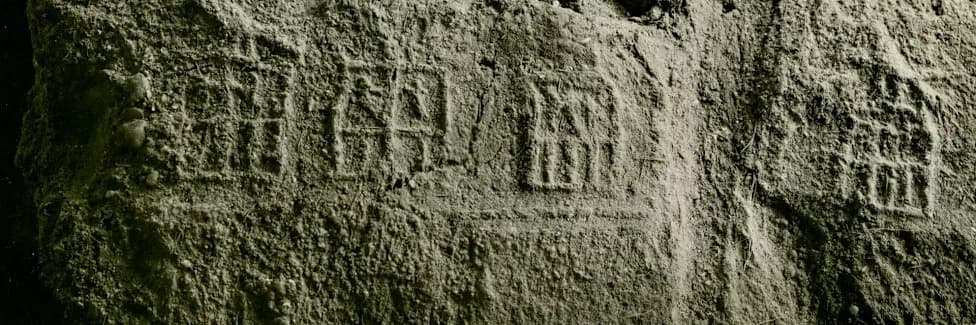
Some subsidiary graves were inscribed with names and titles, identifying occupants as lower- or mid-level officials or artisans associated with the royal court. Petrie noted that dozens of burials were closed roughly at the same time and often hastily, which he argued made sequential, natural deaths unlikely. Campbell’s forensic findings give new weight to Petrie’s long-standing retainer sacrifice hypothesis, suggesting the practice — whether voluntary, chosen, or forced — may have existed from the earliest phases of pharaonic Egypt.
Limits And Next Steps
Campbell emphasizes important limitations: the sample is small and biased (only the skulls Petrie preserved are available), and most of the associated skeletons and full burial contexts remain unexamined. She calls for locating and analyzing additional remains and contextual data to establish scale, age and sex profiles, and whether the pattern reflects ritual killing, social selection, or other processes.
This study illustrates how revisiting historic collections with updated methods can reveal new insights. The research is published in Frontiers in Environmental Archaeology.
Help us improve.