Archaeologists at Saqqara have uncovered a decorated Old Kingdom tomb belonging to Sekhentio-Ptah, an official described as the "keeper of the secrets of royal decrees." The burial contained an offering table, purification basin, two false doors dated to the late Fifth/early Sixth Dynasty (about 4,350 years ago), more than 100 shabtis, a wooden falcon statue and cartonnage. Experts suggest the title denotes a senior royal scribe and note the tomb shows signs of later reuse; the owner's mummy was not identified.
Ancient Tomb of Sekhentio-Ptah — the 'Keeper of the King's Secret Decrees' — Unearthed at Saqqara
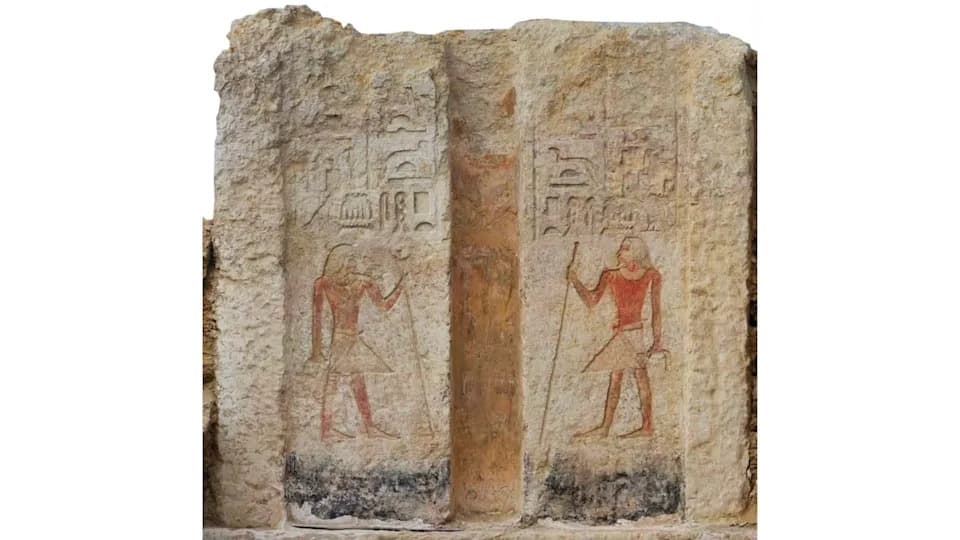
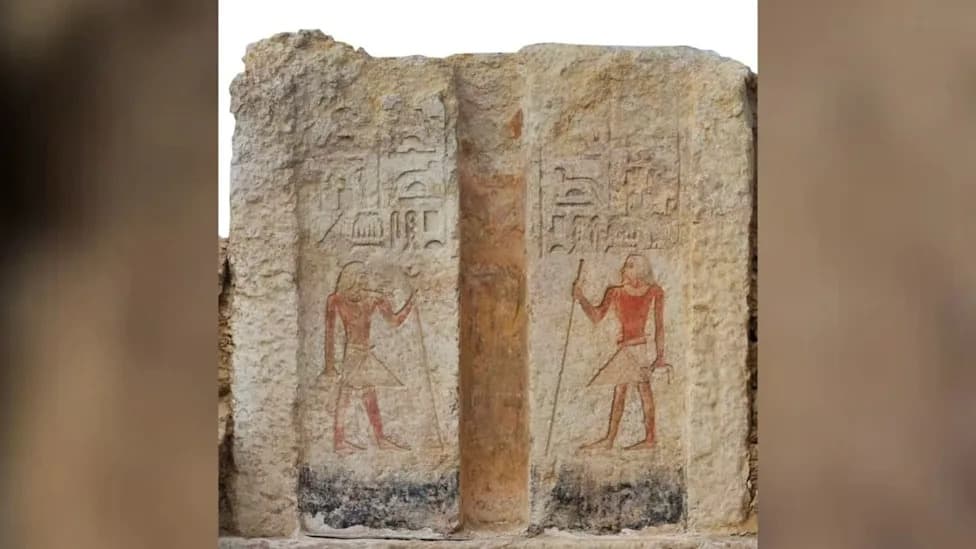
The inscription found in the tomb shows what appears to be an image of the official Sekhentio-Ptah. . | Credit: Photo courtesy of the Egyptian Ministry of Tourism and Antiquities
Archaeologists working at the Saqqara necropolis in Egypt have uncovered a decorated Old Kingdom tomb belonging to an official named Sekhentio-Ptah, described in inscriptions as the "keeper of the secrets of royal decrees." The discovery, announced by Egypt's Ministry of Tourism and Antiquities, sheds light on the administrative elite who supported Egypt's pharaohs during the era famed for pyramid-building.
Who Was Sekhentio-Ptah?
The tomb inscription lists several of Sekhentio-Ptah's titles, including Overseer of All the King's Works and Overseer of Royal Documents. Though the title "keeper of the secrets of royal decrees" sounds exotic, Egyptologists say it was likely a high-ranking bureaucratic role—essentially a senior royal scribe with access to confidential records.
"It probably merely means that as someone in charge of royal documents and the people who write them, he has access to confidential information," said Ann Macy Roth, a clinical professor of Egyptology at New York University, who was not part of the excavation.
What Was Found Inside the Tomb
Excavators recorded a suite of typical funerary equipment, including an offering table, a purification basin and two carved false doors. The design of the false doors suggests a late Fifth or early Sixth Dynasty date—roughly 4,350 years ago—placing the burial solidly within the Old Kingdom (circa 2649–2150 B.C.).
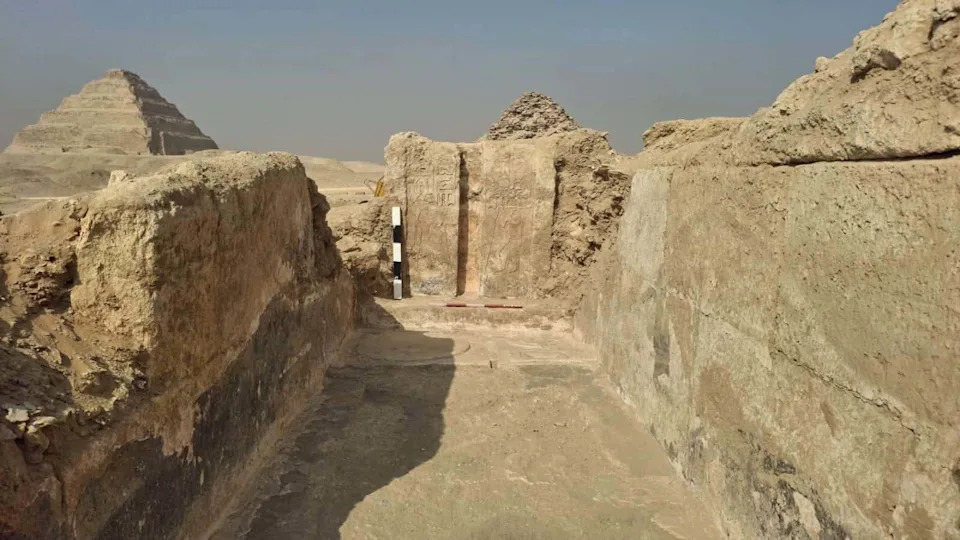
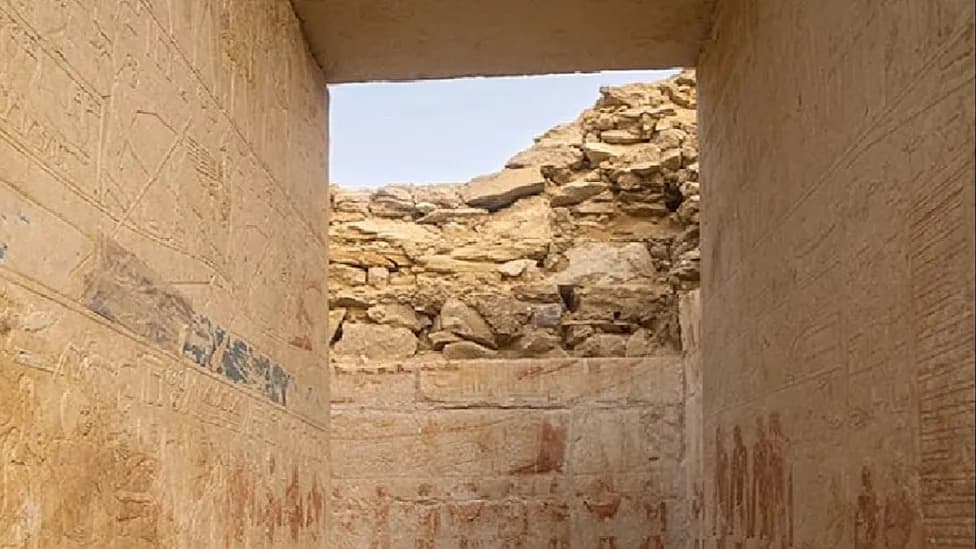
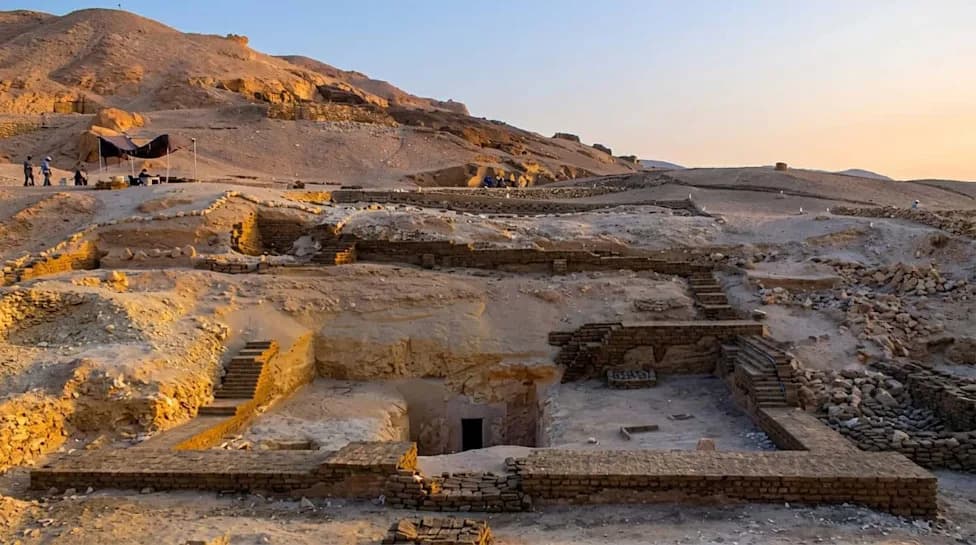
Part of the newfound tomb, which dates to well over 4,000 years ago. | Credit: Photo courtesy of the Egyptian Ministry of Tourism and Antiquities
More than 100 shabtis (also spelled ushabtis), the small funerary figurines believed to serve the deceased in the afterlife, were recovered. The team also found a wooden falcon statue—possibly associated with the falcon god Horus—and fragments of cartonnage, the plastered material used to wrap and protect mummies. The remains of Sekhentio-Ptah himself were not positively identified.
Signs of Later Reuse
Observers of the ministry's photographs and notes noted evidence that the tomb was reused in later periods—a common practice in ancient Egypt. Experts suggest the plentiful shabtis and the cartonnage likely belong to subsequent interments placed within the same chamber centuries after Sekhentio-Ptah's burial.
Context: Bubasteion and Bastet
The tomb lies in the Bubasteion area of Saqqara, a precinct later associated with cat burials and the cat-goddess Bastet during the Late Period (circa 664–332 B.C.). The ministry's statement did not report any cat burials within this particular tomb, however.
Researchers say the find offers useful new evidence about Old Kingdom administration and mortuary practice, especially when combined with careful study of the inscriptions and associated artifacts. Live Science contacted the excavation team for comment but had not received a reply by the time of publication.
Help us improve.