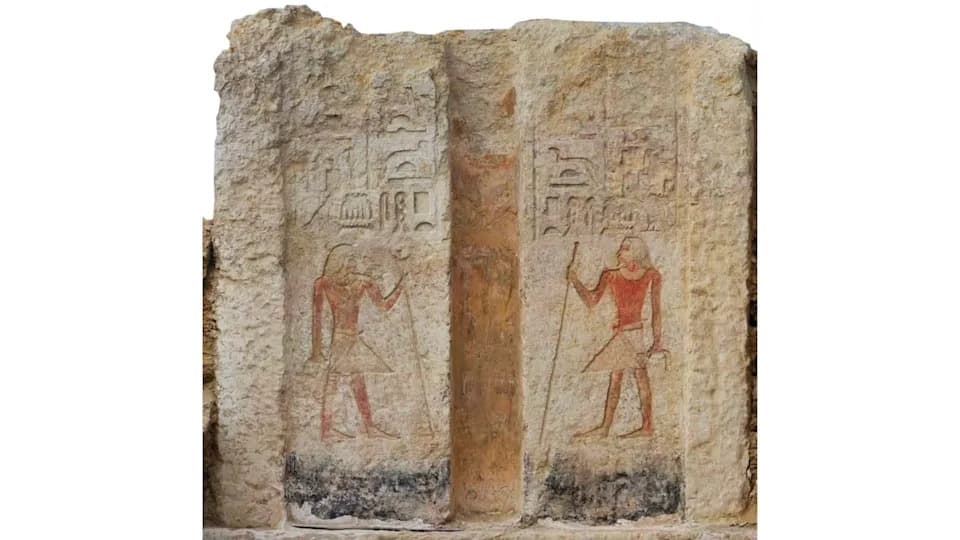
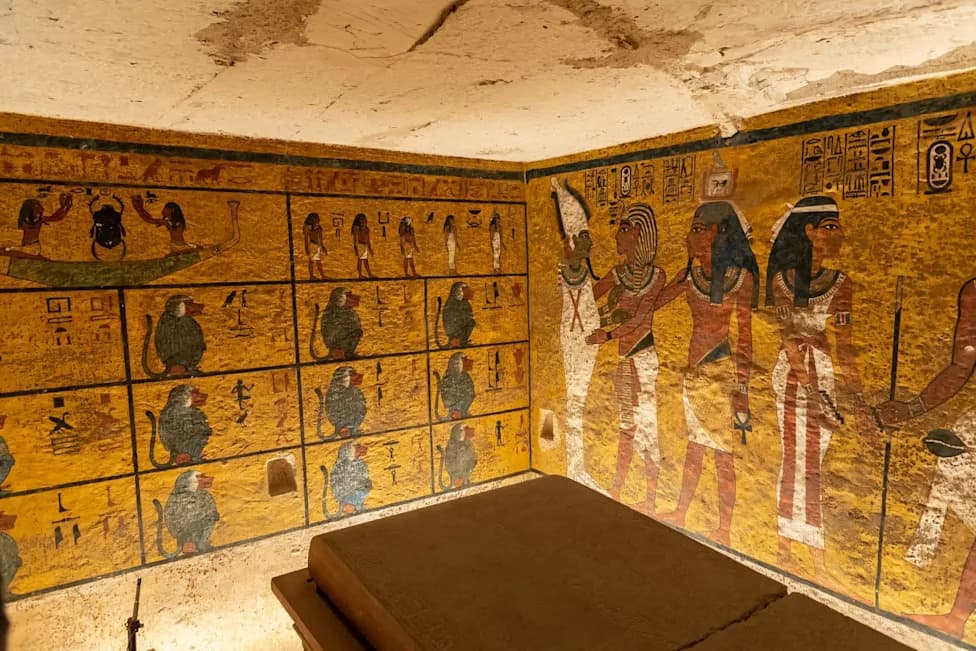
A joint Egyptian–Spanish team discovered two previously undocumented funerary chapels inside a known mastaba at the Mariette Cemetery north of Saqqara. The north chapel belongs to Yunmin, a senior judge and chief scribe, and preserves an inscribed façade and colorful reliefs; the south chapel belongs to his father Iti, a scribal official, and includes a painted false door. Both chapels date to Pharaoh Djedkare Isesi’s reign in the Fifth Dynasty (late 25th–mid-24th century BCE) and shed new light on Saqqara’s funerary architecture, art and administration.
Archaeologists Uncover Two Previously Unknown Funerary Chapels in Saqqara Mastaba
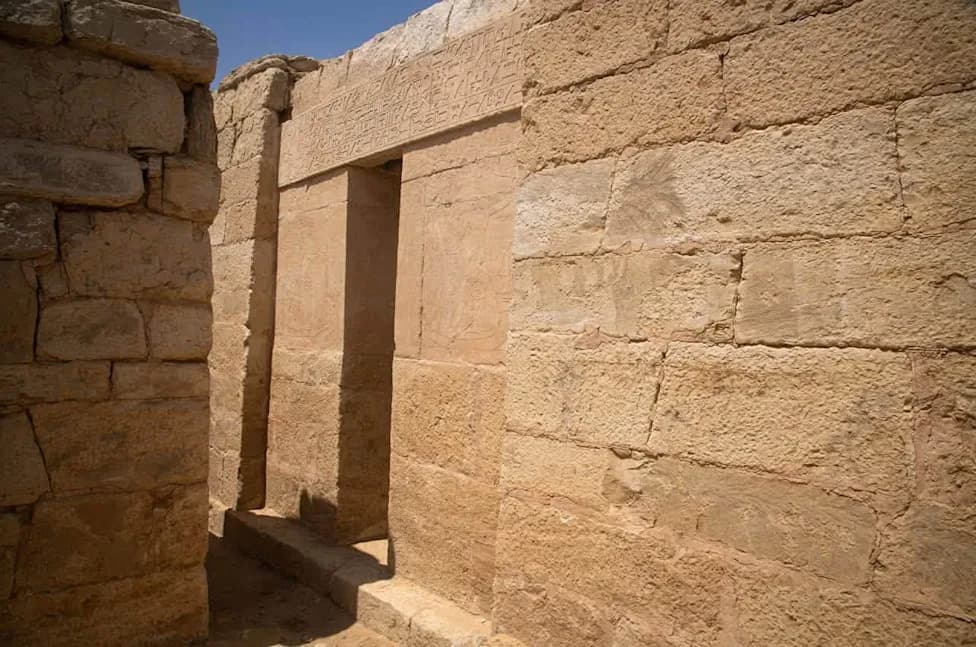
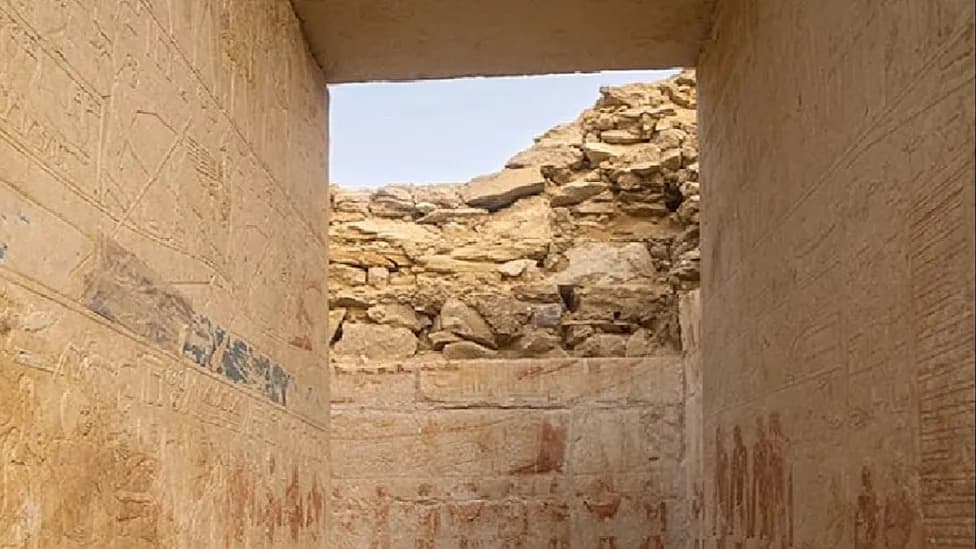
Entrance to tomb found at Mariette Cemetery site located north of the village of Saqqara, Egypt, September 18, 2026. (photo credit: EGYPTIAN TOURISM AND ANTIQUITIES MINISTRY)
A joint Egyptian–Spanish archaeological team has uncovered two previously undocumented funerary chapels inside a mastaba at the Mariette Cemetery north of Saqqara, Egypt's Tourism and Antiquities Ministry announced. Although the mastaba was recorded in the nineteenth century by French Egyptologist Auguste Mariette, the internal chapels were not documented until this season.
The Finds
The mission, conducted under a scientific partnership between the Autonomous University of Barcelona (Spain) and Egypt's Supreme Council of Antiquities, dates the chapels to the reign of Pharaoh Djedkare Isesi of the Fifth Dynasty (roughly late 25th century to mid-24th century BCE).
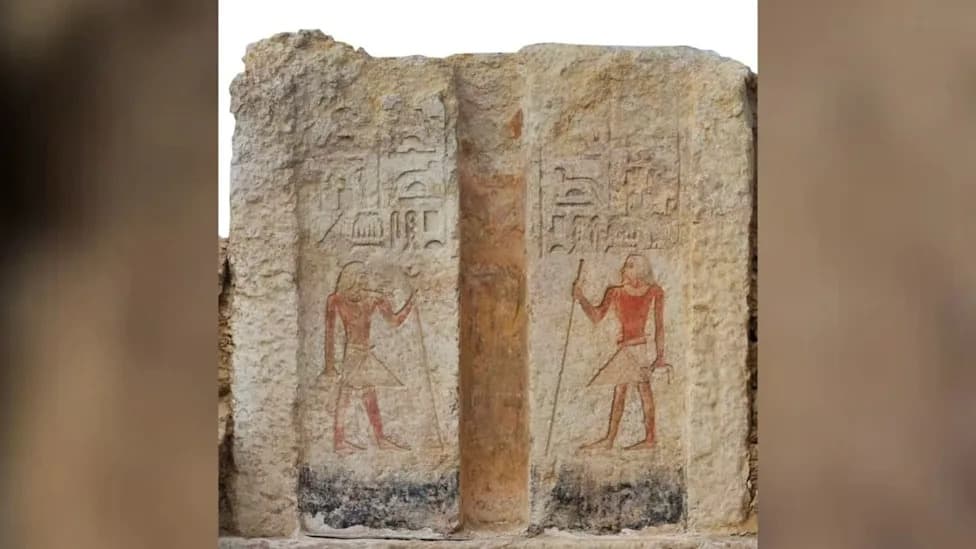
The pair of chapels occupy a medium-sized mastaba. The larger north chapel belonged to Yunmin, identified in inscriptions as a senior judicial official: a judge, court director and chief scribe responsible for reviewing petitions and complaints. Archaeologists recorded a distinctive architectural façade bearing funerary texts and an offering formula that includes Yunmin's official name.
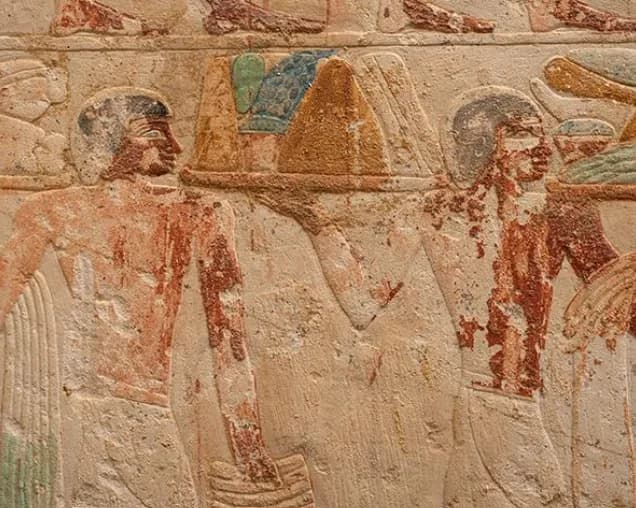
Yunmin's chapel preserves high-quality reliefs that depict agricultural activities and processions bringing offerings to the tomb. Many scenes retain traces of their original pigments, providing rare evidence of color use on Fifth Dynasty reliefs.
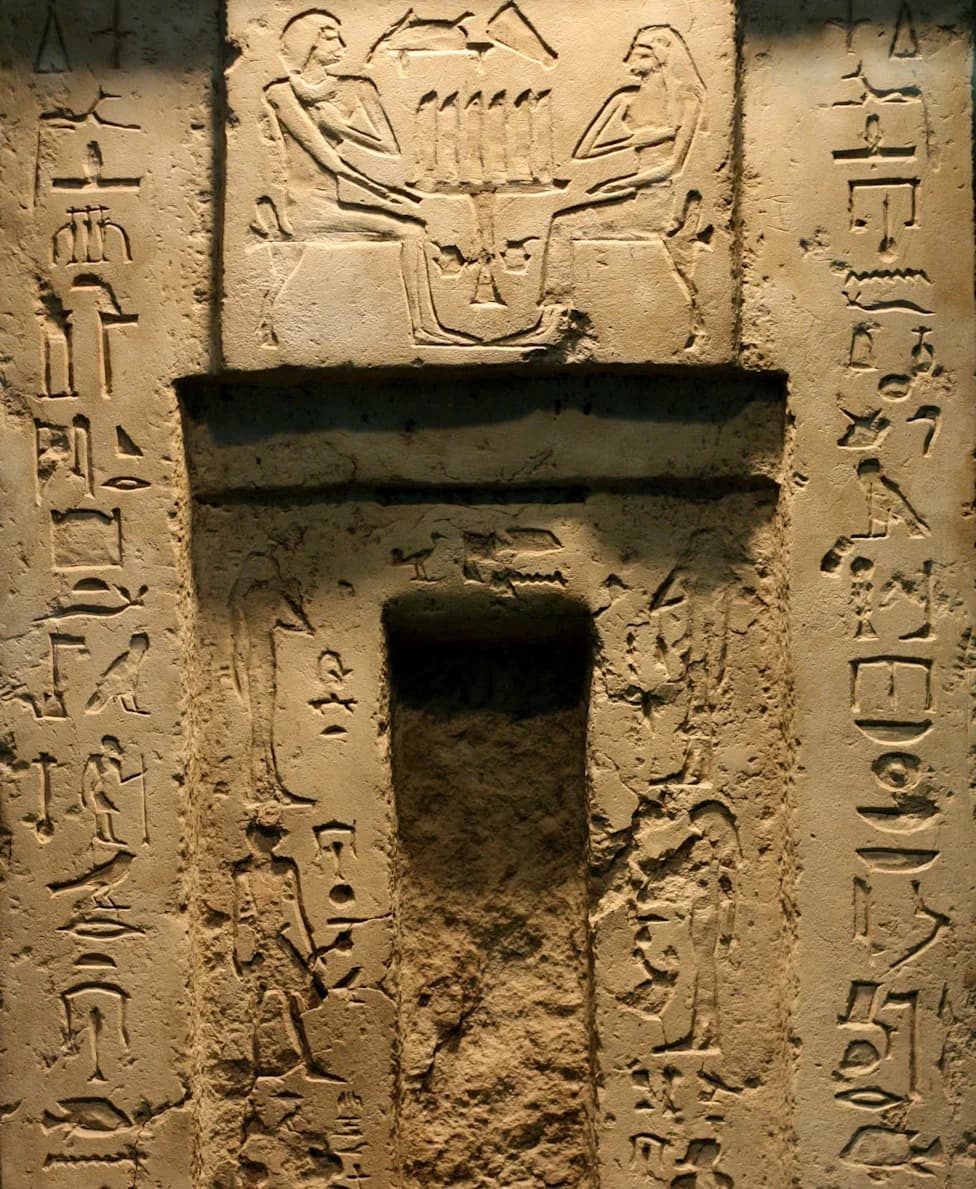
The smaller south chapel belongs to Yunmin's father, Iti, who held several scribal positions connected with the administration of agricultural land and offerings. Iti's chapel contains a painted false door and colored wall decorations showing offering presentations, although some decorative elements are damaged or lost.
Context and Significance
False doors in ancient Egyptian belief functioned as ritual thresholds between the world of the living and the realm of the dead; they were typically placed on the west wall of a chapel in keeping with the west’s association with the land of the dead. The newly recorded chapels add fresh archaeological and epigraphic detail about funerary architecture, artistic practice and the administrative roles of elite officials in Saqqara during the late Old Kingdom.
In a separate announcement, the Ministry also reported the discovery of the tomb of Sekhentiu-Ptah in Sector A of the Bubasteum necropolis at Saqqara. Archaeologists found an Old Kingdom funerary chapel with its false door intact and a complete set of alabaster funerary implements — including an offering table and disc, a purification basin, and jugs — several of which bear hieroglyphic inscriptions naming Sekhentiu-Ptah and listing his titles, such as Royal Chamberlain and Overseer of All the King’s Works.
Dr. Hisham El-Leithy, Secretary-General of the Supreme Council of Antiquities, said the discoveries enrich our understanding of Saqqara’s necropolis during the late Fifth Dynasty by illuminating tomb architecture, decoration, and the bureaucratic careers of senior officials.
The mission’s documentation — inscriptions, reliefs with surviving pigments, and the architectural façade — will help researchers better understand the social and administrative networks that supported Egypt’s state apparatus during the late Old Kingdom.
Help us improve.