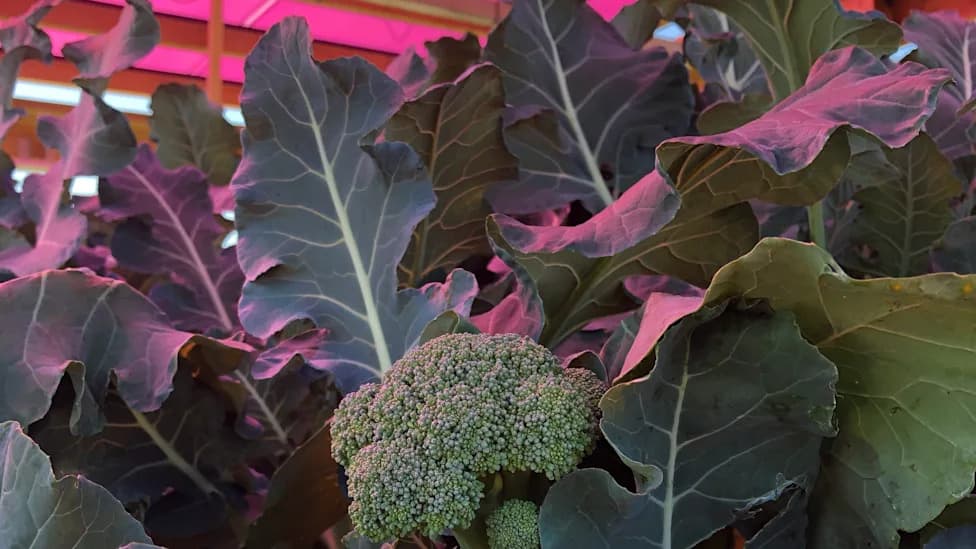
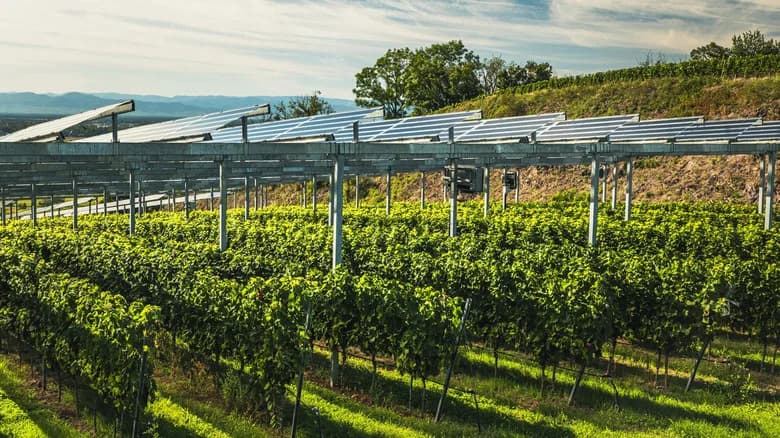
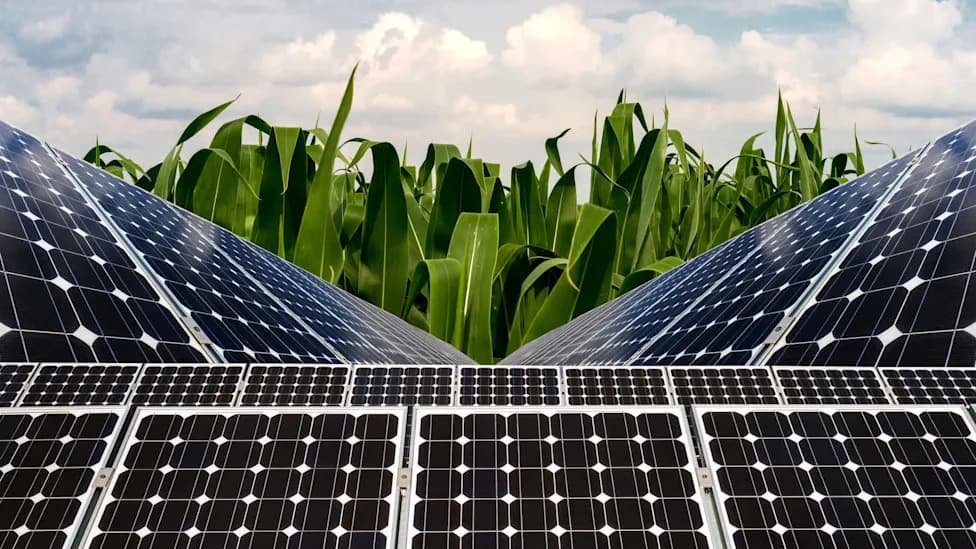
A Swedish team tested semi-transparent magenta solar panels that pass red and blue wavelengths needed for photosynthesis while harvesting other parts of the spectrum for electricity. In 20 m² broccoli trials, yields matched full-sun controls but plants under panels matured 25 days later and showed 2.8–4.5× higher light-use efficiency. The panels produced ~224.7 MWh/ha over the season—about 100 MWh/ha less than conventional panels. Researchers recommend more trials and see current prototypes as best suited to small-scale or greenhouse applications.
Rose-Tinted Semi‑Transparent Solar Panels Let Crops and Power Share the Same Land

(Silvia Ma Lu)
Plants are nature's original solar collectors, using mainly red and blue wavelengths to power photosynthesis. A Swedish team led by Silvia Ma Lu at Mälardalen University tested an intriguing idea: can semi-transparent, magenta-tinted solar panels pass the red and blue light plants need while harvesting other parts of the spectrum to generate electricity?
The study, published in Cell Reports Physical Science, evaluated commercial magenta glass panels repurposed for agricultural testing. Unlike finished agrivoltaic systems designed specifically for crops, these panels were originally developed for architectural use and filter much of the green portion of sunlight. The prototype panels do not currently convert the filtered green light into electricity, although the researchers note future designs might capture additional spectral bands.
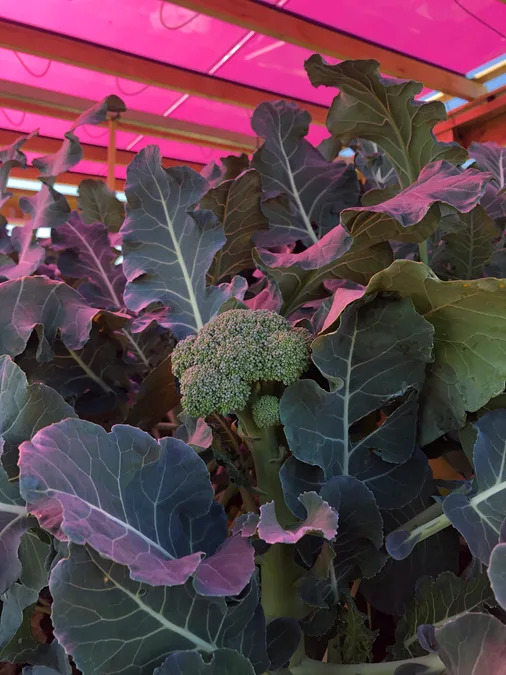
Broccoli growing under the magenta solar panels. (Silvia Ma Lu)
How the Trial Was Set Up
Ma Lu and colleagues grew broccoli (a cultivar of Brassica oleracea) on three adjacent 20 m² plots: one full-sun control and two plots covered by magenta semi-transparent panels with 50% and 70% light transparency, respectively. The panels embed opaque cadmium telluride (CdTe) photovoltaic strips in the glass; the spacing of those strips determines how much light passes through versus how much area is available to harvest electricity.
"The panels divert some incoming sunlight to produce renewable electricity while permitting the wavelengths required by crops to reach the vegetation below," Ma Lu explains, noting the results reflect the specific experimental conditions and need further validation.
Key Findings
Harvest yields were similar across all treatments, but broccoli grown under the magenta panels reached harvest maturity about 25 days later than full-sun controls. Because they received substantially less light overall, the crop under the panels displayed higher light-use efficiency: 4.5× greater under the denser (50% transparency) panels and 2.8× greater under the 70% panels.
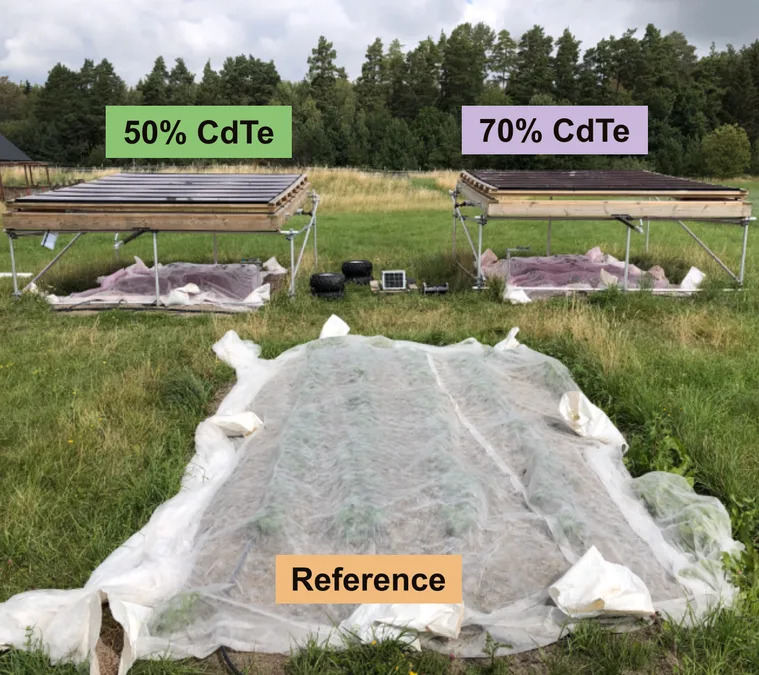
The experimental setup. (Ma Lu et al.,Cell Reports Physical Science, 2026)
Over the growing period the magenta arrays produced roughly 224.7 MWh per hectare — approximately 100 MWh/ha less than conventional, opaque solar panels of equivalent area. Power-systems expert Ramesh Rayudu, who was not part of the study, notes that depending on electricity prices and broccoli market value, the lost electricity could require roughly an extra 1.2–3.2 tonnes of broccoli per hectare to economically offset the shortfall.
Limitations and Next Steps
Open questions remain. Because the experiment used commercially available magenta glass, it is unclear whether crop responses were driven by the spectral shift (less green light), the overall reduction in total light, or both. The trial also did not account for potential microclimate effects of covering plants with glass (a greenhouse effect), seasonal variation, or different crop species and planting densities.
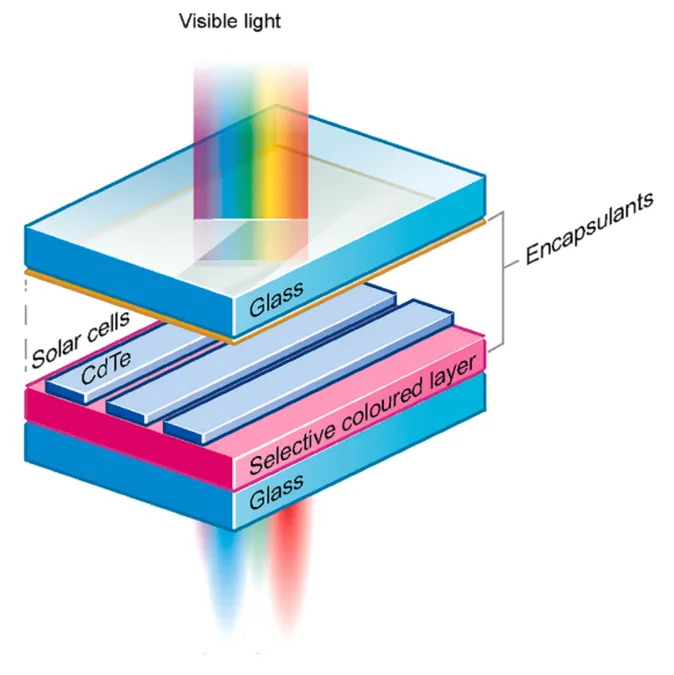
A cross-section diagram showing the components of the magenta solar panels. (Ma Lu et al.,Cell Reports Physical Science, 2026)
Ma Lu suggests that, given current availability, these panels could be suitable for small-scale uses such as community gardens or integration into greenhouse roofs rather than immediate deployment across large agricultural areas. More detailed, multi-season trials and engineering comparisons are needed to determine whether wavelength-selective agrivoltaics can economically and reliably balance crop value against reduced electricity output.
Reference: Ma Lu et al., Cell Reports Physical Science (2026).
Help us improve.