A 2024 Swedish field trial published in Cell Reports Physical Science found that semi-transparent magenta solar panels increased broccoli's sunlight-use efficiency by 4.5 times compared with full sun. Plants grown under two 20m × 20m magenta-panel systems reached typical harvest sizes but took about 25 days longer to mature. Researchers say the panels can produce electricity while sustaining crop sizes, though larger and multi-crop trials are needed before wide deployment.
Magenta Solar Panels Boost Broccoli's Light-Use Efficiency, Study Finds
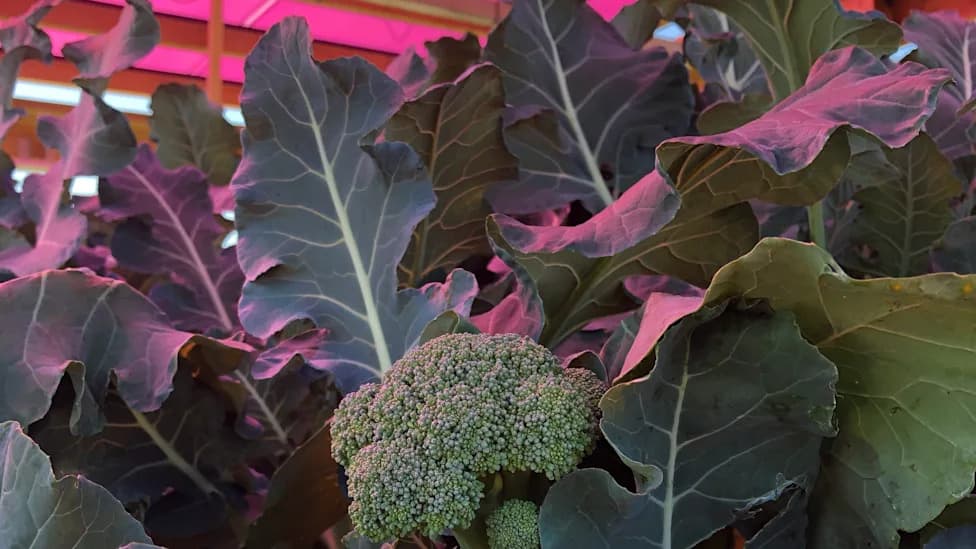
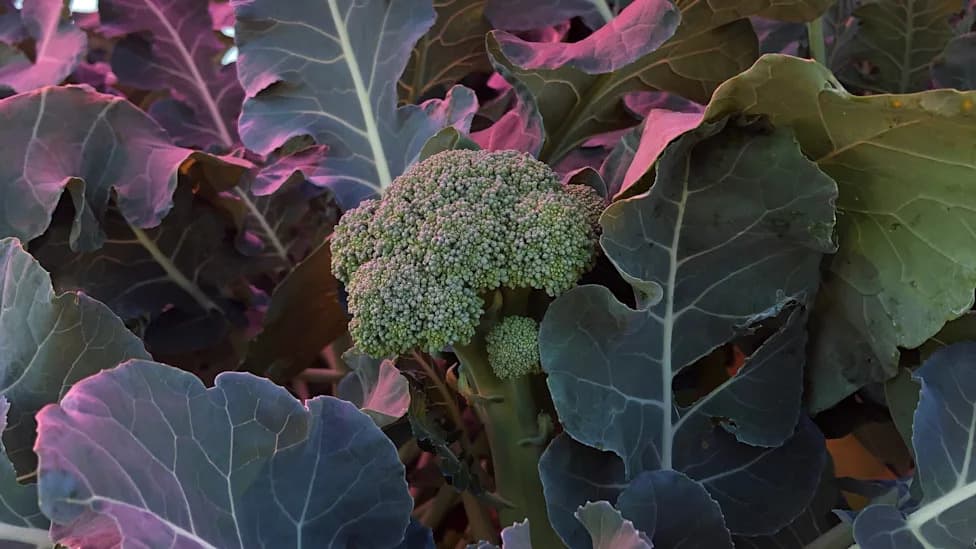
Broccoli growing beneath semi-transparent, colored solar panels at the experimental site at Kärrbo Prästgård farm in Sweden.
Researchers report that semi-transparent, magenta-colored solar panels can significantly improve broccoli's efficiency at using incoming sunlight while simultaneously generating renewable electricity, according to a study published in Cell Reports Physical Science.
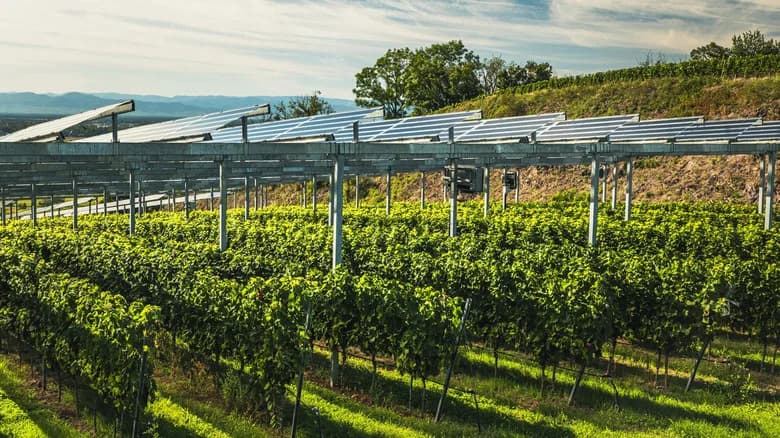
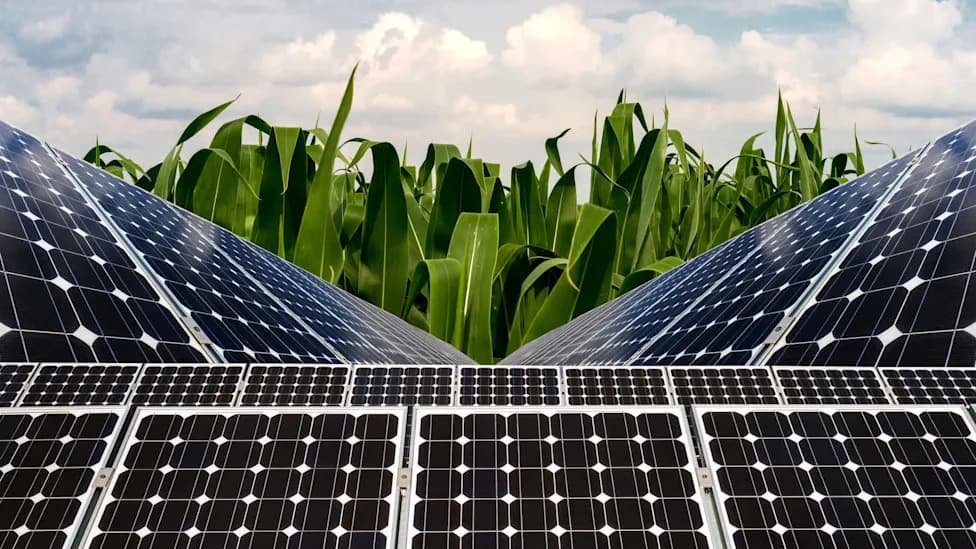
The field trial, carried out on a Swedish farm during the 2024 growing season, compared broccoli grown beneath two magenta-panel agrivoltaic systems—each 65 by 65 feet (20 by 20 meters) and with different transparency levels—to broccoli grown in full sun. The panels allowed specific wavelengths of light to pass through while converting a portion of sunlight into electricity.
"The basic concept is quite straightforward,"said Silvia Ma Lu, a study co-author and engineer at Mälardalen University in Västerås, Sweden. "The solar panels use part of the incoming sunlight to generate renewable electricity while allowing part of the light to pass through to the crops growing underneath."
Throughout the season, the team monitored air temperature, relative humidity, soil moisture and plant metrics including photosynthetic performance, nutrient composition and final yield. Broccoli grown under the magenta panels showed a 4.5-fold increase in sunlight-use efficiency compared with fully sun-exposed plants. Although plants under the panels reached sizes comparable to conventional broccoli heads, they required about 25 additional days to reach maturity.
The similarity in performance across the two magenta systems—despite different transparency levels—was one of the study's most notable outcomes. Panels with a higher density of photovoltaic cells will generate more electricity but allow less light through, so balancing power generation and crop light needs is a key design challenge for agrivoltaics.
Lead authors note that additional trials are needed across different crops, seasons and climates to determine optimal configurations. Larger-scale agrivoltaic systems could potentially power irrigation, machinery, cooling and storage on farms, or feed electricity into the grid to reduce costs and create new revenue streams. The research team is extending tests of magenta panels and is also running controlled laboratory experiments with red and blue filters to better understand how light spectra affect plant growth.
For now, the researchers suggest that similar configurations may be best suited to smaller-scale uses—such as community gardens or greenhouse roofs—until larger trials confirm performance and economics for broad agricultural deployment.
Help us improve.