A new microraptor, Norellraptor barsboldi, from north-eastern China is described in Nature Communications. The nearly complete 57 cm skeleton shows flight-related feathers on the forelimbs and tail, and bone histology indicates the individual was not fully grown. Phylogenetic and developmental evidence from the study suggests flight-related traits in microraptorines and birds may have evolved independently, implying convergent evolution. The authors stress that additional fossils and analyses are needed to confirm this hypothesis.
New Feathered Raptor <i>Norellraptor barsboldi</i> Suggests Flight Evolved Independently Within Paraves
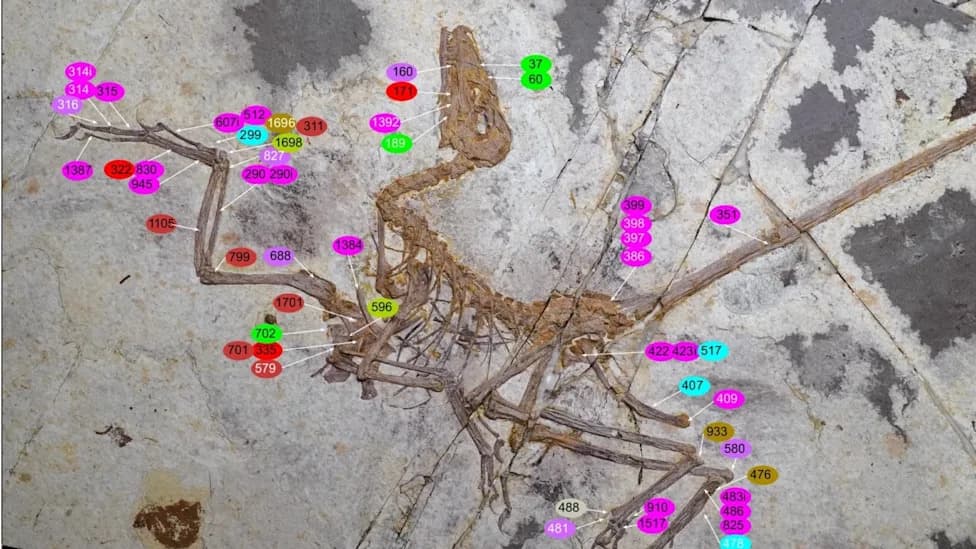
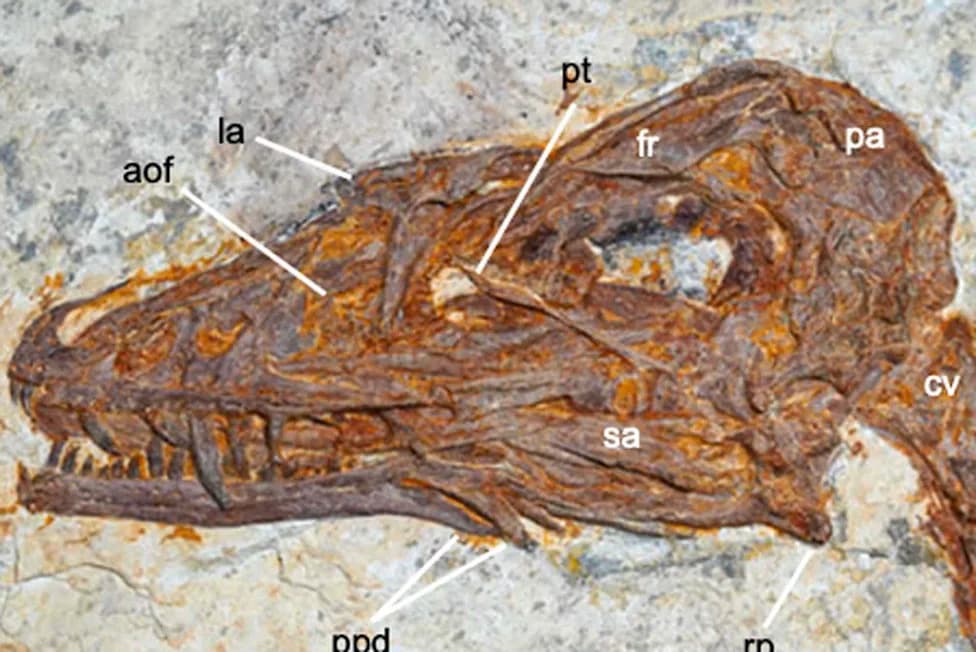
The first Norellraptor barsboldi fossil is impressively well-preserved. (Wang et al., Nat. Comms., 2026)
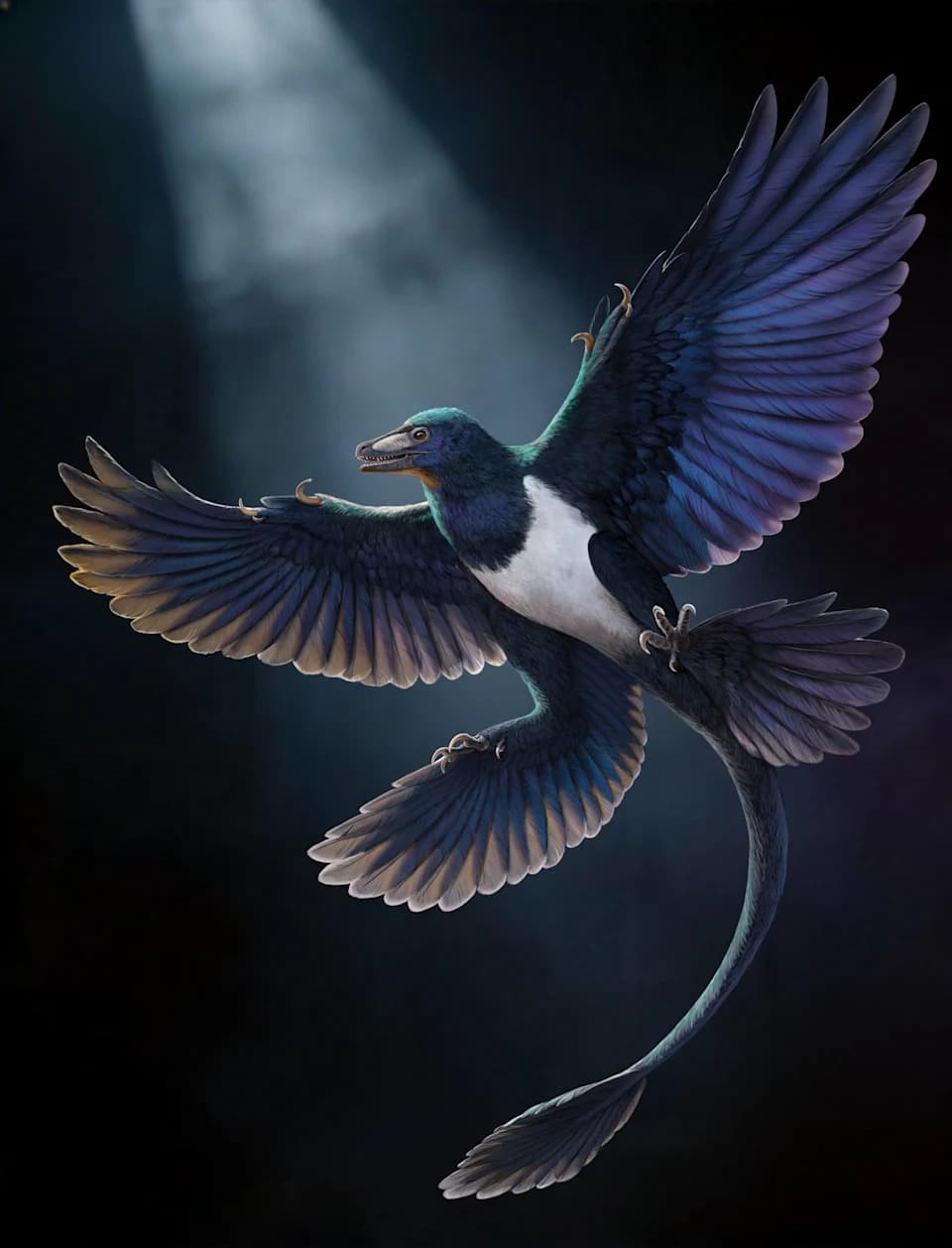
An exquisitely preserved feathered raptor from north-eastern China—named Norellraptor barsboldi—is prompting paleontologists to rethink how flight evolved among Paraves, the group that includes both microraptorines and modern birds.
The holotype is described by Xuri Wang and colleagues in Nature Communications. The nearly complete skeleton measures about 57 centimetres (just over 22 inches) in body length. Bone histology indicates the individual had not reached full adult size at death.
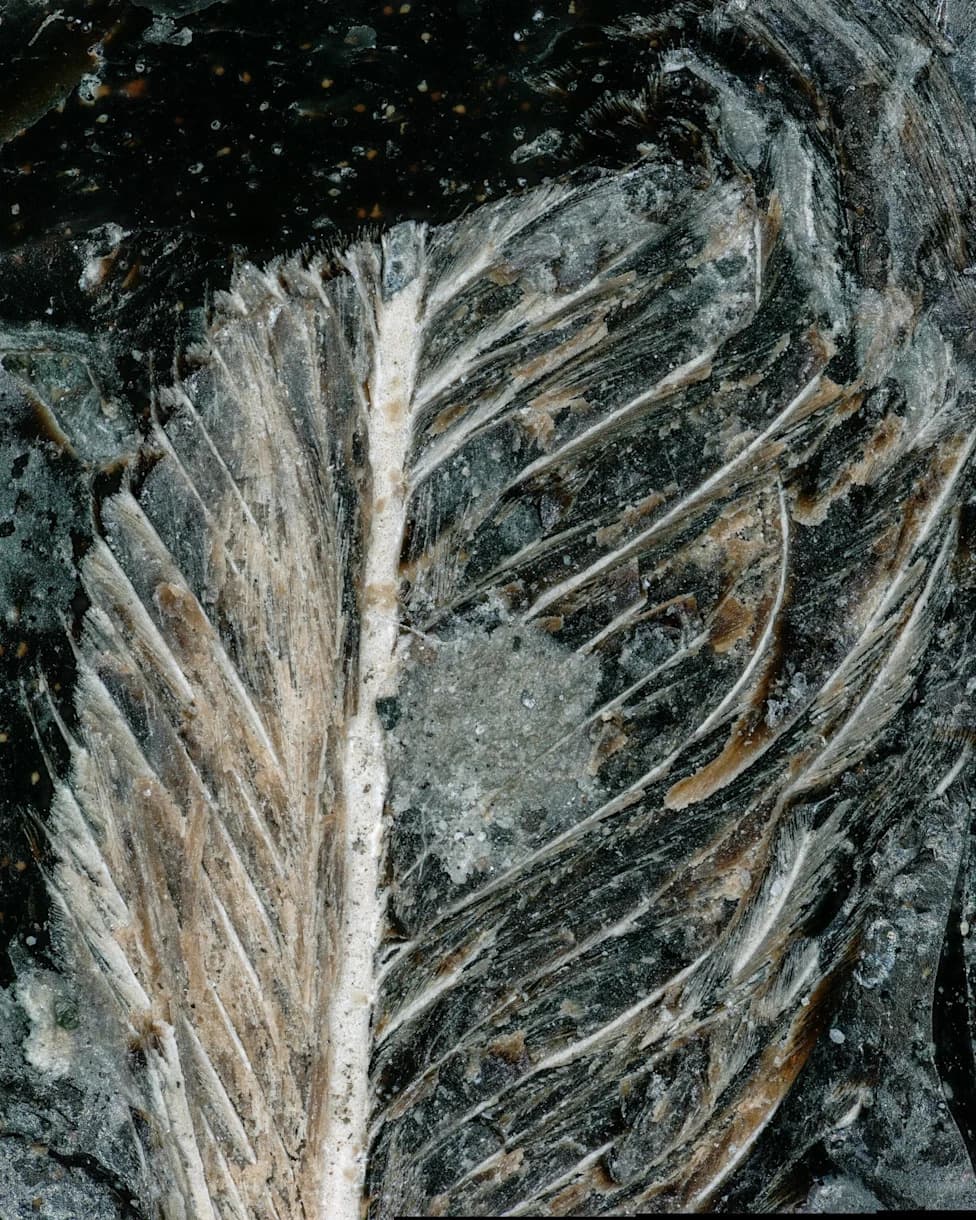
Although feathers are not as well preserved as the bones, visible plumage on the forelimbs and tail is consistent with flight-related feathers, while the rest of the body was covered with simpler filamentous feathers. These proportions and feather placements are characteristic of microraptorine anatomy and suggest aerodynamic capability.
Detailed anatomical study and an updated phylogenetic analysis place Norellraptor within Microraptorinae but not directly on the same branch that led to modern birds. Crucially, the authors report that the sequence of flight-related changes reconstructed along the microraptorine lineage differs from that inferred for the avian lineage.
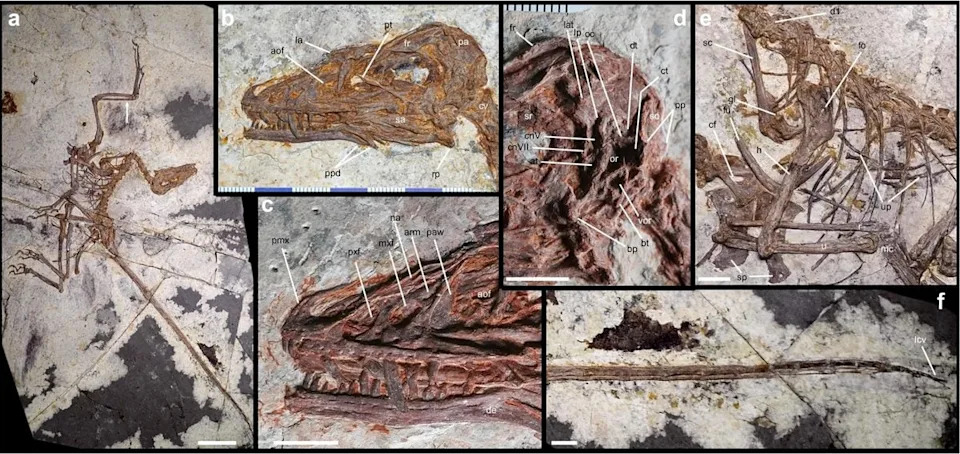
Details of theNorellraptor barsbolditype specimen. (Wang et al.,Nat. Comms., 2026)
Another notable observation is developmental: the forelimb (the functional wing) shows signs of early cessation of growth in this microraptorine, a growth pattern opposite to that seen in extant flying birds, which extend wing growth later into development. Combined with histological evidence, the authors argue this indicates a different limb growth model in Microraptorinae.
"The sequences of flight-related novelties reconstructed along the two lineages differ consistently," the authors write. "Combined with histological evidence which might indicate a peculiar limb growth model in Microraptorinae, these results dismiss a shared developmental pattern driving the evolution of the flying dinosaurs and support multiple and independent selective regimes at the origin of the winged taxa in Paraves."
In plain terms, the team suggests that powered flight (or at least aerial capability) may have evolved convergently in at least two paravian lineages: microraptorines and the avian stem lineage. Convergent evolution means separate groups arrived at similar functional outcomes via different morphological and developmental routes.
However, the authors and other specialists emphasize caution. One well-preserved specimen, however informative, cannot by itself overturn long-standing evolutionary hypotheses. Additional fossils, broader taxon sampling, and further developmental and functional studies will be required to test whether microraptorines and birds truly developed powered flight independently.
The new description of Norellraptor barsboldi appears in Nature Communications; the paper highlights both the exciting potential of this specimen and the need for more evidence to resolve the origins of flight within Paraves.
Help us improve.