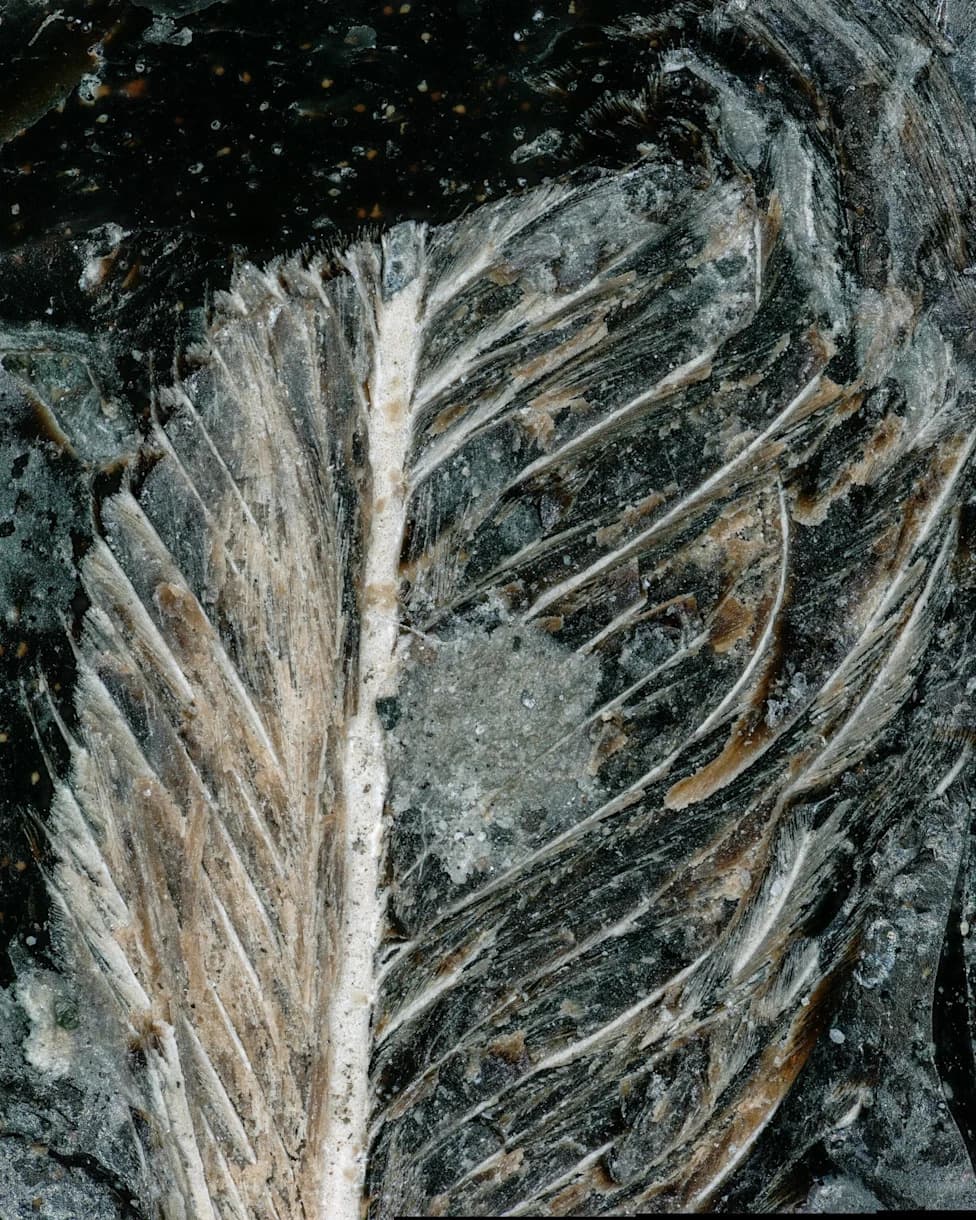
Norellraptor barsboldi is an exceptionally preserved, four-winged microraptor from the Jiufotang Formation (~Early Cretaceous). At about 21 inches long and ~3 years old at death, the specimen preserves plumage and detailed anatomy. A comparative analysis found that ~30% of 194 microraptor anatomical changes also appear in the bird lineage, but they accumulated in a different order—supporting convergent, independent origins of flight-related traits. Experts suggest microraptors used a mix of gliding and flapping and may have launched from slopes or cliffs, with hind wings aiding maneuverability and braking.
Four-Winged Dinosaur Norellraptor barsboldi Adds Strong Evidence That Flight Evolved Independently
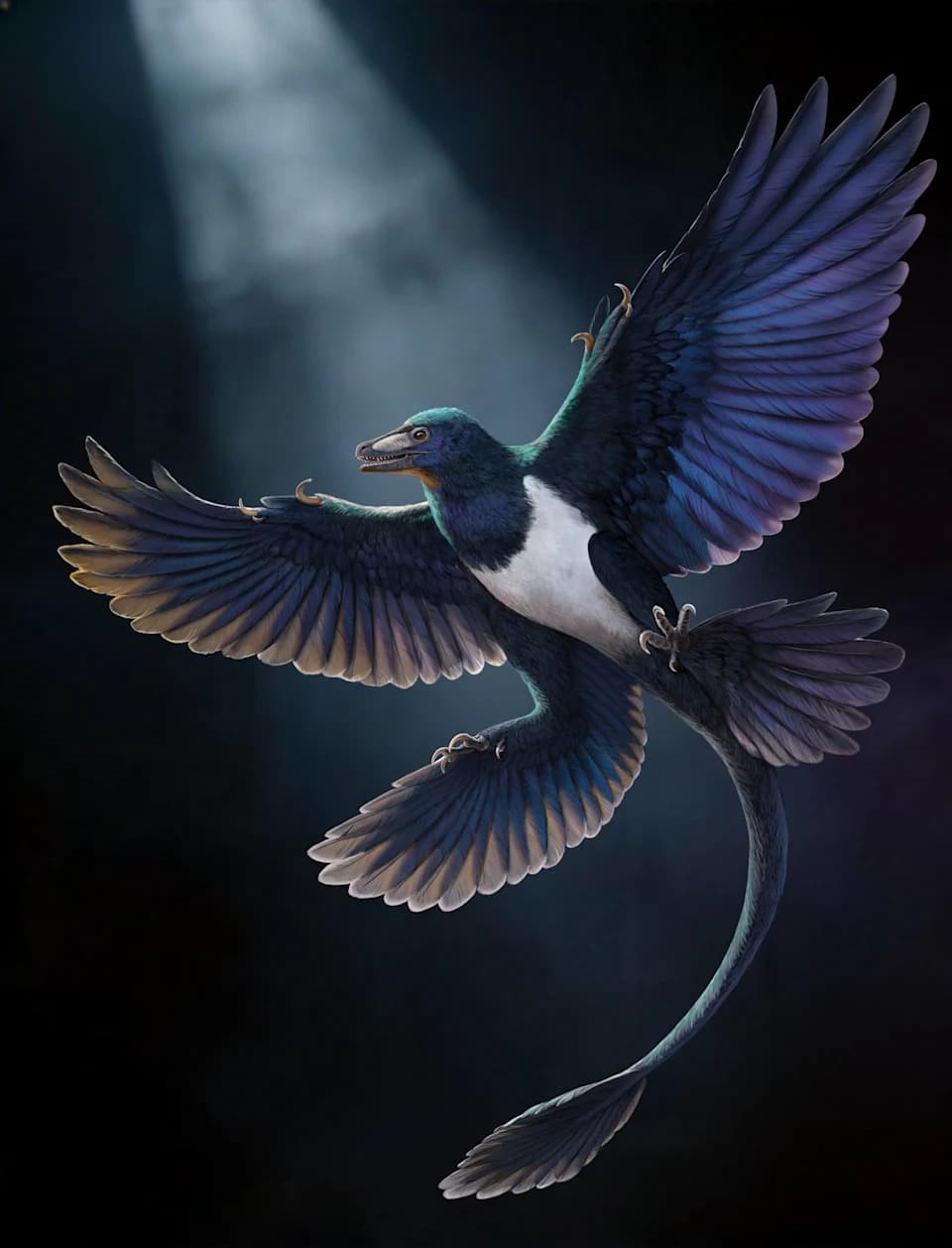
An artist's reconstruction of what the newly described bird-like dinosaur (Norellraptorbarsboldi)would have looked like. | Credit: Mr. Zhao Chuang
Remarkable four-winged fossil from China sheds new light on how powered flight evolved in dinosaurs.
An exceptionally complete, feathered predator named Norellraptor barsboldi has been described from northeastern China, providing fresh evidence that flapping flight may have evolved independently in separate dinosaur lineages. The specimen, recovered from the Early Cretaceous Jiufotang Formation, preserves plumage and detailed anatomy that illuminate how some non-avian theropods experimented with winged locomotion.
Specimen details. Researchers estimate the individual was about 3 years old at death and measured roughly 21 inches (57 centimeters) long. The Jiufotang Formation spans much of the Early Cretaceous (commonly cited as ~145–100 million years ago), with many well-known specimens from the region often dated near ~120 million years ago.
Predatory lifestyle. N. barsboldi had recurved teeth and sharp claws consistent with a small generalist predator. Experts say it likely preyed on early mammals, lizards, amphibians and juvenile dinosaurs rather than large-bodied prey. As Scott Hartman (University of Wisconsin–Madison) put it, attacking large dinosaurs would have been like "mosquitoes attacking battleships."
What this means for the evolution of flight. Microraptors like N. barsboldi are close relatives of birds but are not considered direct ancestors of modern birds (birds belong to the neighboring Avialae clade). Both microraptors and early avialans such as Archaeopteryx bore feathers, but the key question has been whether feathers and powered flight originated once in a shared ancestor or multiple times independently.
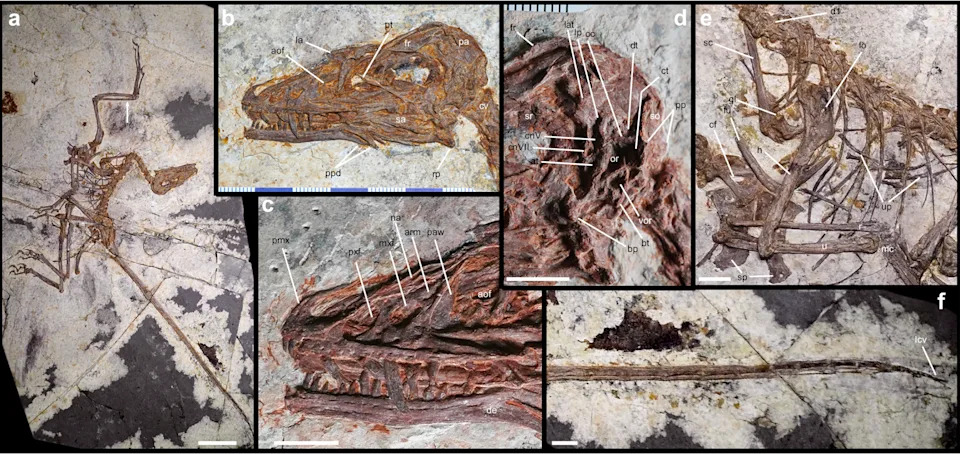
Researchers found a series of fossilized remains of a four-winged dinosaur in northeastern China. | Credit: Andrea Cau et al., Nature Communications (2026)
In a paper published in Nature Communications (Sept. 29, 2026), Andrea Cau and colleagues present a comparative analysis of microraptor anatomy. They identified 194 anatomical transformations across microraptor evolution; roughly 30% of those changes also appear in the bird lineage. Shared traits include fused rib projections creating a stiffer trunk, relatively robust forelimb elements compared with hindlimbs, and an ulna longer than the humerus—an arrangement associated with wing-based weight bearing.
"This demonstrates that microraptors acquired traits convergent with the early evolutionary stages of true birds, albeit through a distinct evolutionary pathway," said Rui Pei (Institute of Vertebrate Paleontology and Paleoanthropology), who was not involved in the study. The researchers note that, although many features are similar, the sequence in which those features accumulated differs between microraptors and avialans.
Convergence, not direct ancestry. Because the order of trait acquisition differs between the two lineages, the team argues these similarities reflect convergent evolution—independent origins of flapping flight or flight-related adaptations in non-avialan theropods and true birds. Hartman expressed strong agreement with that conclusion.
How microraptors might have moved. Experts suggest microraptors likely employed a combination of gliding and flapping. Their forelimbs may not have allowed squirrel-like vertical climbing, but they could have launched from slopes, cliffs or elevated perches. A well-ossified sternum would permit larger pectoral muscles and a strong downstroke to generate thrust. The presence of hind wings beneath the body likely aided stability, braking and tight turning—useful for rapid, surprise attacks on prey.
Other possible functions for wings. The authors and commentators also point out that feathered wings can serve multiple roles beyond locomotion, including courtship displays, thermal regulation and brooding behavior (warming eggs on a nest).
Implications. The new specimen and comparative study strengthen the view that winged locomotion and flight-like behaviors evolved through different evolutionary routes in separate theropod lineages. That complexity underscores the many evolutionary experiments with flight among feathered dinosaurs before the origin of modern birds.
Credit: Reconstruction imagery and fossil figures from Andrea Cau et al., Nature Communications (2026); reconstruction credit to Mr. Zhao Chuang.
Help us improve.