The coprolite UWBM 103150 preserves a feather, dense bird bones, and fish scales from a Hesperornis-like diving bird that had recently eaten fish before being consumed by a medium-sized carnivorous dinosaur in Montana. This is the first recorded feather found inside fossilized dung and likely survived digestion because feathers are made of keratin and transit through theropod guts was rapid. The feather’s water-adapted structure appears less effective at insulating against cold, offering a possible reason why toothed diving birds may have perished during the post-impact "impact winter." The find provides a rare, direct snapshot of a late-Cretaceous food web.
Feather Found Inside 66-Million-Year-Old Tyrannosaur Coprolite Reveals Final Meal of a Diving Bird
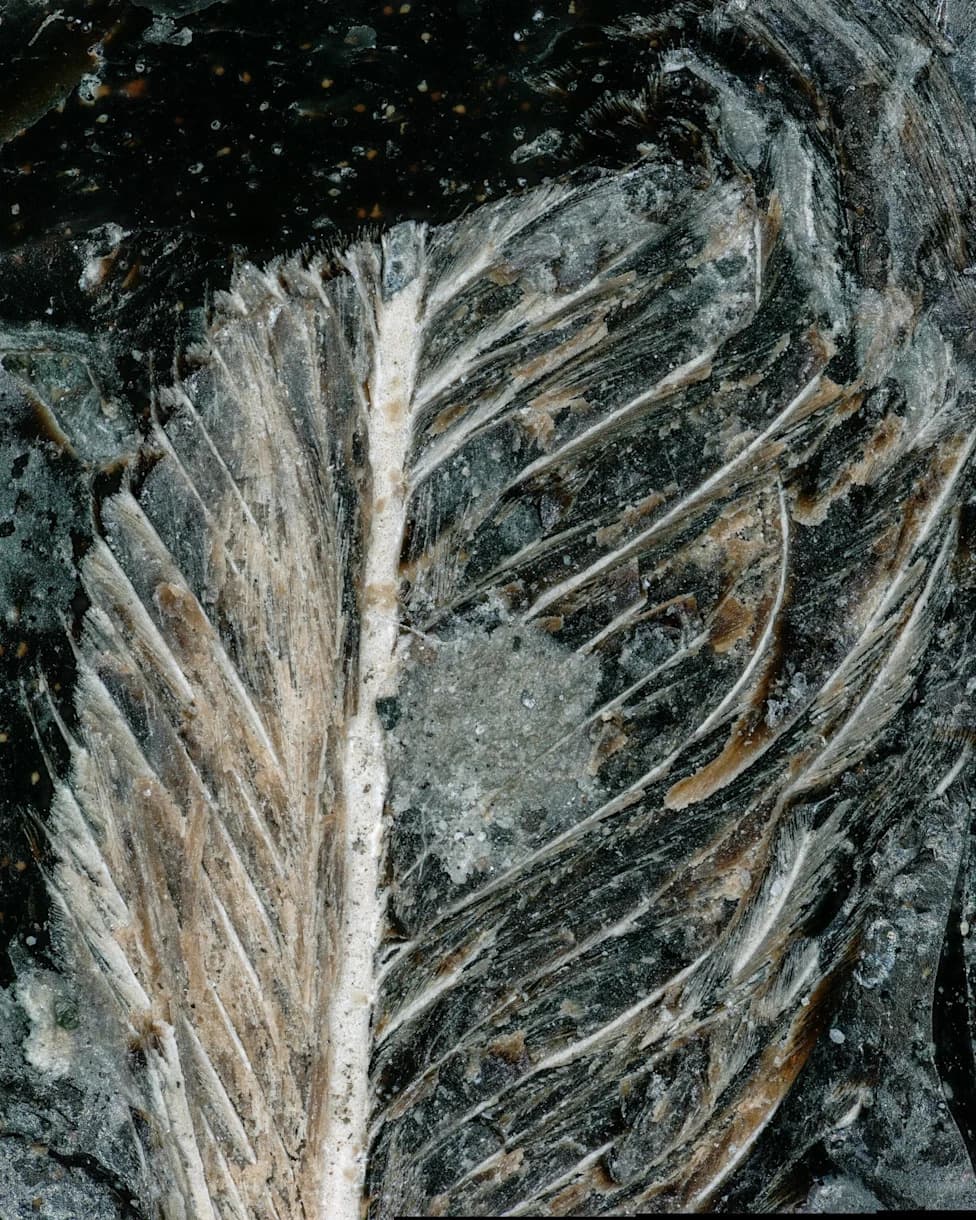
Researchers analyzing a 66-million-year-old coprolite discovered preserved plumage and bones from an extinct, fish-eating aquatic bird.Jingmai O'Connor
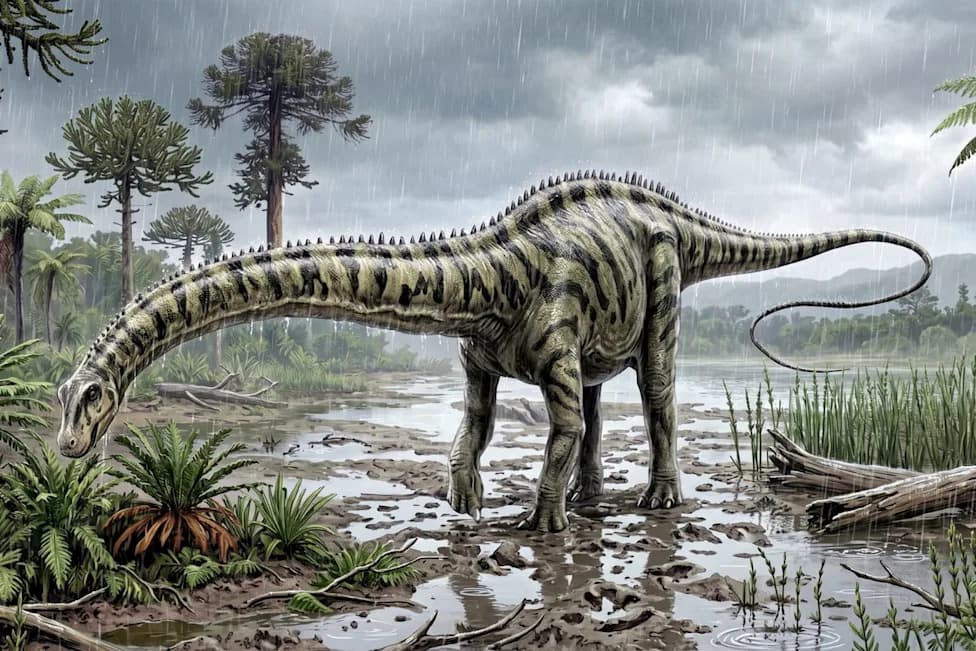
The small aquatic bird had no idea its last meal would become a time capsule. Its stomach was still full of fish when a feathery carnivore seized it, swallowed the prey whole, and later expelled fossilized feces that preserved fragments of that interaction for 66 million years.
The specimen, catalogued as UWBM 103150, consists of three lithified blobs interpreted as a coprolite from a medium-sized meat-eating dinosaur that lived in what is now Montana. Researchers propose the producer was likely a juvenile Tyrannosaurus rex or a smaller tyrannosaur such as Nanotyrannus. Embedded in the hardened droppings are tiny bone fragments, fish scales, and an unusual multi-branched feather structure.
What the Coprolite Reveals
Analysis shows the bone fragments are unusually dense—an adaptation seen in diving birds like the toothed, loon-like Hesperornis. The feather’s branched anatomy also appears adapted to repel water, resembling modern aquatic birds. Taken together with the presence of gar fish scales, the most likely interpretation is that a Hesperornis-like, flightless diving bird had recently eaten fish before being eaten itself.
"This is the first fossil feather found in a coprolite," says Jingmai O'Connor of the Field Museum in Chicago, a co-author of the study published in Current Biology.
Feathers are made of keratin, a tough, fibrous material that very few organisms can digest. Large theropods had elevated body temperatures and fast metabolisms, so food moved quickly through their guts. That rapid transit, combined with keratin’s durability, likely allowed whole small feathers to survive passage through the digestive tract and be preserved.
Why It Matters
Beyond the dramatic predator–prey snapshot, the find may illuminate why some avian groups went extinct at the end of the Cretaceous while others survived. The fossil feather resembles modern diving-bird plumage in being water-repellent, but its structure appears less effective at trapping insulating air than the feathers of many living birds. If toothed diving birds lacked efficient insulation, they could have been especially vulnerable during the multi-year global cooling—an "impact winter"—that followed the asteroid impact 66 million years ago.
Matthew Shawkey of Ghent University, who was not involved in the work, praised the preservation: "The preservation is truly amazing, almost as if it was in amber." Karen Chin of the University of Colorado, another co-author, notes that because few animals can digest keratin, it is reasonable to expect feathers to show up in feces—when preservation conditions allow.
UWBM 103150 therefore preserves more than a single meal: it captures a small slice of a vanished ecosystem and may provide a clue to how body plan and plumage influenced survivorship during one of Earth's greatest mass-extinction events.
Study citation: O'Connor et al., published in Current Biology (2024).
Help us improve.