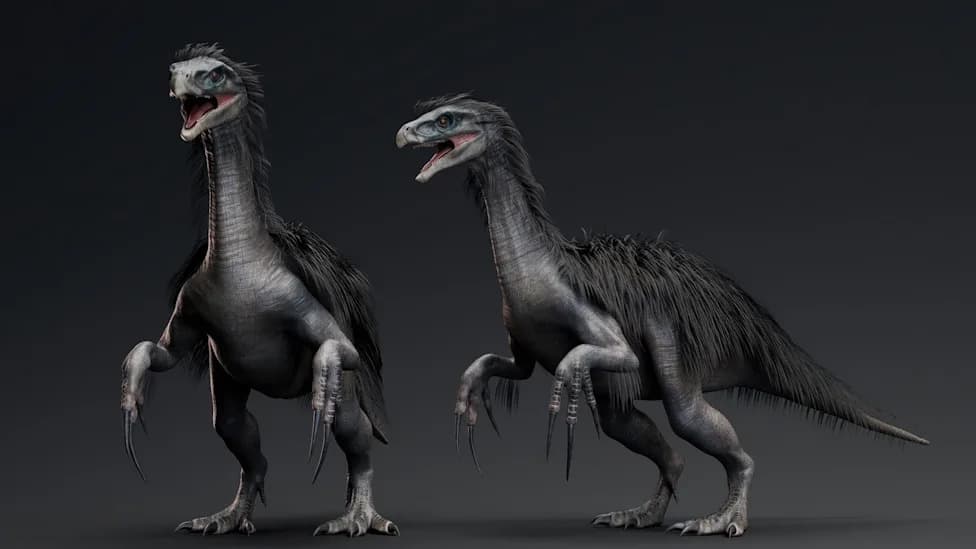
Kayrasaurus changliensis is a newly described, very large therizinosaur from the Lower Cretaceous Yixian Formation in northeastern China. The nearly complete, still-growing specimen likely weighed roughly 250–600+ pounds and measured nearly 12 feet long, about 1.6 times larger than the previous Chinese giant Beipiaosaurus. Its jaws show a pronounced underbite and an unusually high tooth count—45 lower teeth and 32 upper teeth—as well as distinctive openings whose function is unknown. Despite its big claws and many teeth, the skull and dentition indicate adaptations for a plant-based diet.
Giant Feathered Therizinosaur Kayrasaurus changliensis Discovered in China — Massive Size and Unusual Dental Battery
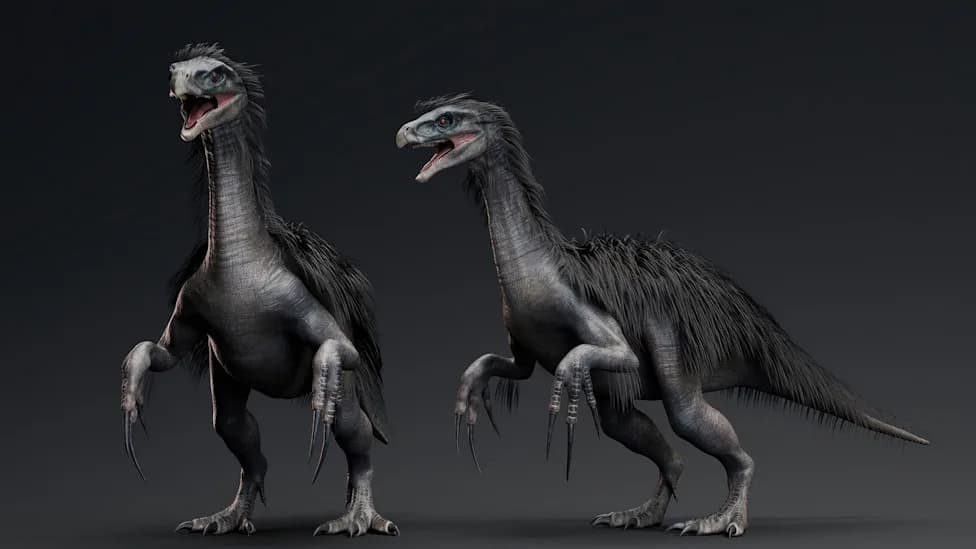
Therizinosaurs had possibly the longest claws of any creature on Earth, clocking in at over three feet long!
Kayrasaurus changliensis is a newly described, unusually large therizinosaur whose nearly complete skeleton was recovered from the Lower Cretaceous Yixian Formation in northeastern China. The specimen combines the group's hallmark features—feathers, long neck, small head, and oversized hand claws—with a strikingly dense dental arrangement and a pronounced underbite that set it apart from previously known relatives.
Description
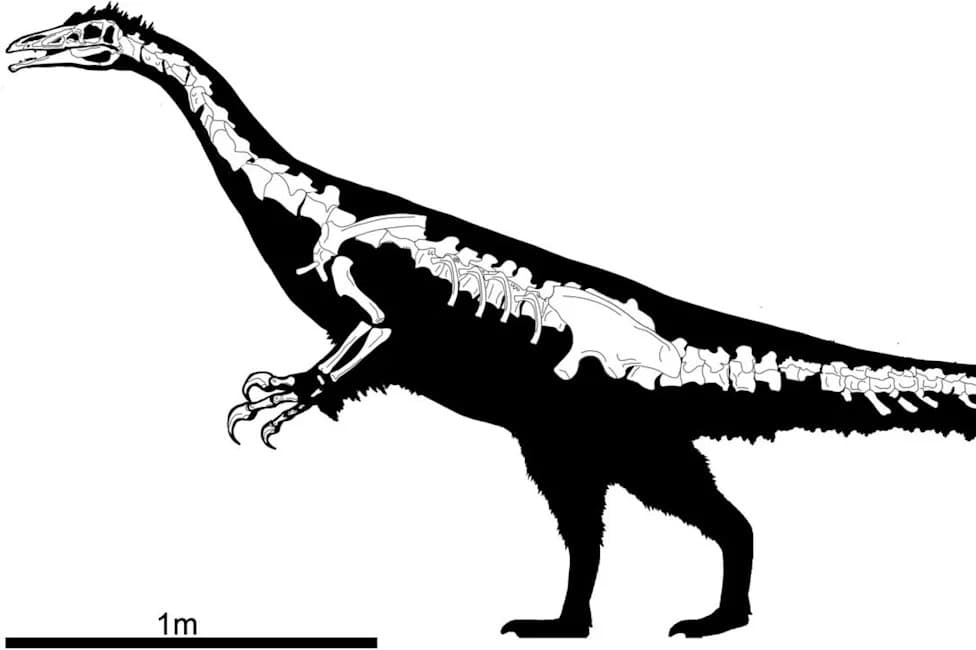
Paleontologists report that the recovered specimen of Kayrasaurus changliensis was large for a therizinosaur even though it was still growing. Researchers estimate the individual weighed roughly 250 to more than 600 pounds and measured nearly 12 feet (about 3.5 meters) long. By these measures it is approximately 1.6 times larger than the previously known large Chinese therizinosaur Beipiaosaurus inexpectus.
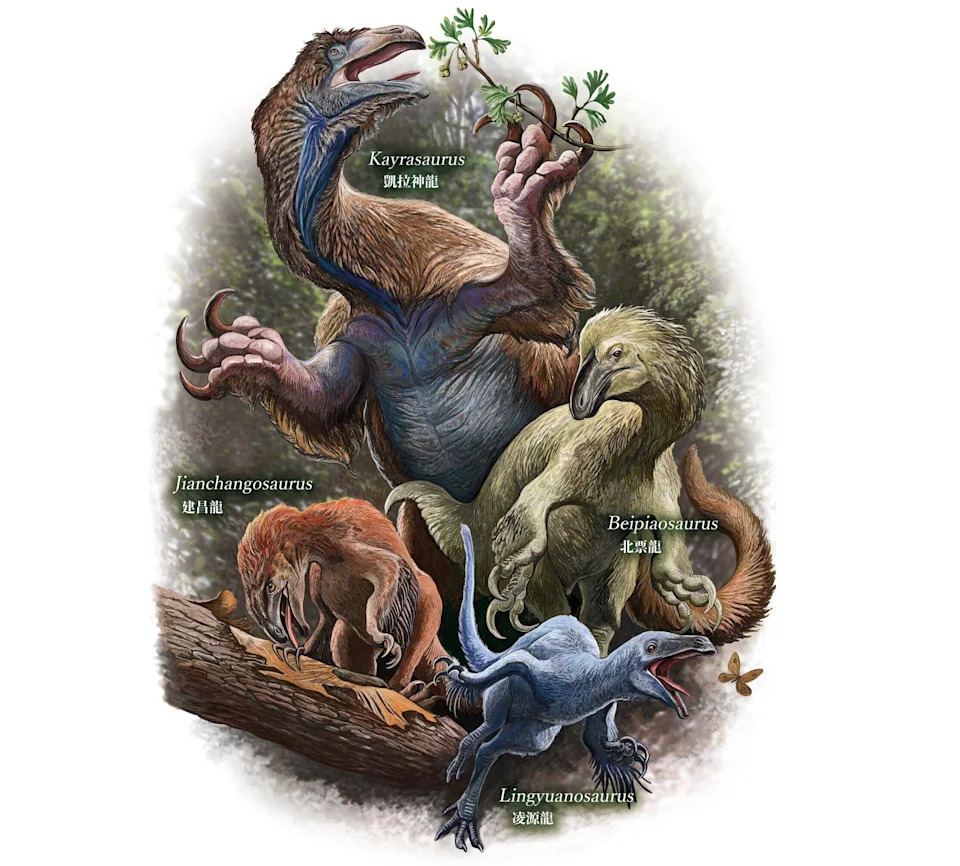
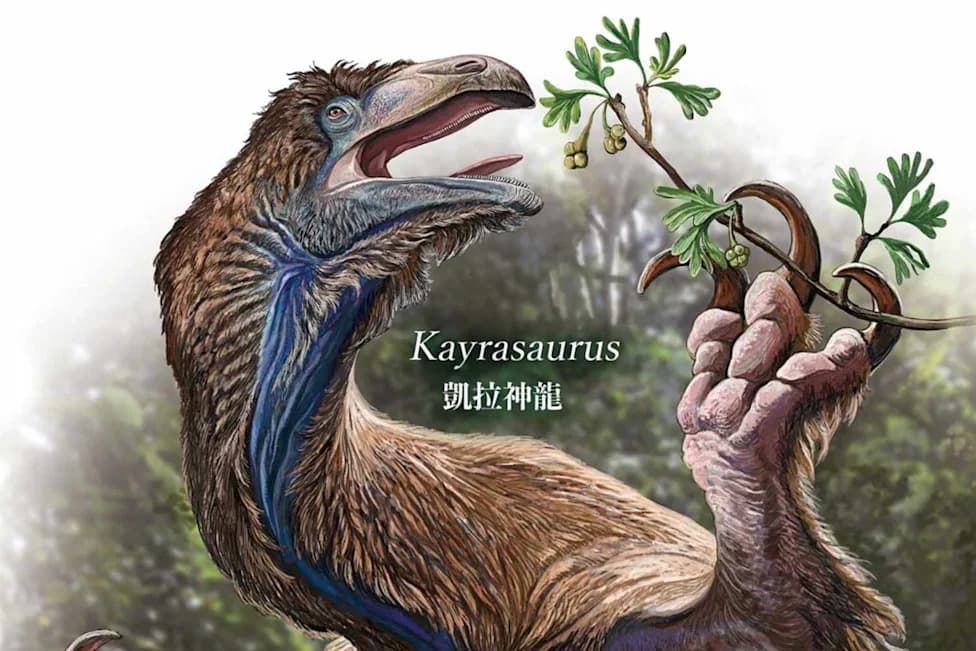
This illustration shows a range of different therizinosaurs, including the newly discoveredKayrasaurus changliensis.Image:Liao et. al 'Journal of Systematic Palaeontology' (2026)
Anatomy And The Remarkable Jaw
The skull and jaws are among the most distinctive elements. K. changliensis had a pronounced underbite: the lower jaw contained an unusually high number of small, tightly packed teeth—45 lower teeth versus 32 upper teeth—creating a dense dental battery that no other large therizinosaur has shown. The lower jaw also features a triangular lateral opening, while the upper jaw has a large aperture near the snout; the function of these openings is not yet understood and will require further study.
Claws, Body Plan, And Diet
Like other therizinosaurs, K. changliensis bore large, elongated hand claws—members of the group are famous for claws that in some species reached extreme lengths. However, despite their fearsome appearance, the skull, teeth, and jaw mechanics of K. changliensis point toward herbivory. The authors of the description note that its jaw and tooth morphology are "more reminiscent of herbivorous dinosaur clades," suggesting these teeth were adapted for processing plant material rather than for hunting large prey.
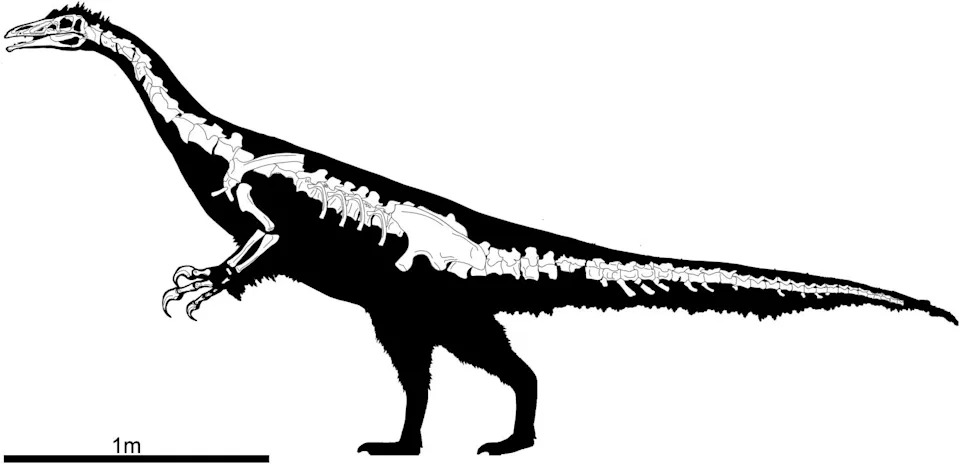
A skeletal diagram ofKayrasaurus changliensis.Image:Liao et. al 'Journal of Systematic Palaeontology' (2026)
Geological Context And Age
The skeleton was recovered from the Lower (Early) Cretaceous Yixian Formation, a well-known fossil-bearing unit in northeastern China that has produced numerous exceptionally preserved feathered dinosaurs and other Mesozoic life. The age and depositional context help place K. changliensis in an important evolutionary interval for early feathered theropods.
Significance
This discovery expands the known size range and dental diversity of therizinosaurs, showing that some members of this clade evolved both very large body sizes and unusually dense tooth batteries. The combination of heavy body proportions, extensive dentition, and jaw openings raises new questions about feeding mechanics and ecological roles within this odd, primarily herbivorous group of feathered dinosaurs.
Source: Liao, Freimuth, Zanno & Xu. Journal of Systematic Palaeontology (2026).
Help us improve.