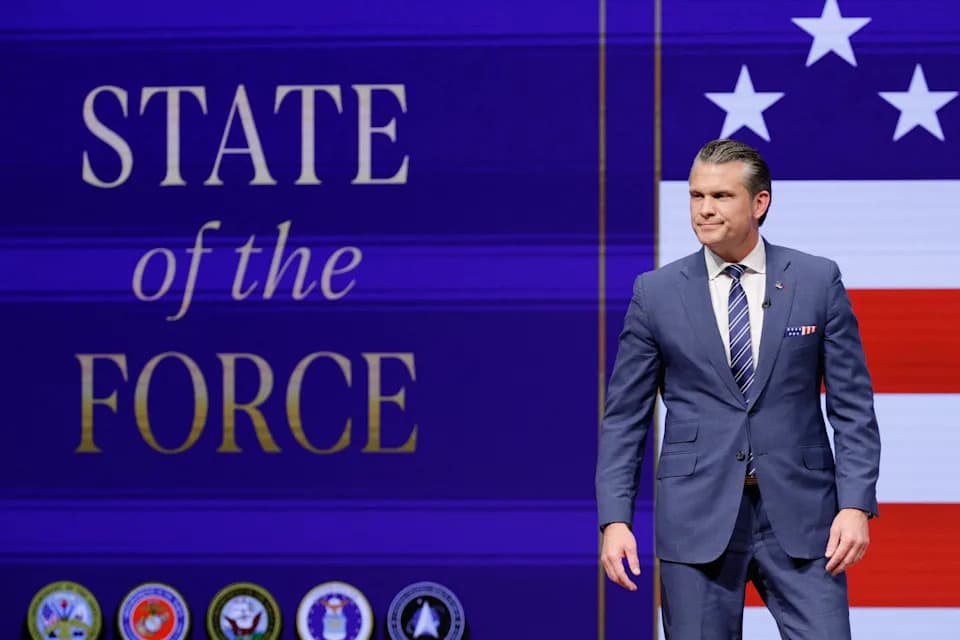
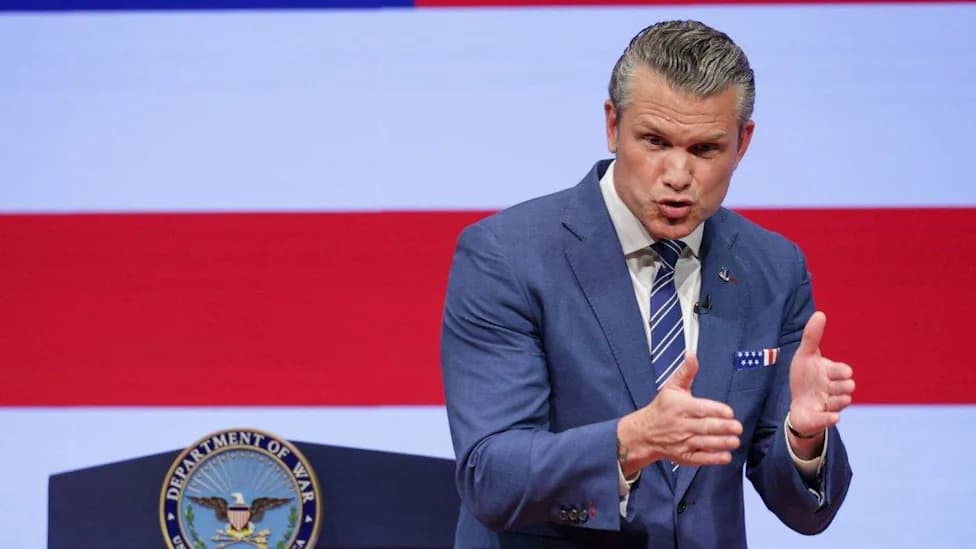
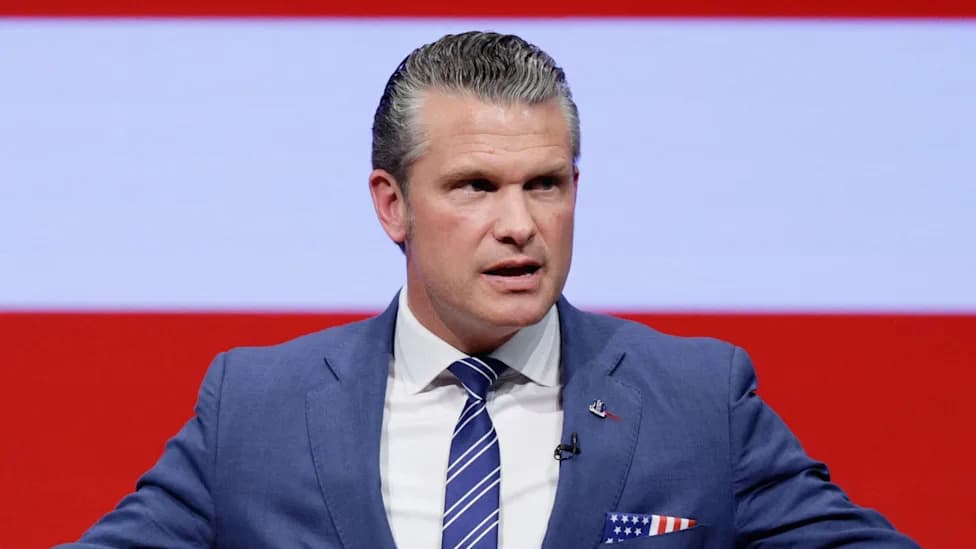
Defense Secretary Pete Hegseth ordered U.S. service academies to stop appointing civilian employees to tenured positions, arguing tenure undermines institutional focus on warfighting. The September 29 memo directs academies to create hiring plans that prioritize flexibility and mission-focused teaching but does not address the status of current tenured civilians. The move follows other Trump-era efforts to limit certain academic programs and has prompted legal and academic pushback over free speech and viewpoint diversity.
Hegseth Orders Service Academies To Stop Appointing Civilians To Tenure, Sparking Legal And Academic Pushback

Defense Secretary Pete Hegseth has told the nation's military academies, like the U.S.Military Academy at West Point, to stop hiring civilian faculty into tenure positions.getty
Defense Secretary Pete Hegseth has directed the nation's service academies to "immediately cease appointing civilian employees to tenured positions," according to a brief memo dated September 29. The memo says the change is intended to keep the U.S. Military Academy at West Point, the U.S. Naval Academy and the U.S. Air Force Academy focused on preparing warfighters.
Memo Rationale
Titled "Refocusing the Military Service Academies on Warfighter Education," the memo argues that "civilian academic norms" have eroded institutional focus on lethality. Hegseth writes that granting tenure to civilian faculty can "lead to academic stagnation, faculty complacency, and institutional inability to adapt to emerging needs," and that tenure can shift curriculum priorities away from educating service members toward the research agendas of tenured academics.
"Immediately cease appointing civilian employees to tenured positions," the memo states, and it instructs academies to "develop hiring plans that prioritize institutional flexibility and faculty contribution to the warfighting mission."
Scope, Legal Concerns, And Context
The memo does not clarify the immediate status of currently tenured civilian faculty; instead, it directs officials to develop new hiring plans. Since taking office, Hegseth has argued for increasing the number of uniformed instructors at the academies. At his Senate confirmation hearing he said: "We need more uniformed members going back into West Point, the Air Force Academy, the Naval Academy as a tour to teach with their wisdom of what they've learned in uniform instead of just more civilian professors that came from the same left-wing, woke universities that they left and then try to push that into service academies."
Critics describe Hegseth's wider agenda as censorial and anti-academic. The action comes amid other Trump-administration initiatives that sought to limit diversity, equity and inclusion programs and restrict the teaching of certain "divisive concepts" and gender-related material. The Pentagon reportedly has been considering such measures for months.
Legal Challenges And Academic Impact
Earlier legal disputes have already tested academy policies. When West Point adopted a policy requiring faculty to seek prior approval for public speeches and media interviews conducted in an official capacity, a federal judge struck that rule down as unconstitutional. Separately, West Point faces a lawsuit by Adam Kalkstein, a civilian science instructor of 17 years, who alleges the academy violated his First Amendment rights by prohibiting him from teaching human-caused climate change.
Last year, the administration removed hundreds of books from the U.S. Naval Academy library that it viewed as politically incompatible; many of those volumes were later returned. Observers warn the new tenure directive could reduce viewpoint diversity and narrow academic breadth at the academies.
Faculty Composition
The proportion of civilian tenured faculty varies across institutions: about 25% of West Point's professors are civilians, roughly 50% of Naval Academy instructors are civilians, and civilian faculty make up about 30% of the Air Force Academy's instructors. The United States Merchant Marine Academy and the Coast Guard Academy are overseen by other federal departments (Transportation's Maritime Administration and the Department of Homeland Security, respectively), not the Department of Defense.
What Happens Next
Academies have been ordered to create hiring plans that emphasize flexibility and mission-focused teaching. The memo's long-term effects will depend on how the academies implement hiring changes, how existing tenured faculty are treated, and whether additional legal challenges alter or delay implementation.
Originally published on Forbes.com.
Help us improve.