Pentagon chief Pete Hegseth used a "State of the Force" address at Quantico to attack transgender troops and diversity initiatives, criticize the news media and unveil several modernization proposals. He announced plans for a new four-star autonomous warfare command, a solicitation for a "next great American base" and a Pentagon study he said would be co-directed by Elon Musk. Hegseth also proposed a 20% cut to billets reserved for generals and admirals and named recent U.S. casualties from the Iran war, while stressing stricter standards and discipline across the force.
Hegseth’s 'State of the Force' at Quantico: Attacks on Diversity, Media and New Modernization Plans
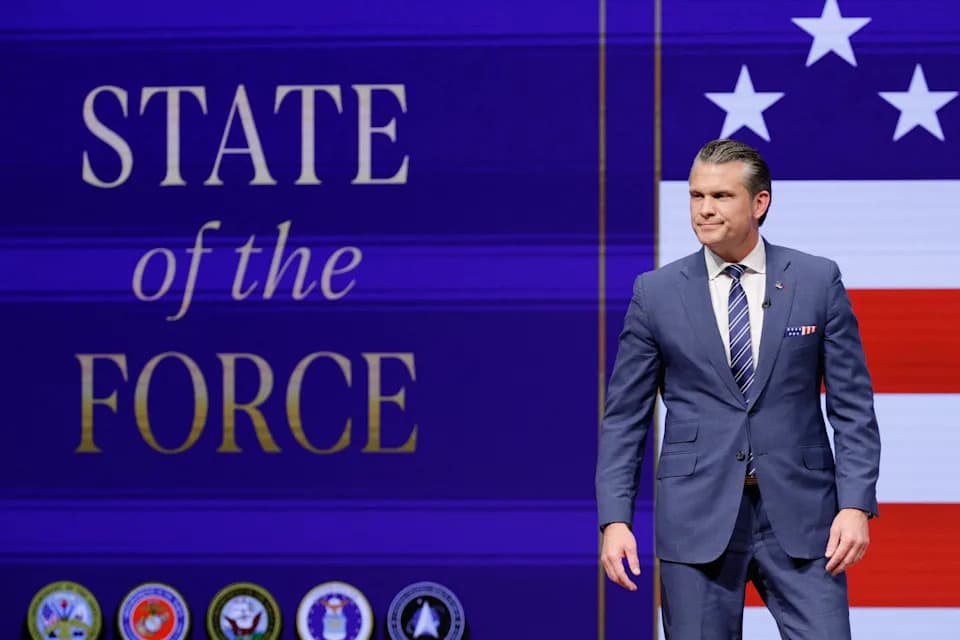
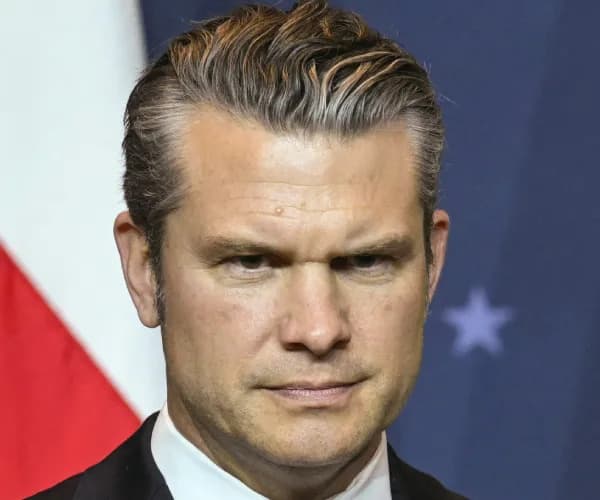
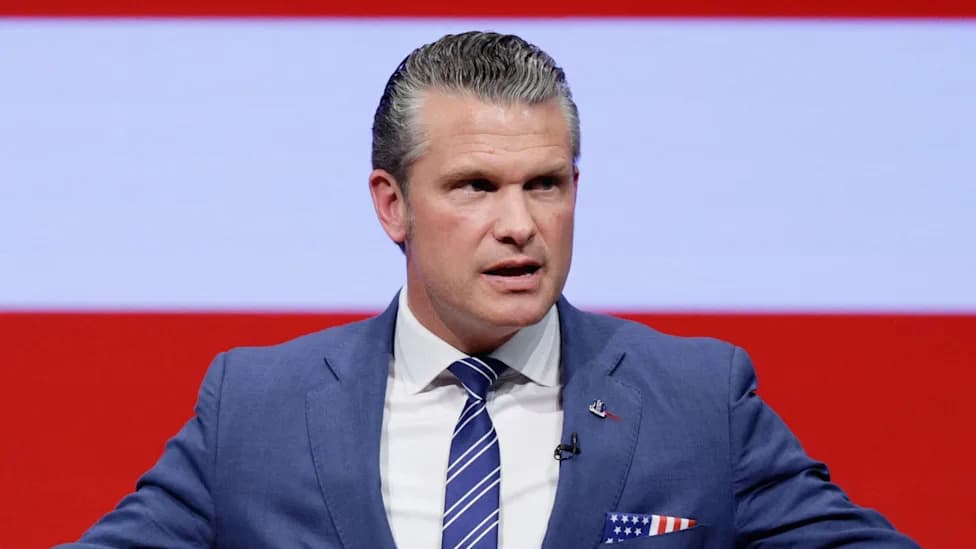
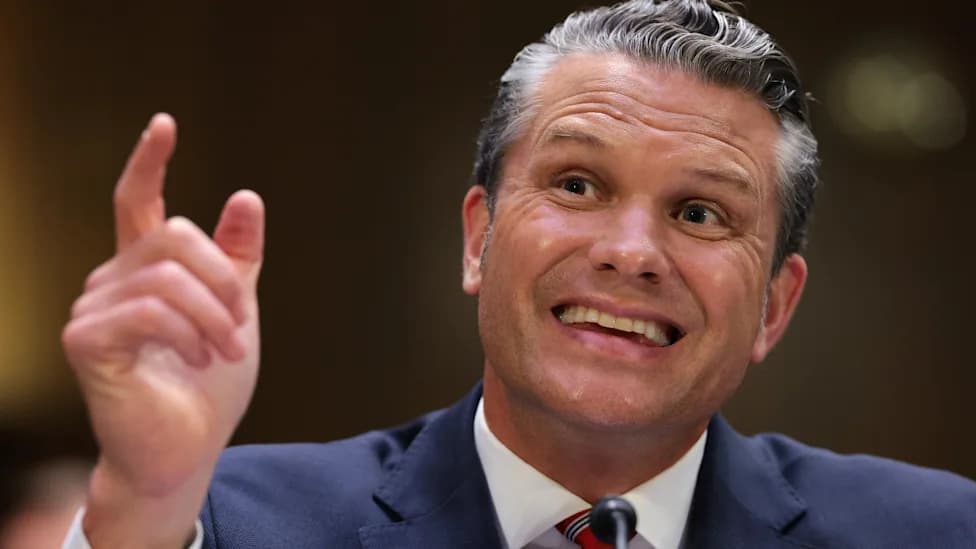
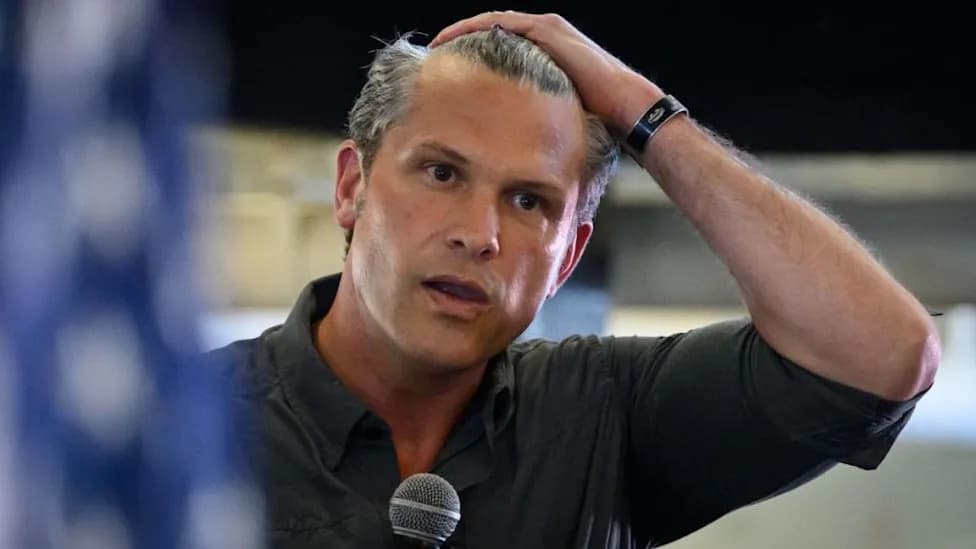
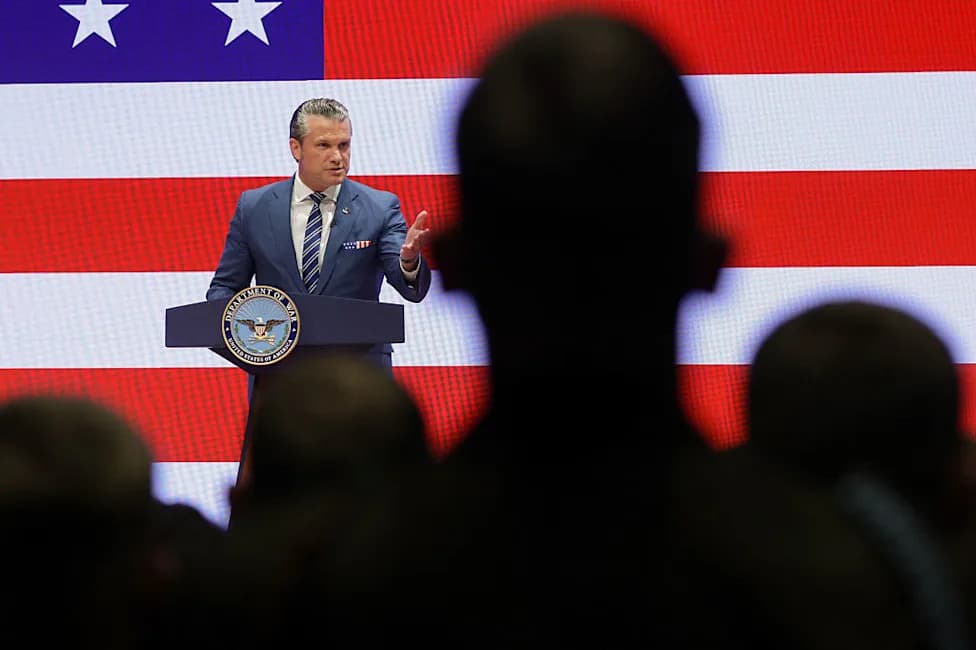
Defense Secretary Pete Hegseth delivers his 2026 "State of the Force" address to U.S. junior officers and enlisted leaders at Marine Corps Base Quantico in Quantico, Virginia, on Sept. 30, 2026.
Pentagon chief Pete Hegseth used a combative "State of the Force" address at Marine Corps Base Quantico to attack transgender service members, denounce diversity initiatives and assail the news media — while also announcing a slate of modernization efforts for the U.S. military.
Modernization Push
Hegseth said the department will create a new four-star combatant command focused on autonomous warfare, aimed at scaling robotic and autonomous capabilities "across the Joint Force in the fastest peacetime shift in modern military history." He also said the Pentagon will solicit proposals for what he called the "next great American base" and launch a study, which he said would be co-directed by SpaceX CEO Elon Musk, to identify technological requirements for future conflict.
Culture, Education and the Media
"The ideological clowns are out, the patriotic cowboys are in," Hegseth said, adding that "diversity is not our strength, unity is our strength because that's all that really matters when the missiles are flying."
He criticized elite universities for promoting what he described as critical race theory and said the Pentagon would partner with colleges including Louisiana State University, Liberty University and Tuskegee University to cultivate what he called the next generation of leaders versed in Western political and religious traditions.
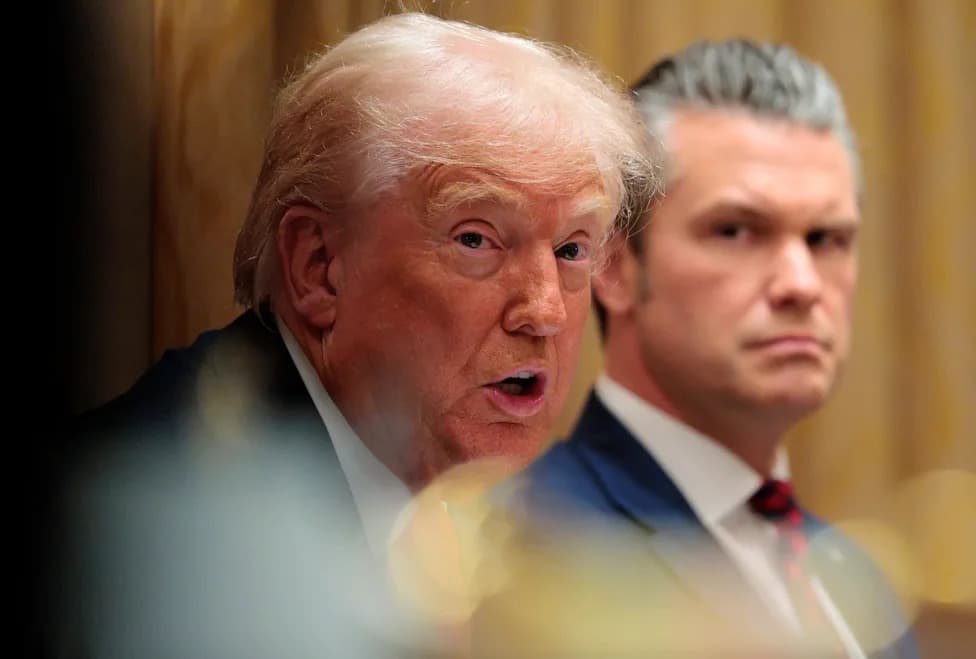
Hegseth, a former television host, also attacked the press, calling some journalists "anti-American losers" and accusing news outlets of bias against President Donald Trump. He said such coverage undermines service members and cited reporters as contributing to domestic division.
Casualties, Morale and Operational Strain
In his remarks Hegseth referenced the ongoing Iran war and named several U.S. service members killed or missing in recent months, including 1st Lt. Tyler James Feehan, Cmdr. Gabriel Edwards (presumed dead following a helicopter emergency landing), Major John "Alex" Klinner, Sgt. 1st Class Noah Tietjens, Capt. Seth Koval, Capt. Curtis Angst, Tech. Sgt. Tyler Simmons, Chief Warrant Officer 3 Robert Marzan and Isabella Gonzalez. He did not address reports of a U.S. airstrike on an Iranian school that civilian sources say killed scores of children.
Hegseth also acknowledged reports of low morale and poor conditions among deployed forces, citing accounts from sailors aboard the U.S.S. Abraham Lincoln carrier strike group, where multiple attempted suicides were reported during an extended deployment.
Personnel Policy and Standards
Framing himself as a leader aligned with rank-and-file troops, Hegseth announced a proposed 20% reduction in billets reserved for generals and admirals, calling the change "long overdue" and saying "you can't change a culture with the same people who enabled it." He emphasized stricter enforcement of personal and professional standards, using blunt, derogatory language to describe those he said do not meet them.
About 600 service members in attendance received a booklet of Hegseth's past speeches that included a foreword attributed to former President Donald Trump. The event echoed a similar Defense Department gathering from the previous year, though Trump did not attend this time.
Context: The speech combined policy announcements with sharp cultural rhetoric. Some initiatives Hegseth described—such as the autonomous warfare command and a study co-directed by a private-sector CEO—will require formal planning, interagency coordination and congressional oversight before implementation.
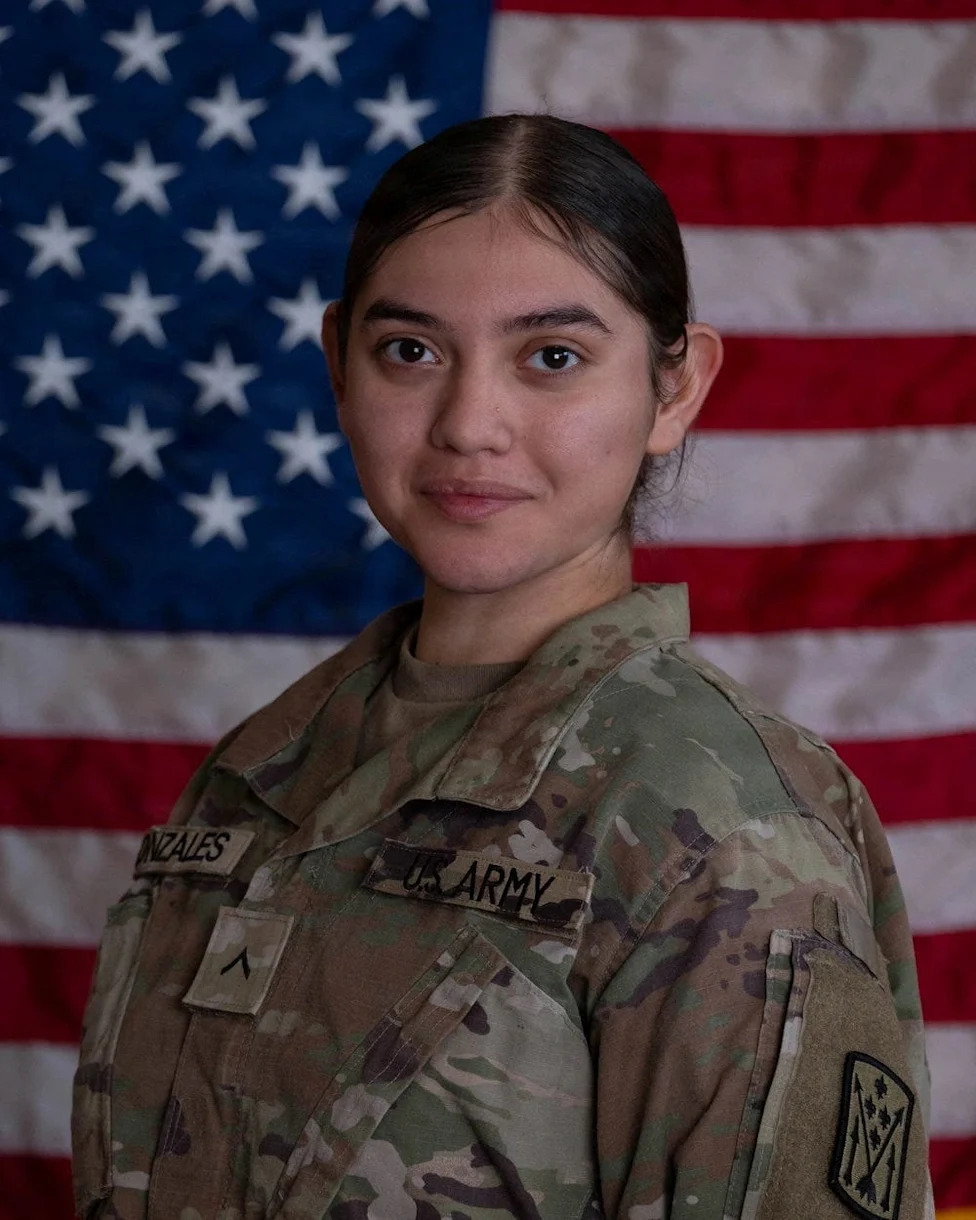
Two American soldiers were killedin an attack in Jordan, including Isabella Gonzalez, raising the U.S. military death toll in the Iran war to 17.Pvt. Gonzales, killed in action in an Iranian attack on Muwaffaq Salti Air Base, Jordan, in this image taken at a location given as Germany, released on July 20, 2026.(10th Army Air and Missile Defense Command/Handout, via Reuters)
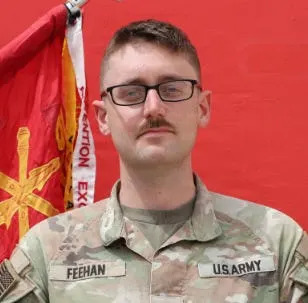
1st Lt. Tyler James Feehan, 25, 2nd Battalion, 55th Air Defense Artillery Regiment, 32nd Army Air and Missile Defense Command, was killed in action July 18 during an enemy attack at Muwaffaq Salti Air Base, Jordan.(Brooke Parcus, U.S. Army Space and Missile Defense Command)
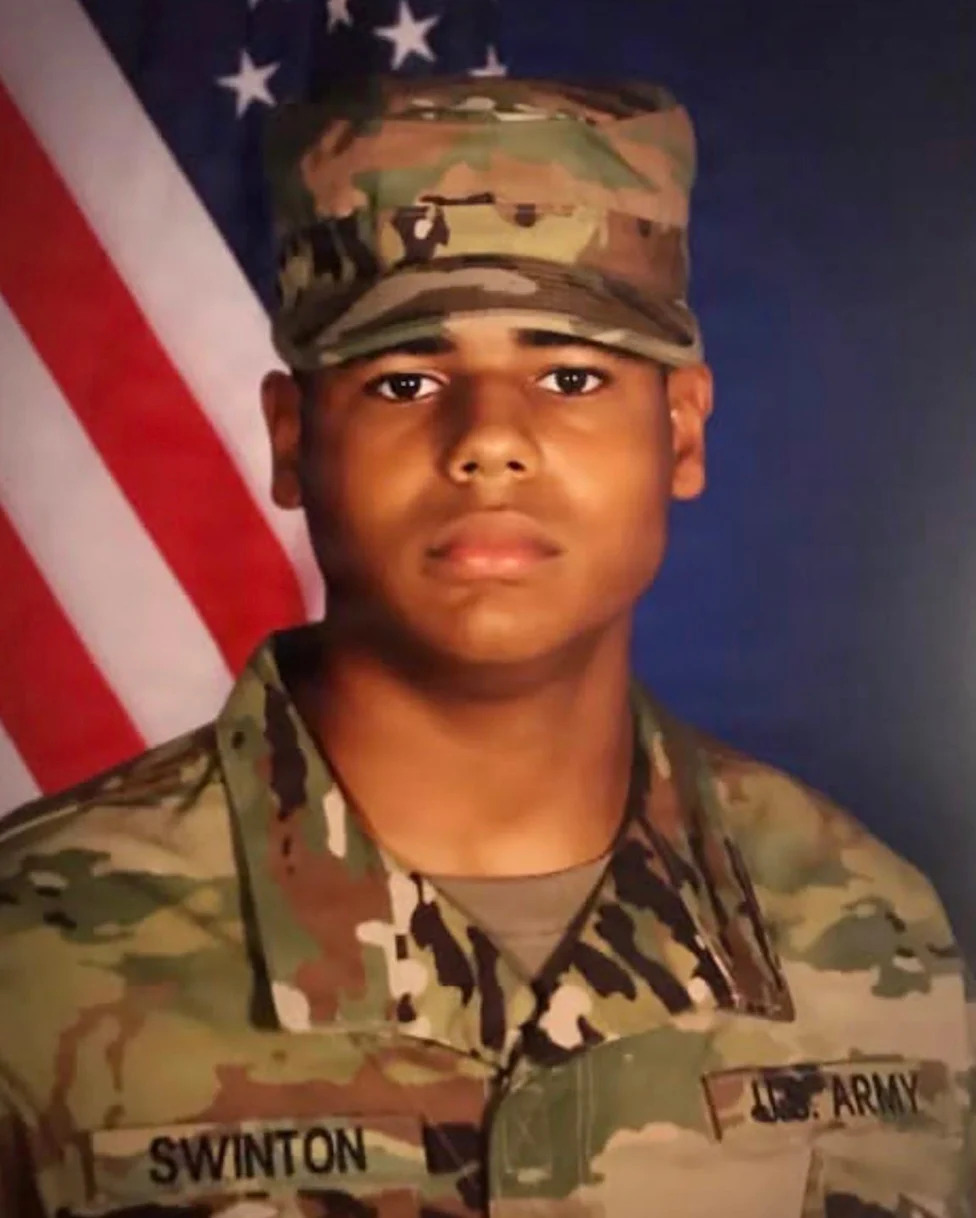
Sgt. Michael Emmanuel Swinton, 30, was killed in action during a controlled detonation of a downed One-Way Unmanned Aerial System July 19, 2026, at Erbil Air Base, Iraq.(Brooke Parcus, U.S. Army Space and Missile Defense)
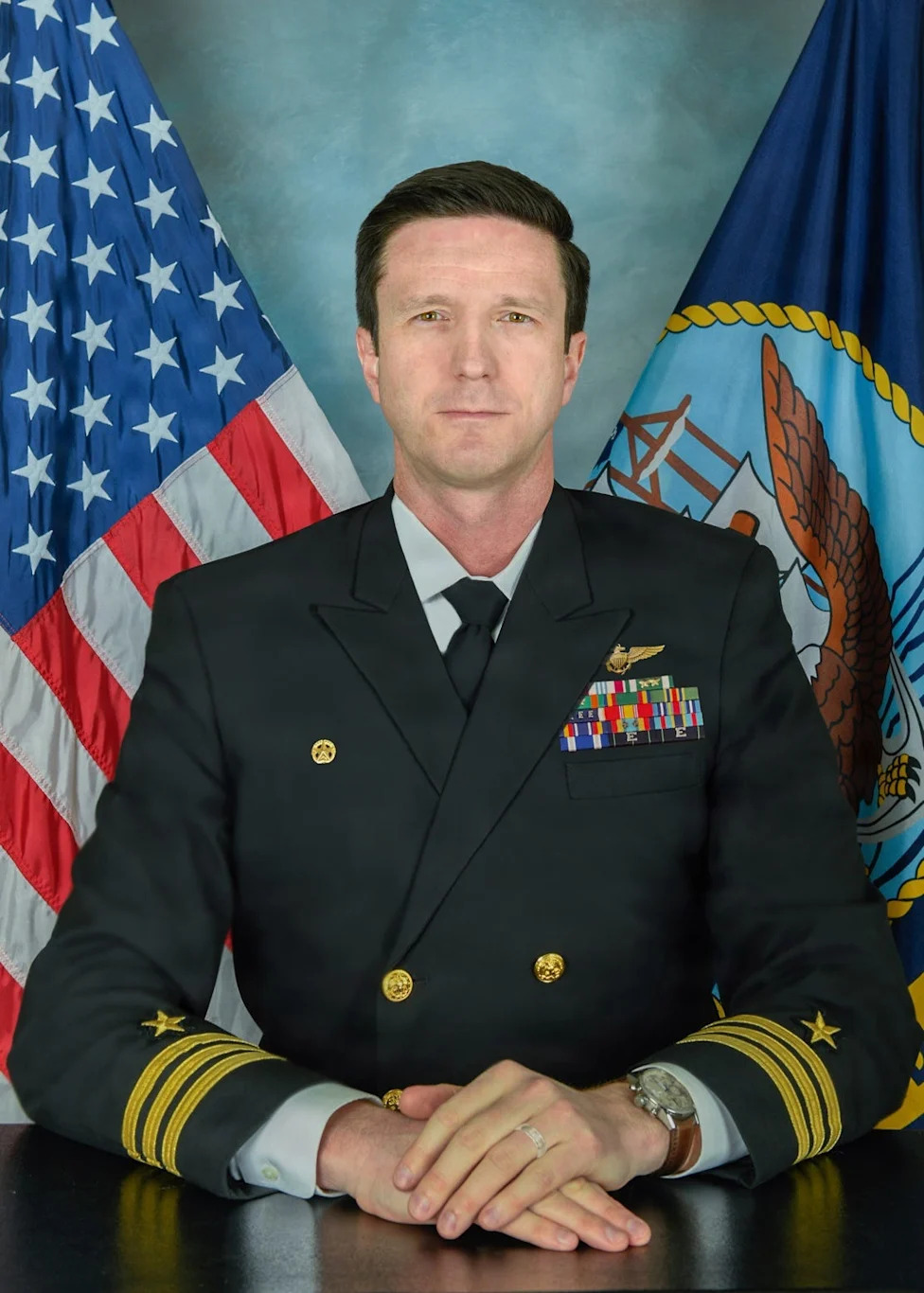
Cmdr. Gabriel Edwards is presumed dead after a U.S. Navy helicopter made an emergency landing in the Arabian Sea on July 1. He was identified as the missing crew member following a dayslong search.(Commander, Naval Air Force Atlantic)
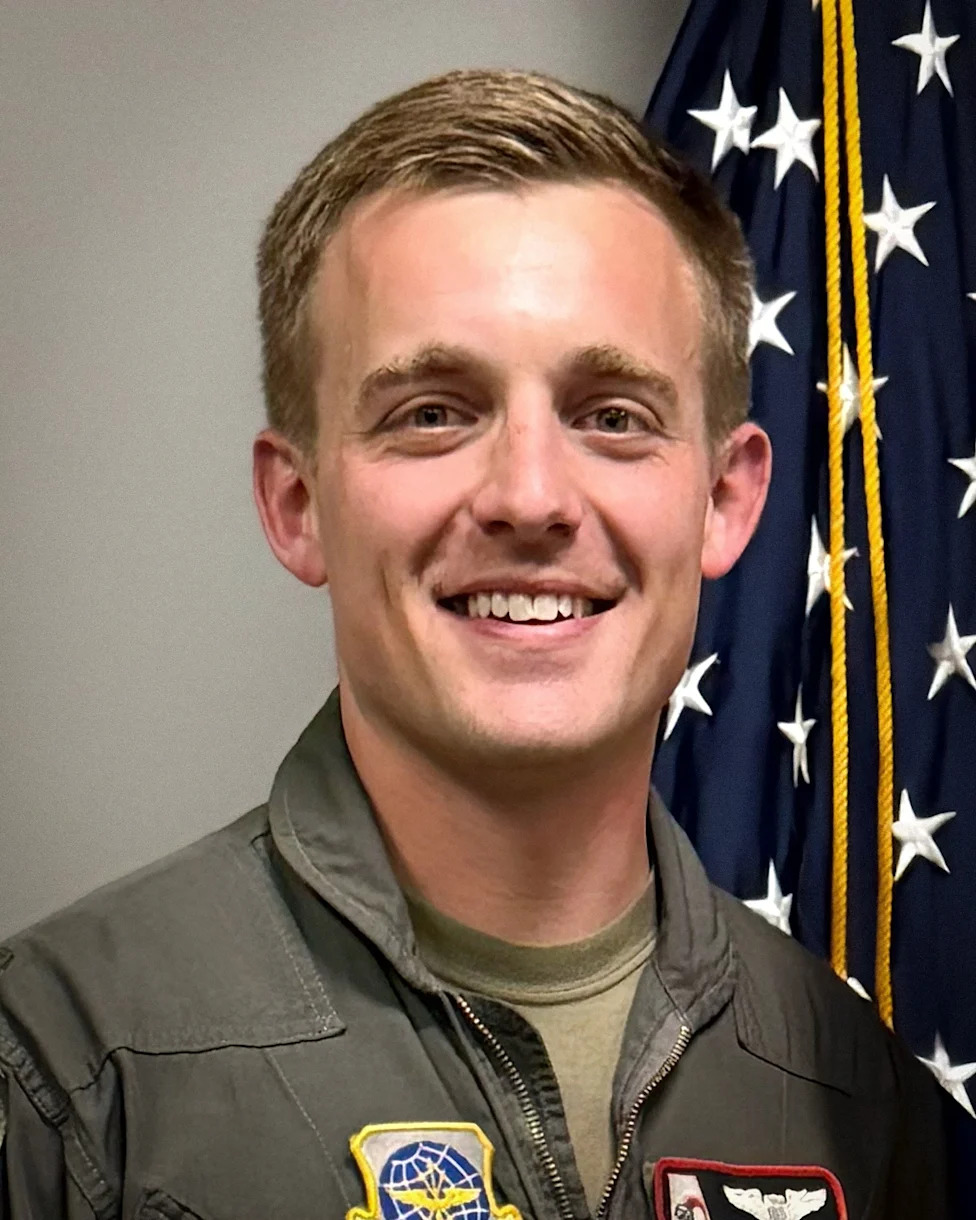
Major John “Alex” Klinner, 33, died on March 12, 2026, along with five other service members, after the U.S. aircraft they were on crashed in Iraq.(Courtesy Photo, DVIDS)
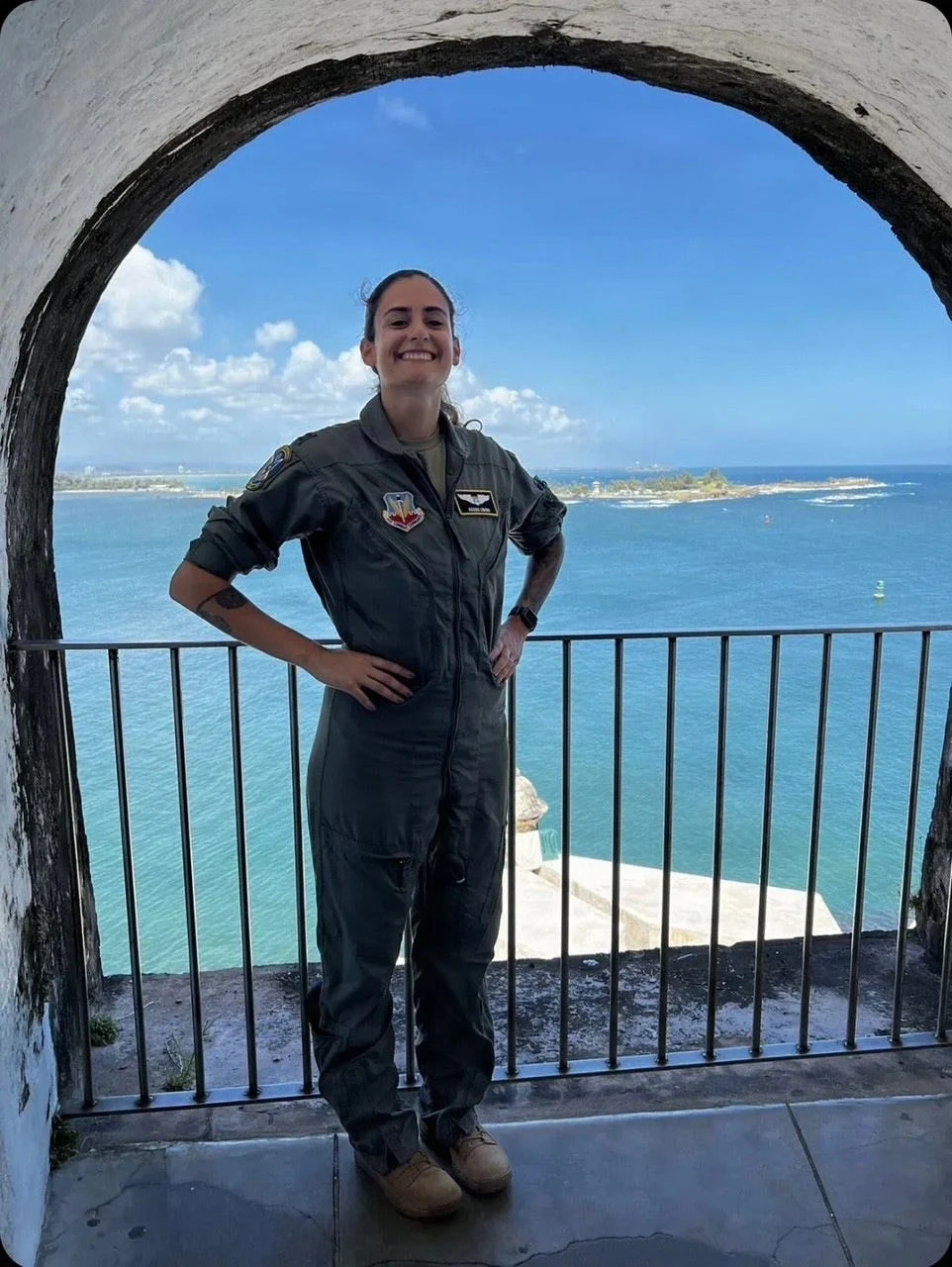
An undated photo of Capt. Ariana G. Savino, 31, of Covington, Wash., assigned to the 6th Air Refueling Wing at MacDill Air Force Base, Fla. Savino was one of six Airmen who died March 12, 2026, when a KC-135 aircraft crashed in western Iraq while supporting Operation Epic Fury.(Secretary of the Air Force)
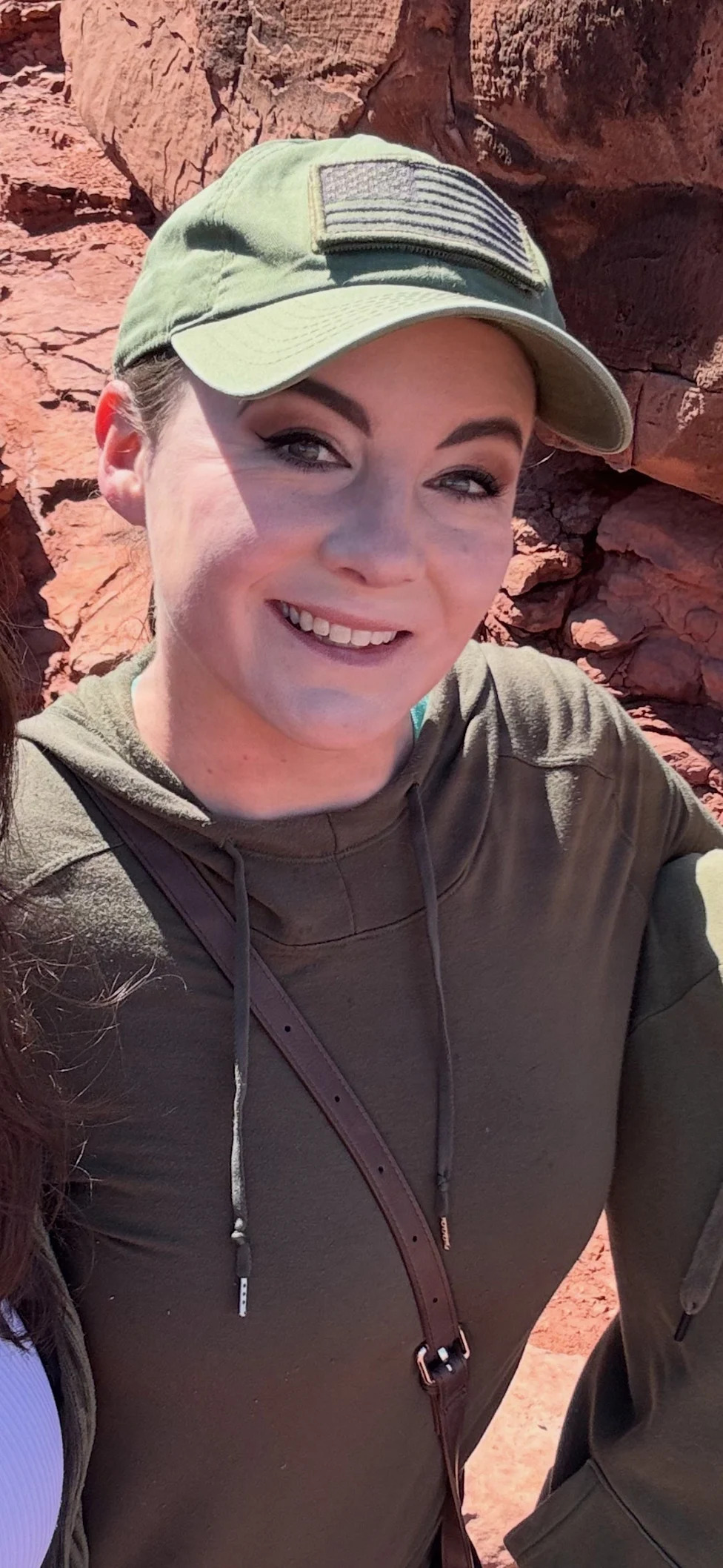
An undated photo of Tech. Sgt. Ashley B. Pruitt, 34, of Bardstown, Ky., assigned to the 6th Air Refueling Wing at MacDill Air Force Base, Fla. Pruitt was one of six Airmen who died March 12, 2026, when a KC-135 aircraft crashed in western Iraq while supporting Operation Epic Fury.(Secretary of the Air Force)
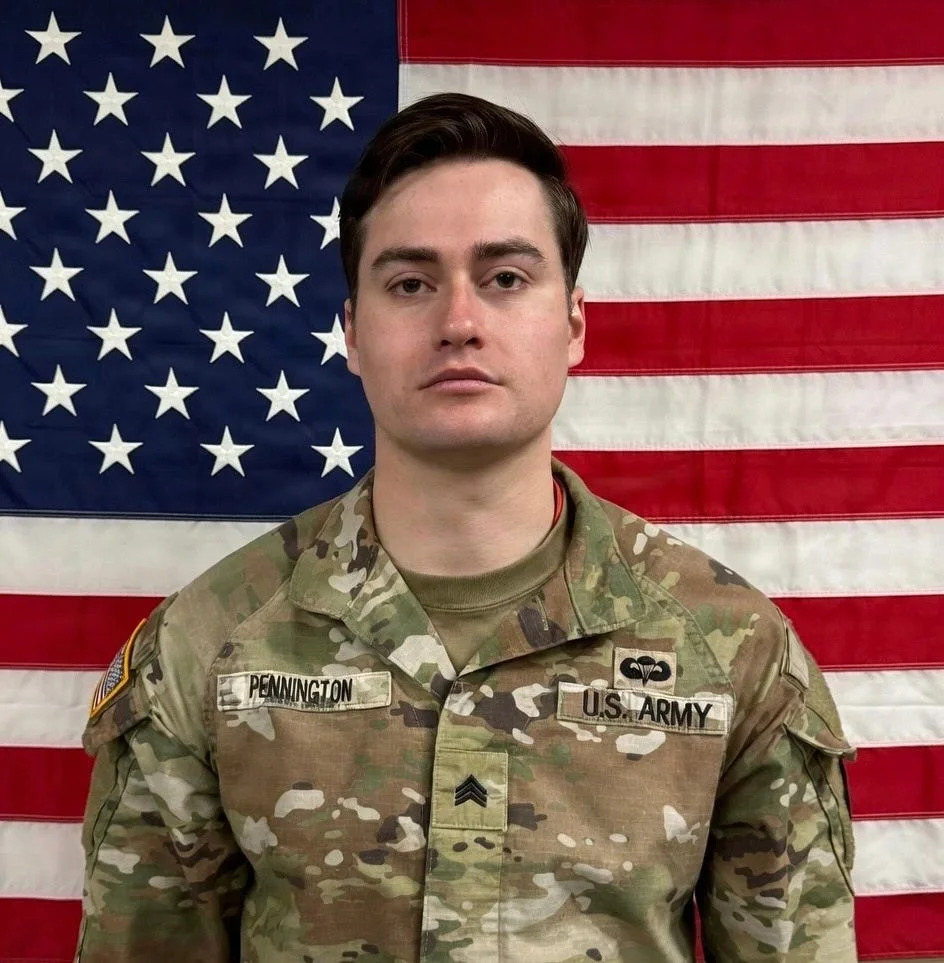
U.S. Army Sgt. Benjamin N. Pennington, 26, of Glendale, Kentucky, assigned to the 1st Space Battalion, 1st Space Brigade, Fort Carson, Colo, died March 8, 2026, from wounds sustained during an enemy attack on March 1, 2026, at Prince Sultan Air Base, Saudi Arabia.(Dottie Henderson, U.S. Army Space and Missile Defense Command)
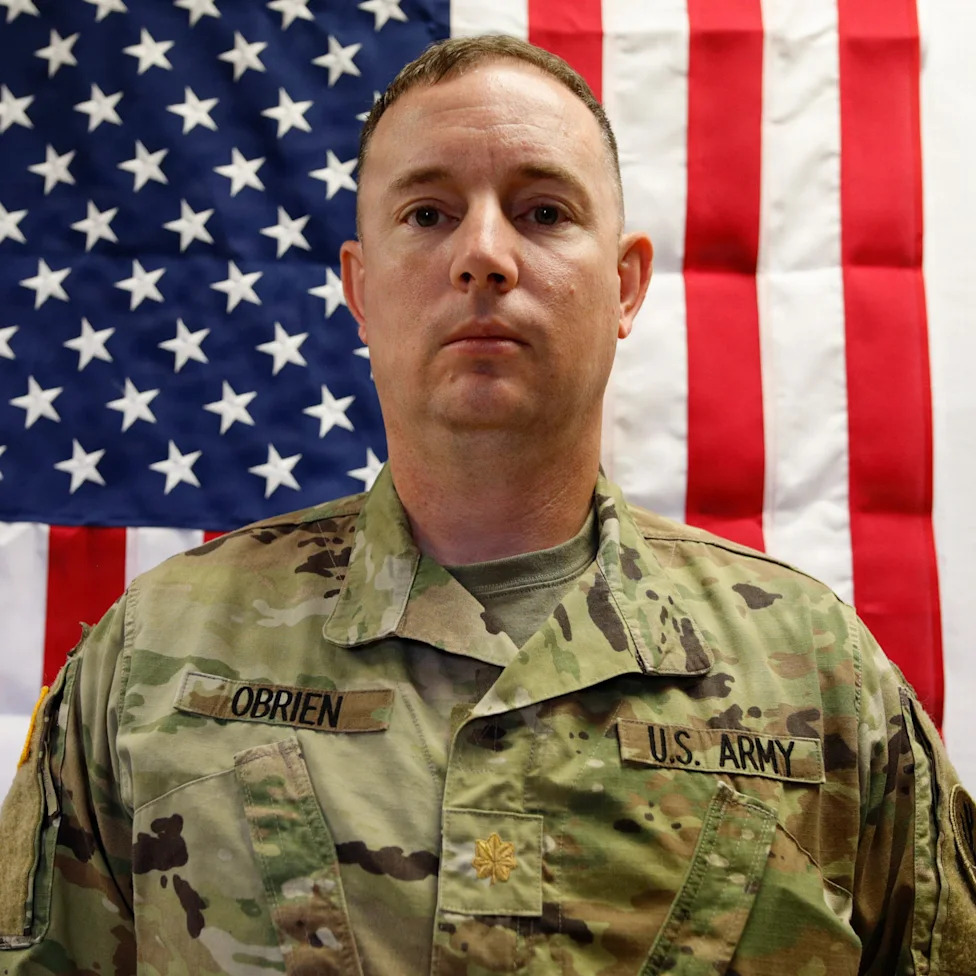
U.S. Army Reserve Maj. Jeffrey O’Brien, 45, of Waukee, Iowa, assigned to the 103rd Sustainment Command, died March 1, 2026, in Kuwait at the Port of Shuaiba during an unmanned aircraft system attack.(Gloria Holt, U.S. Army Reserve Command)
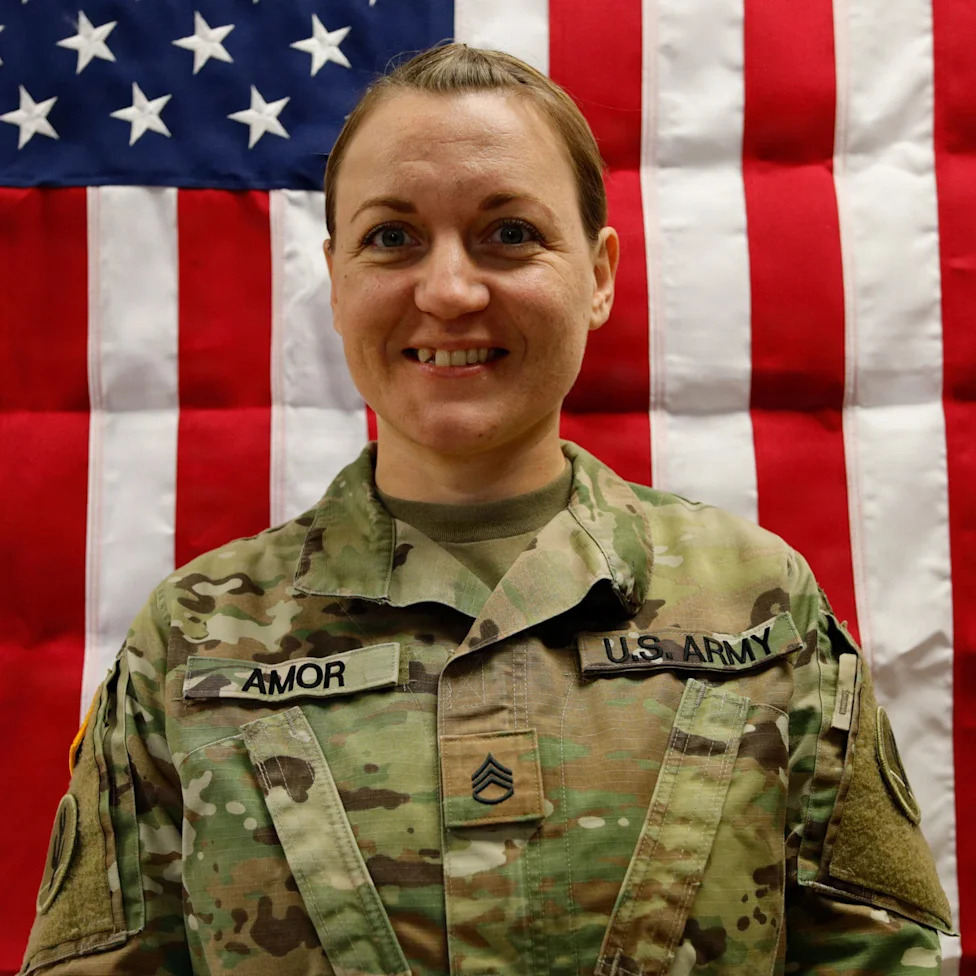
U.S. Army Reserve Sgt. 1st Class Nicole Amor, 39, of White Bear Lake, Minnesota, assigned to the 103rd Sustainment Command, died March 1, 2026, in Kuwait at the Port of Shuaiba during an unmanned aircraft system attack.(Brent Newton, U.S. Army Reserve Command)
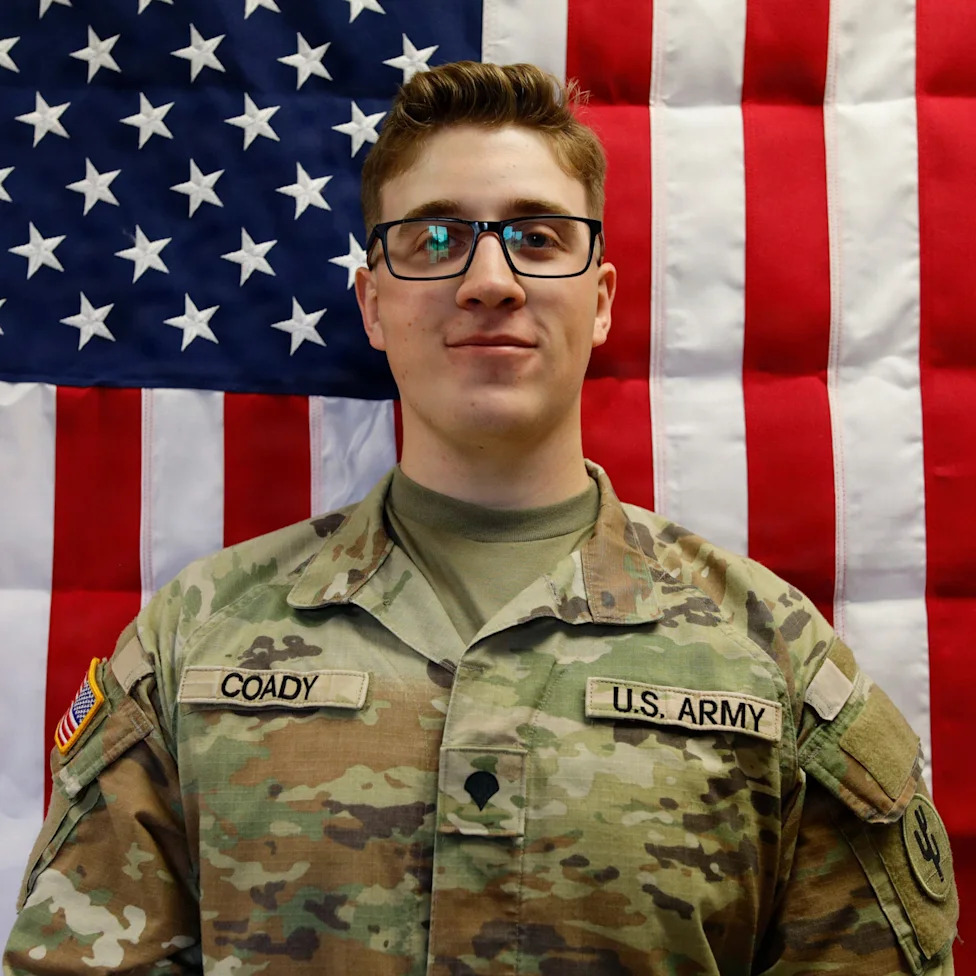
U.S. Army Reserve Sgt. Declan Coady, 20, of Des Moines, Iowa, assigned to the 103rd Sustainment Command, died March 1, 2026, in Kuwait at the Port of Shuaiba during an unmanned aircraft system attack.(Brent Newton, U.S. Army Reserve Command)
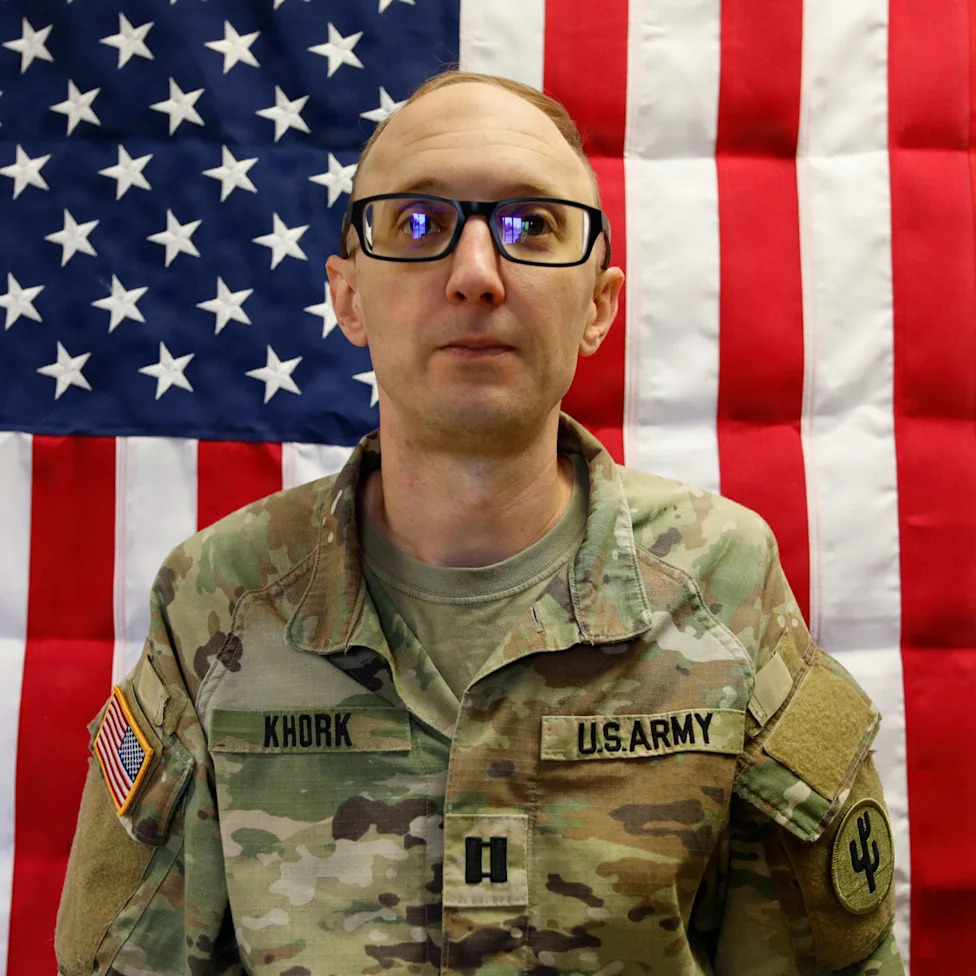
U.S. Army Reserve Capt. Cody Khork, 35, of Winter Haven, Florida, assigned to the 103rd Sustainment Command, died March 1, 2026, in Kuwait at the Port of Shuaiba during an unmanned aircraft system attack.(Brent Newton, U.S. Army Reserve Command)
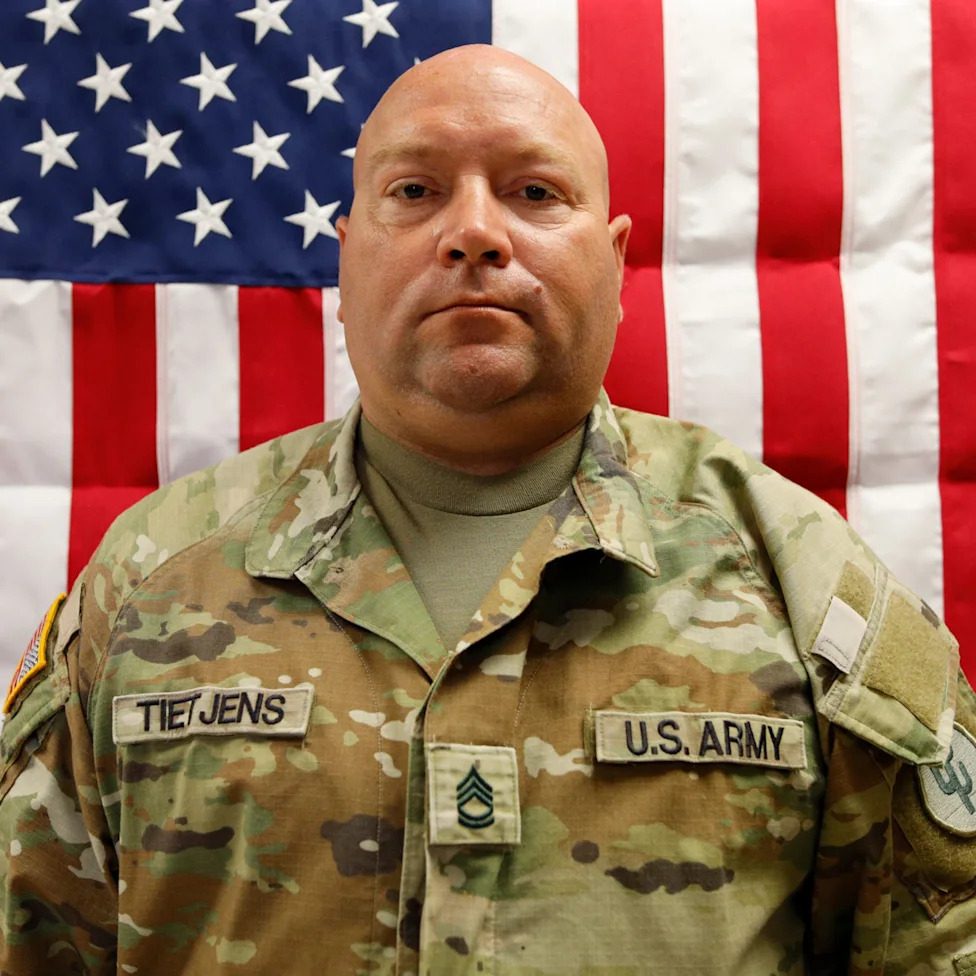
Sgt. 1st Class Noah Tietjens died in the attack on March 1, 2026, in Kuwait, the Pentagonsaid.Other US service members killed in the Iran War are: Capt. Seth Koval, 38, Capt. Curtis Angst, 30, Tech. Sgt. Tyler Simmons, 28 andChief Warrant Officer 3 Robert Marzan, 54.(Brent Newton)
Help us improve.