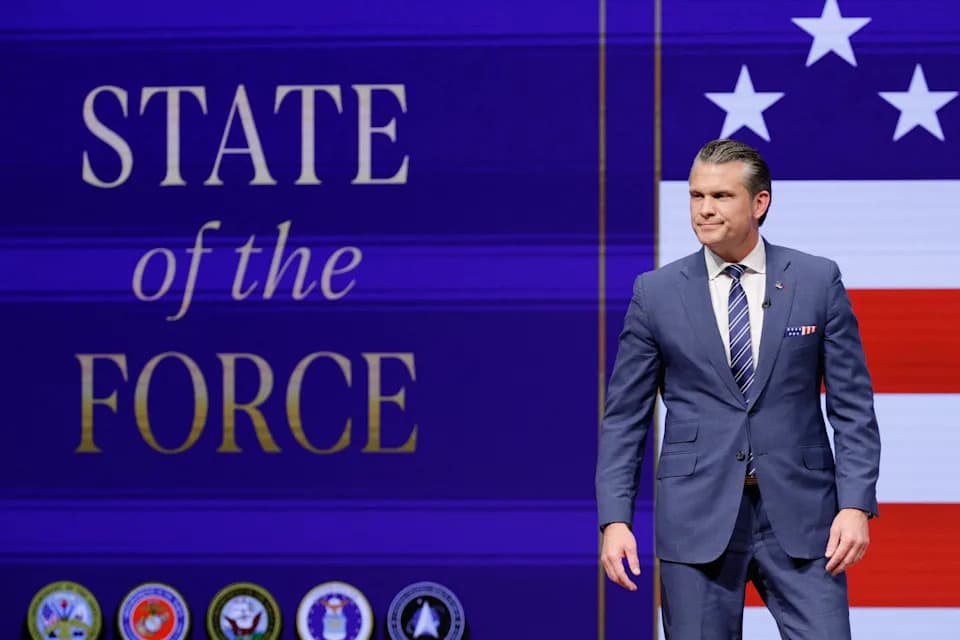
Pete Hegseth used a 52-minute "State of the Force" address at Quantico to combine personnel changes and policy proposals with aggressive culture-war rhetoric. He claimed the department removed about 10% of its generals and admirals, promoted testosterone testing and used a censored transphobic slur. The administration's effort to defend its transgender ban is before the courts, and a judge has questioned the treatment program's role. Hegseth also announced new organizational plans and sharply criticized universities, diversity initiatives and some journalists.
Hegseth's 'State of the Force': Testosterone Tests, Transphobic Rhetoric and a Culture-War Agenda
pete hegseth
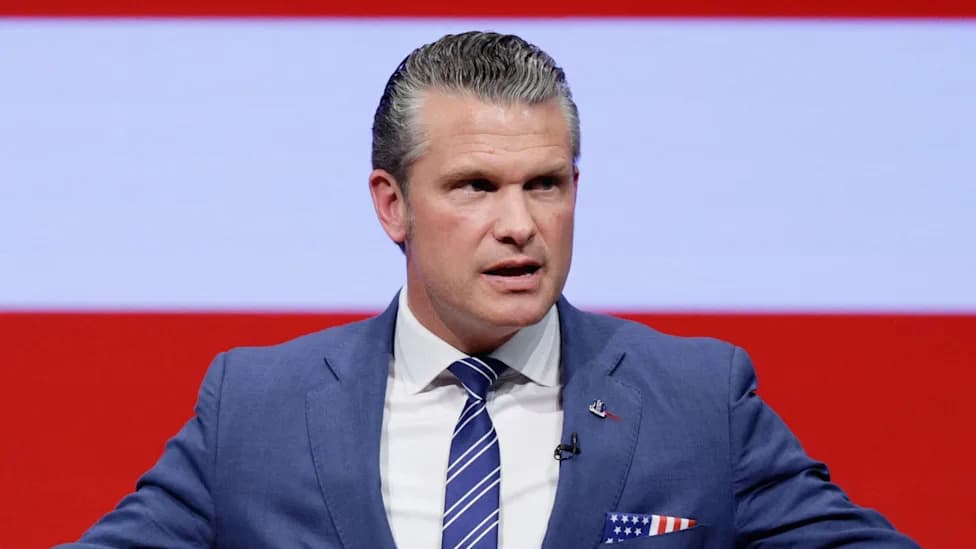
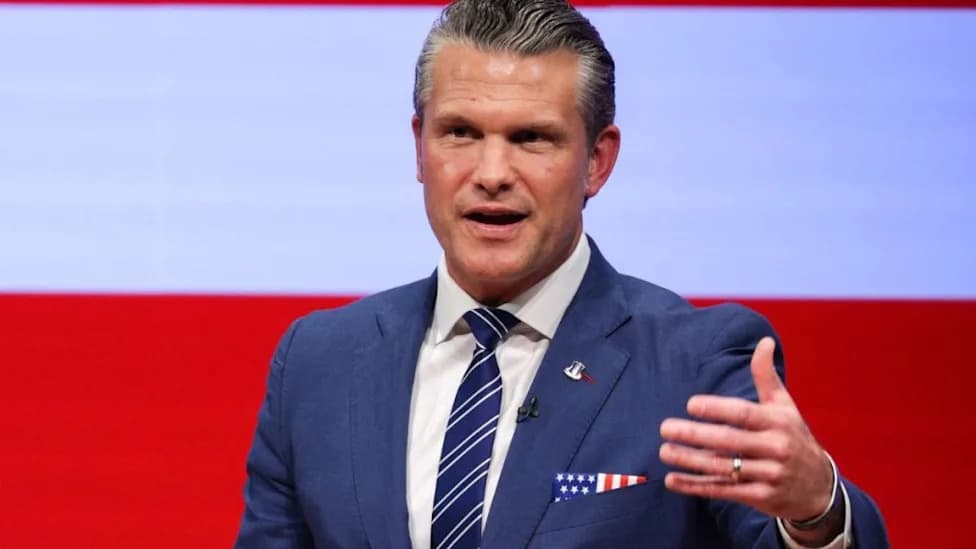
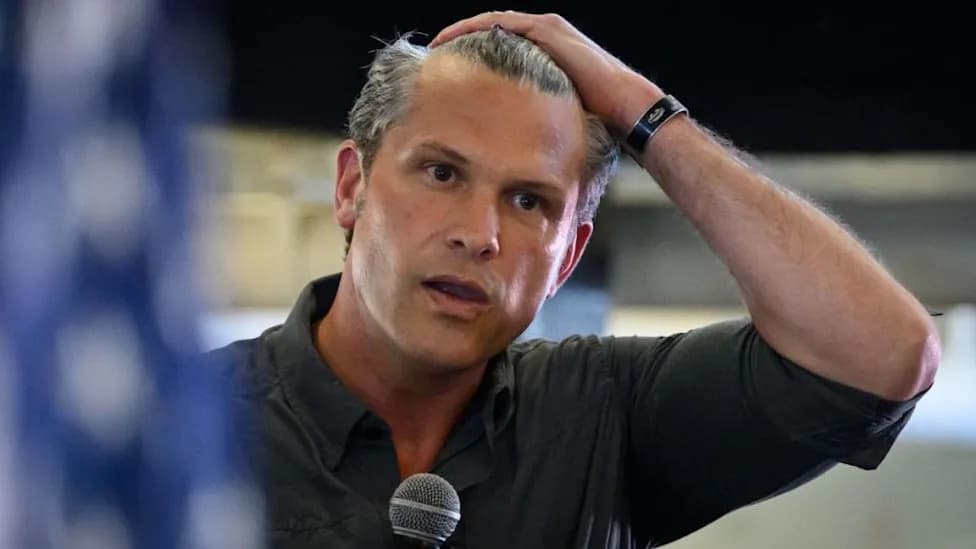
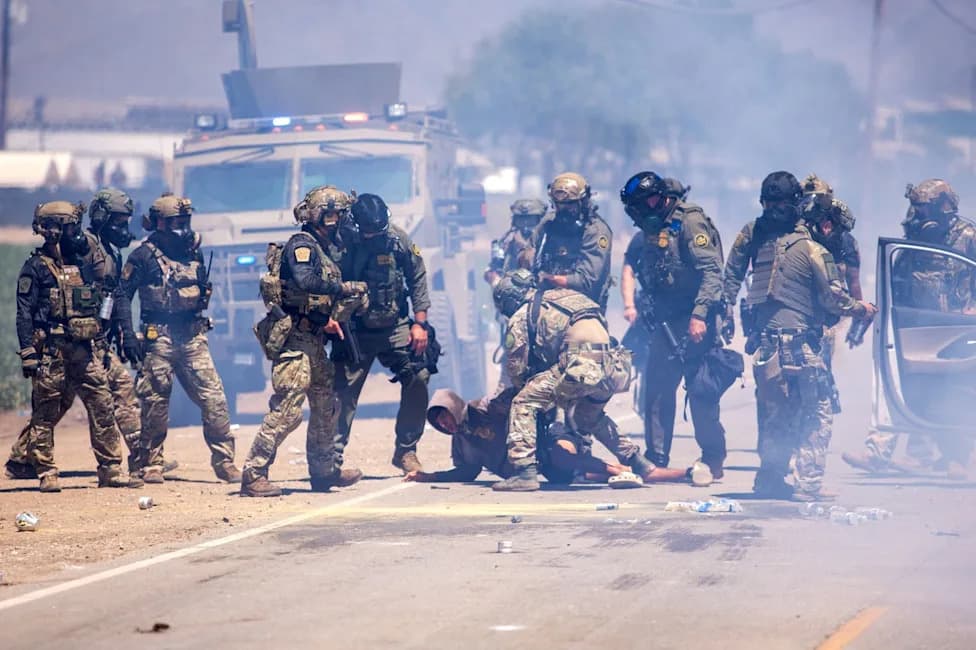
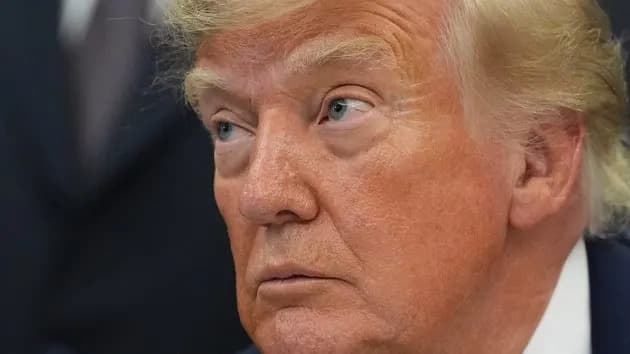
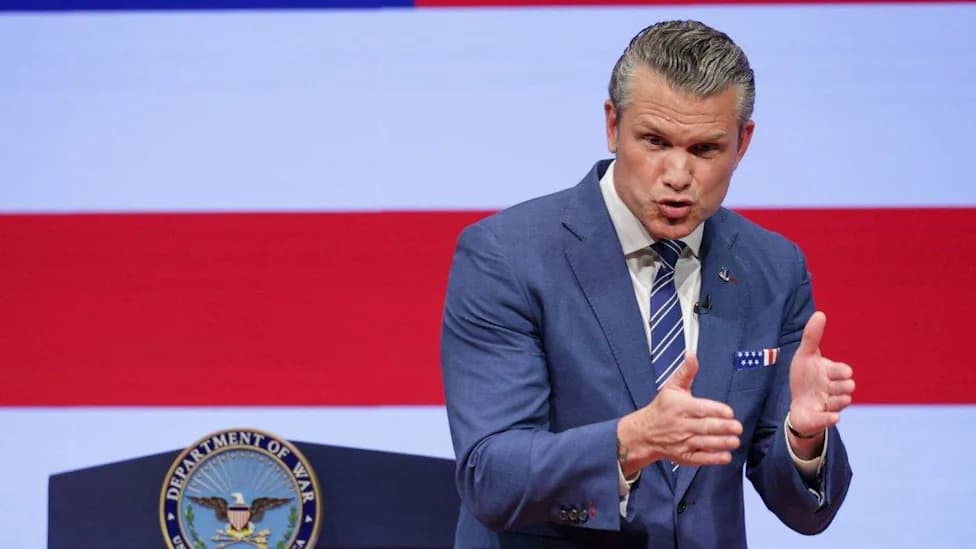
Defense Secretary Pete Hegseth returned to Marine Corps Base Quantico for a 52-minute "State of the Force" address that blended personnel and policy announcements with extended culture-war rhetoric and personal bravado. Much of the speech read less like a routine defense briefing and more like a political performance targeting transgender service members, journalists, universities and diversity programs.
Outline Of the Address
Hegseth framed his agenda as a restoration of "merit" and the "warrior ethos," while promising a transformed force. He claimed the department had removed roughly 10% of its generals and admirals and reduced senior officer billets, presenting those actions as accountability and proof of a cultural overhaul.
"We are no longer the woke department or the weak department," Hegseth said. "The ideological clowns are out. The patriotic cowboys are in with testosterone testing on top."
At one point he recited a censored string of derogatory labels—"No fatties, no tr***ies, no beardos, no weirdos, no wimps, no radicals, just warriors"—and praised a testosterone-testing program as part of the department's new direction. That line prompted an awkward silence from the audience of junior officers and enlisted leaders.
Policy Announcements
- Force changes: Hegseth said he had fired senior leaders and cut senior billets as part of a recalibration of command and culture.
- New organizations: He announced plans for an autonomous warfare command, a proposed domestic military base, and the creation of an Office of Religious Affairs reporting directly to the secretary.
- Medical and personnel programs: He promoted a testosterone-testing program that has drawn scrutiny in ongoing litigation over the administration's transgender military ban.
Legal And Institutional Context
The speech comes amid the administration's effort to uphold a ban on most transgender service members. In August, the government asked the U.S. Supreme Court to overturn protections for service members challenging that ban. Lower courts have questioned the administration's rationale, and U.S. District Judge Ana Reyes has specifically asked why testosterone treatment is being promoted for some troops while ongoing medical care has been cited as a reason to exclude transgender personnel—requesting details on costs, monitoring and logistics.
Attacks On Institutions And The Press
Hegseth repeatedly returned to perceived ideological enemies. He dismissed diversity programs and identity initiatives—saying "no more diversity quotas, no more gender pronouns, no more identity months, only the warrior ethos"—and labeled universities "DEI-worshiping woke factories." He also criticized journalists covering the war with Iran and accused some reporting of undermining troops' missions, calling such behavior "fundamentally anti-American" and at one point using the word "treason." Legal protections for journalism under the First Amendment remain intact, and treason is a narrowly defined federal crime.
Audience Reaction And Tone
The audience, largely junior officers and enlisted leaders, offered sparse applause at several points and fell silent after some of Hegseth's more provocative lines. The address mixed concrete organizational changes with performative, combative rhetoric that is likely to deepen debate over the role of ideology, religion and culture in shaping military policy.
Contextual note: Hegseth previously restricted Pentagon press access before a judge ordered the press corps' entry restored; his tenure as a former cable news anchor has contributed to his high-profile, media-savvy approach.
Help us improve.